About
The Craft of Doctoring
The craft of doctoring is the practical knowledge, habits, skills, and forms of reasoning through which medicine is practiced.
Poet Doctor studies how that craft has been practiced, taught, represented, and transformed rather than assuming a fixed definition.
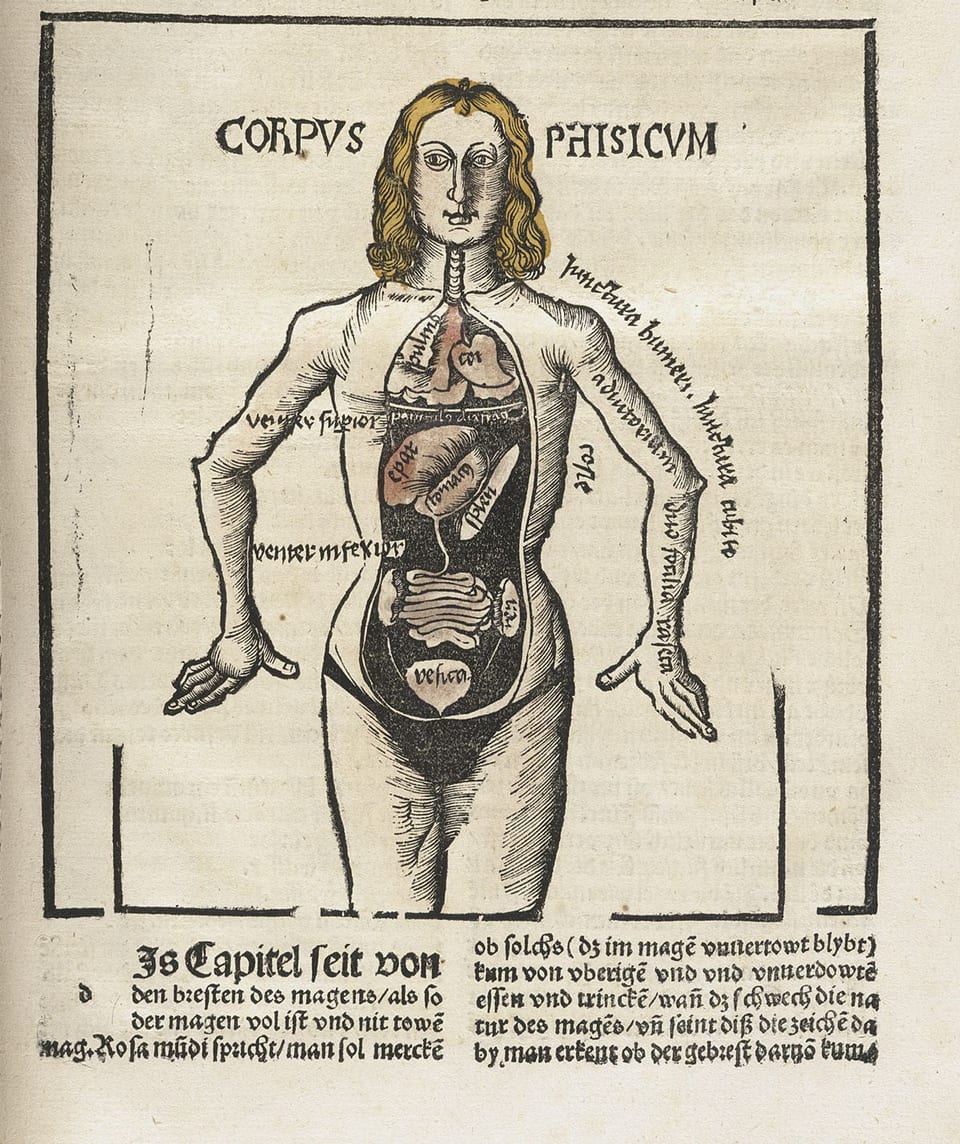
A craft within medicine
Medicine asks much of physicians. It asks for scientific knowledge, technical competence, ethical seriousness, and practical judgment. Yet even when those demands are named, the work of doctoring is often experienced more richly than it is described. Physicians must decide what matters in a crowded field of signals, interpret uncertainty without rushing to certainty, speak clearly when stakes are high, and remain present to patients and families in vulnerable moments.
Craft suggests skill, discipline, formation, and practice over time. Today, doctoring is learned through repeated acts of attention, interpretation, restraint, and relation.
What the craft includes
These are present-day names for these skills. Earlier eras used other names and valued some skills that are not on this list.
Attention
The ability to notice what is present, what is changing, and what may otherwise go unseen.
Judgment
The ability to decide well under conditions that are often incomplete, pressured, and uncertain.
Presence
The ability to remain steady, responsive, and human when illness places strain on everyone involved.
Interpretation
The ability to move responsibly between data, language, experience, and action.
Poetry as inheritance and method
Physicians in many eras have used poetry and other forms of writing to reflect on practice, witness suffering, register surprise, and test language against experience. That writing matters to us as historical evidence and as a method of inquiry today. Poems can hold compressed acts of perception and relation that are difficult to capture elsewhere. They show how attention moves. They register ambiguity without flattening it. They let us compare how physicians in different eras described their work.
At Poet Doctor, poetry is one of the primary ways physician attention becomes legible.
Historical Library
Doctoring in the written record
The craft of doctoring is often difficult to observe directly. Much of it happens in confidential spaces: at the bedside, in the chart, and in conversations that cannot be put on display. Historical medical writing gives us another way to study that craft: how physicians noticed, taught, argued, consoled, and turned judgment into language.
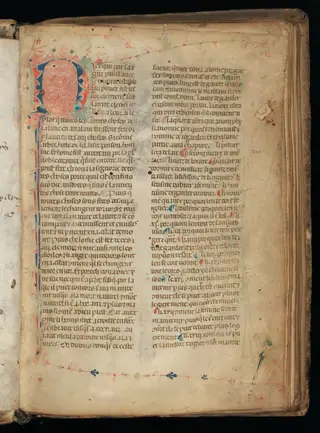 Le Régime du corpsLe Régime du corpsHere begins the book of the regimen of bodies, which Master Aldobrandino of Siena composed and gave to the King of France — that he might keep his body in health, and know the signs of sickness before it arrives.
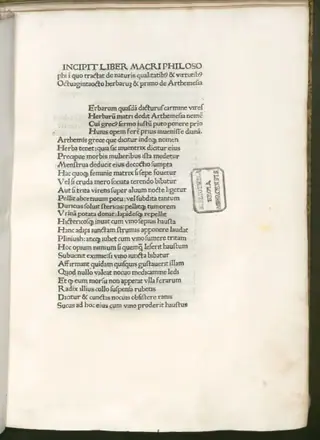 De viribus herbarumDe viribus herbarumOf artemisia first I shall speak — first of all the herbs, the mother of them all, who lends strength to the limbs and quiet to the womb, and whom the ancients carried in their belts against the weariness of long roads.
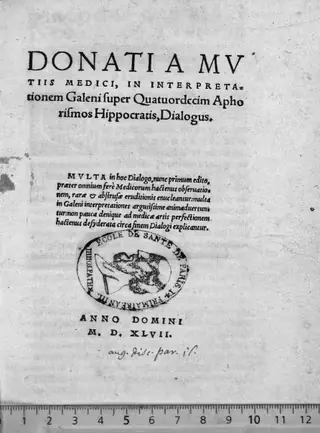 In interpretationem GaleniIn interpretationem GaleniLife is short, the art long, the occasion fleeting, experiment perilous, judgment difficult. — A dialogue between two physicians on what Galen means by the first aphorism, and how the medical reader should hold each word in the hand.
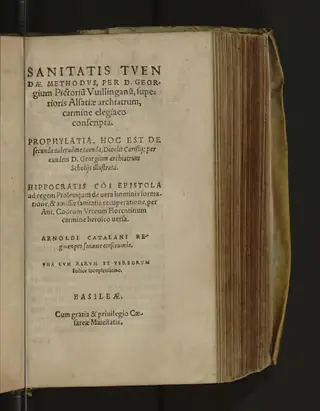 Sanitatis tuendae methodusSanitatis tuendae methodusWhoever desires to live long in health: let him rise with the sun, walk before his morning meal, take wine sparingly and well-watered, and listen — when the body speaks first, the physician comes second.
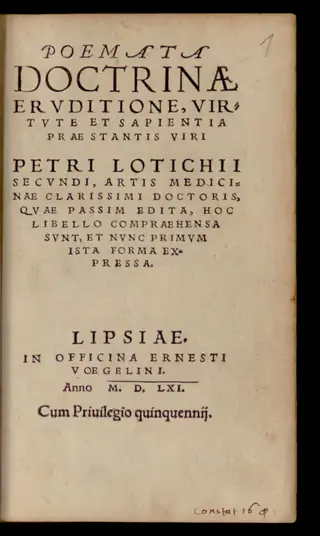 PoemataPoemataI, sickly in my limbs and driven by the wars from German town to town, write these verses by the Rhine — for grief, set to a measure, becomes patient; and the physician, when he cannot mend the body, can at least settle the mind.
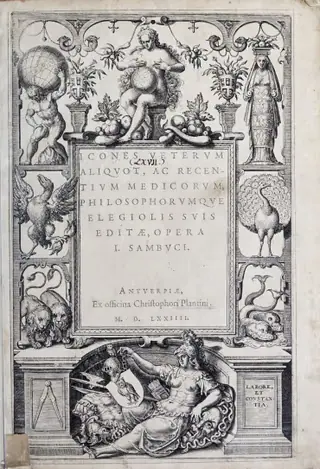 Icones medicorumIcones medicorumBehold Hippocrates — from whose grave brow the whole physic of the Greeks took its first form. Read the face: the verse below is only its caption, and the man came before the words.
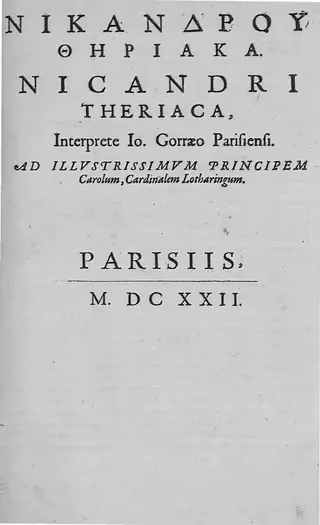 Nicandri TheriacaNicandri TheriacaOf serpents first — of the viper whose bite swells the limb and darkens the blood; and of the antidotes the shepherd carries in his pouch against the noon, when reptiles wake and the field is most perilous.
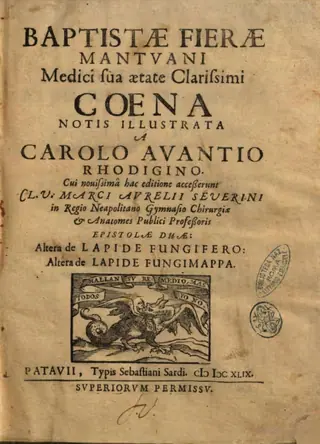 CoenaCoenaBring the first dish: lettuce. — Whoever has the hot liver, says Galen, let him eat lettuce; whoever has the cold, let him pass. So begins the dinner at which physicians dispute, course by course, what to swallow and what to refuse.
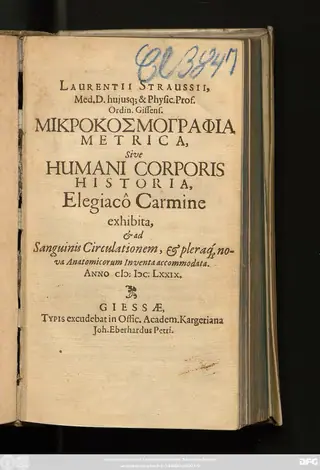 Mikrokosmographia MetricaMikrokosmographia MetricaOf bones first I sing — the skull, that vault whose seams the master builder closes when the child is one year old; and the ribs, the cage in which the heart keeps its small and constant fire.
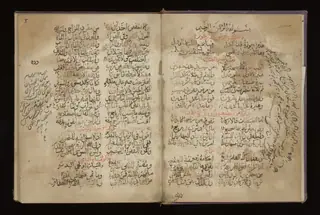 Rajaz medical poemsRajaz medical poemsIn the name of God — who made the heart a king, the lungs his fan, the liver the cook of the body's house, and the four humours the servants who carry the dishes from one chamber to the next.
 La LuciniadeLa LuciniadeLucina, goddess of birth, descend — and put aside those iron forceps that have turned the chamber of life into the chamber of slaughter. I sing the midwife's hand; I sing the mother who lives.
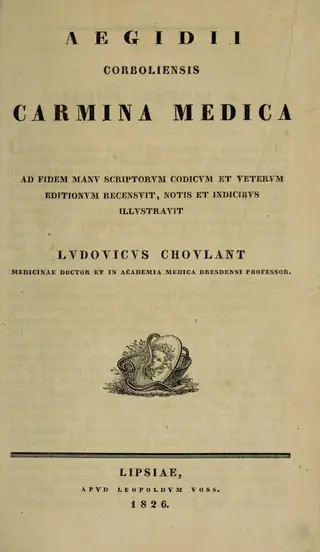 Carmina medicaCarmina medicaIf the urine be red and thick, the patient burns; if white and thin, the matter is yet uncooked; if pale, the cold has the upper hand. The colour is the chart the body itself draws, and the physician has only to read.
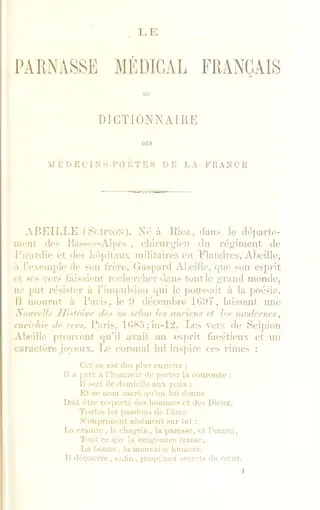 Le Parnasse médical françaisLe Parnasse médical françaisOf the French physicians who have written verse — and they are not few — the first is Macer, whose hexameters on plants every monastery copied; the last, perhaps, is the one writing this preface, who is no poet, but a librarian among poets.
Why this matters now
As AI takes on more of medicine's formal knowledge work, the human craft of doctoring becomes newly visible. Questions of judgment, communication, responsibility, and role design are becoming more—not less—important. Studying doctoring with greater care is one way of preparing for that future well.
Continue to AI & Doctoring
See how Poet Doctor approaches the future physician role with curiosity, seriousness, and respect for what medicine is becoming.