01.The premise
Medicine has strong institutions for science, evidence, and systems performance. The human craft of doctoring deserves the same attention. Physicians work alongside nurses, therapists, social workers, and other care professionals. Their judgment, interpretation, and communication are central to safe care. As AI changes clinical work, these skills need dedicated study.
The Poet Doctor builds the language, archives, educational resources, and public understanding needed to study this work and to develop it under the conditions of AI-shaped medicine.
The research studies this tradition and its place in medicine as clinical teams adopt AI.
02.The approach
We study doctoring through history, philosophy, linguistics, and anthropology. We begin with poetry because it records how physicians notice and interpret experience. Poems give us a way to study perception, uncertainty, and physical presence in clinical encounters.
Poems written by physicians capture acts of noticing, ambiguity, embodiment, witness, and relation that other forms often miss. Read alongside scholarship, archival work, and digital analysis, they help build a more adequate language for doctoring, one that can inform the future design of medicine.
Physician poems also describe experiences that clinical records may leave out. We read them with historical archives and look for patterns across the texts.
The aim is to understand physician practice more clearly, so that medicine can build stronger training, stronger public understanding, and better frameworks for human-AI care.
We help physicians teach and explain their work, and we examine their responsibilities when they use AI in patient care.

The Ether Dome, Massachusetts General Hospital
03.Scope and stance
Healthcare in the United States accounts for nearly 18% of GDP and employs over 22 million people, including physicians, nurses, pharmacists, therapists, technicians, and social workers. Medicine is a team effort, and safe care depends on every role in that collaboration.
Each healthcare profession has its own expertise and responsibilities. The Poet Doctor focuses on the physician tradition, studying doctoring through physicians' writing and experience, including the questions they have yet to resolve.
Patients and their care teams are part of this work. Within that collaboration, we ask how physicians understand their own profession, its responsibilities, and its intellectual and ethical traditions.
Poet Doctor studies physician writing from about 1350 to today as evidence of how each era understood medical fact and medical ethics. We compare eras, including our own, knowing that today's views will also be revised, and we ask what, if anything, connects them.
04.Close observation
Poetry and medicine share a core discipline: close observation. Clinical training today teaches physicians to see in a particular way: to notice the slight asymmetry of a smile, the pause before an answer, the detail that doesn’t fit. This trained attention to the small, the fleeting, and the easily missed is the same capacity that animates lyric poetry.
Poetry is a long-standing part of physician writing. It records observations and reflections that let us study how physicians have understood their work across time.
A COMPARISON / TWO DISCIPLINES OF ATTENTION
Clinical observation
Years at the bedside train physicians to notice what is present, what is absent, and what is changing. Reading a poem also requires close attention to detail.
Compressed lyric poetry
Short poems use concrete images to express observations and ideas in few words. This approach is closer to epigrams and haiku than to conventional free verse.
05.The co-founders
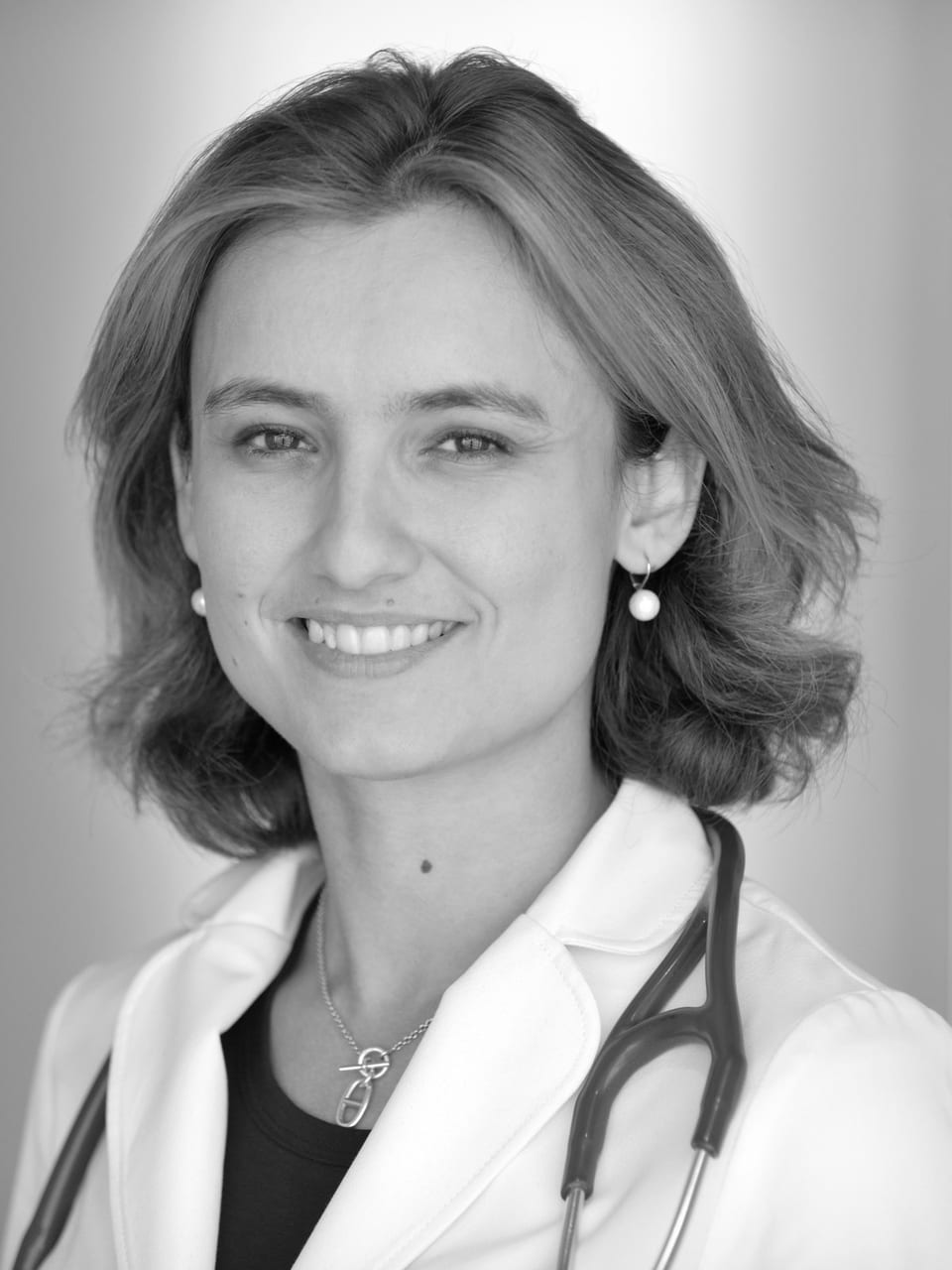
Jenelle Jindal, MD
Jenelle Jindal, MD is a neurologist and poet who co-founded Poet Doctor to study the craft of doctoring. Her work brings clinical experience and poetry to questions about physician judgment, responsibility, and the use of AI in medicine.
She studied Biological Sciences and Linguistics at Stanford University, earned her medical degree at Yale, and completed her neurology residency and vascular neurology fellowship at Massachusetts General Hospital and Brigham & Women’s Hospital, affiliated with Harvard Medical School.
Her short lyric poems draw on close observation. To protect patient privacy, poems with clinical themes are imaginative literary works shaped by artistic transformation. They are not case reports or factual clinical accounts.
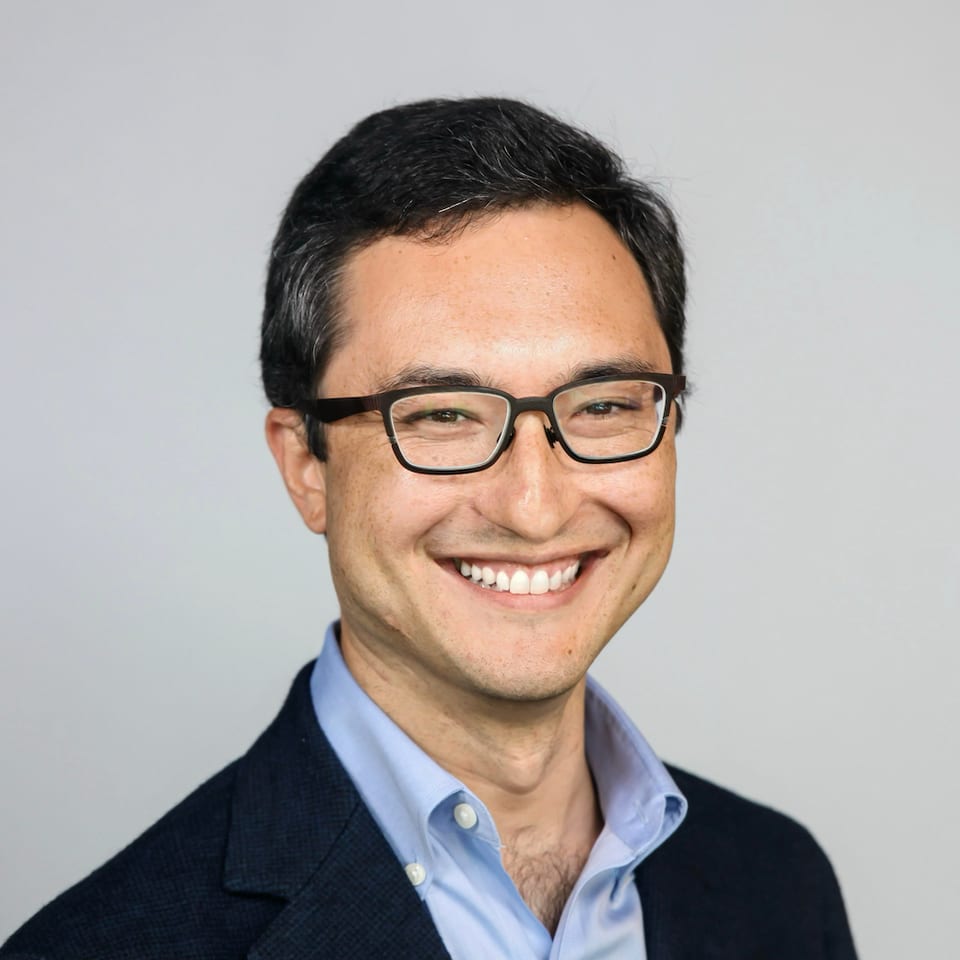
Christopher Baer
Christopher Baer is a co-founder of Poet Doctor whose work connects medical humanities and technology. He brings a dual focus in science and engineering to questions in the philosophy of medicine and to how AI will transform medicine and society.
His interest in data science helps guide the institute's digital humanities work, including computational analysis of physician writing and historical medical archives.
He holds a B.A. in Human Biology with a concentration in Neuroscience and a minor in Mathematical & Computational Science from Stanford University. His career in technology includes product and strategy leadership at eBay, Tripadvisor, and Wish.
Read more about Christopher's background and work at baeronline.com.
06.Collaborate
We welcome collaborators in the humanities, medicine, AI and computer science, and philanthropy. We are looking for people who want to help research, teach, or support the study of doctoring.
You can also follow the work on Instagram at @thepoetdoctor (opens in new window), or reach us at hello@poetdoctor.com.