Narrative Medicine
Parallel Charts
The same clinical encounter, seen through three lenses — exploring what each form reveals about doctoring.
Narrative medicine is a clinical practice developed by Rita Charon at Columbia University that trains physicians in close reading and reflective writing to strengthen their capacity for attention, empathy, and ethical engagement with patients (Charon, 2006). Its signature exercise is the parallel chart — a private, reflective text written alongside the official medical record. The chart records disease, the biomedical account of lab values and diagnoses. The parallel chart records illness, the lived, felt, intersubjective experience. Arthur Kleinman (1988) argued that the biomedical model tends to overlook illness.
Narrative medicine training has long involved both prose and poetry as forms of clinical reflection. Most published parallel charts — including those in Charon’s foundational work — are written in prose. Here, we choose to present each scenario through both a narrative prose reflection and a poem alongside the SOAP note. The choice of form matters: prose allows the clinician to narrate the encounter — to process uncertainty, sit with silence, and trace the contours of what was felt but unspoken. Poetry compresses attention into image, holding contradictions that prose resolves too neatly.
The Three Lenses
Each encounter, three forms
I
SOAP Note (EHR)
The language of the institution: subjective complaints, objective findings, assessment, and plan. It records what Kleinman (1988) calls disease: the biomedical account that the institution needs.
II
Narrative Prose
Reflective first-person writing in the tradition of Charon’s parallel chart (2001) — turning toward what the chart note omits: the silence after a difficult question, the body language across the exam table, the “absent body” (Leder, 1990).
III
Poetry
Observational verse in the tradition of Williams, Campo, and Holub — compressing attention into image. Where prose processes experience into coherence, the poem holds what resists resolution.
Gallery / 13Charts
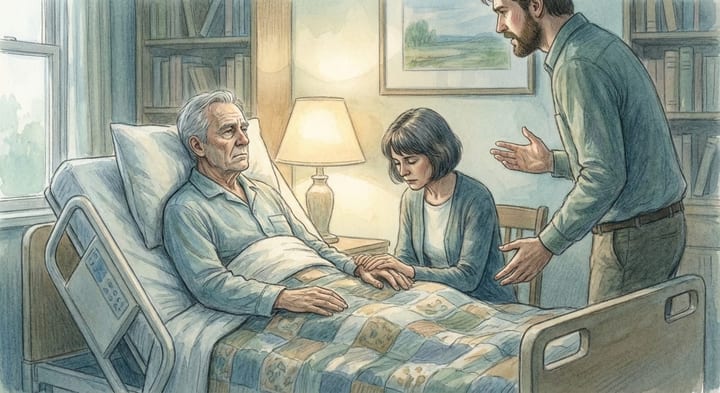
nephrology
ESRD and the Decision to Stop Treatment
A 58-year-old man with diabetes-related end-stage renal disease on hemodialysis three times weekly presents for a…
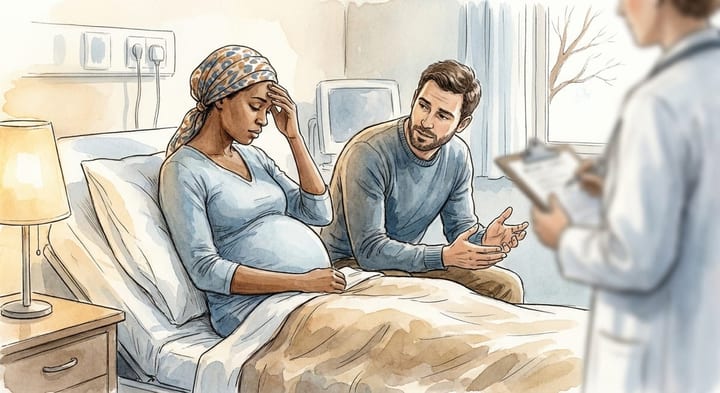
obstetrics
Preeclampsia at Thirty-Four Weeks, Interpreter on the Line
A 29-year-old Congolese refugee at 34 weeks gestation presents to labor and delivery with severe headache, visual…
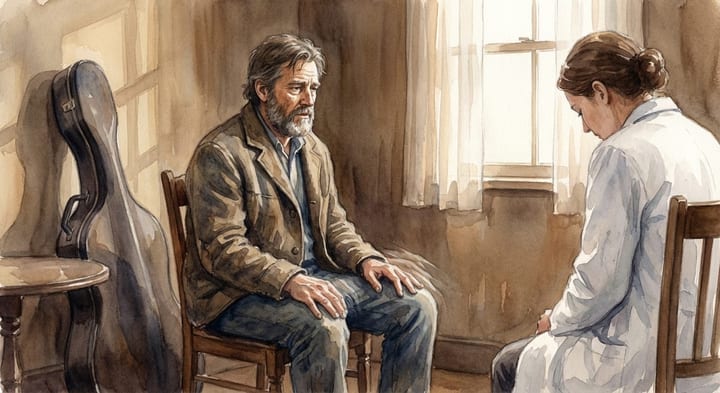
neurology
The Cellist with a New Tremor
A 61-year-old man, a professional cellist with the city symphony for 33 years, is referred to neurology for a six-month…
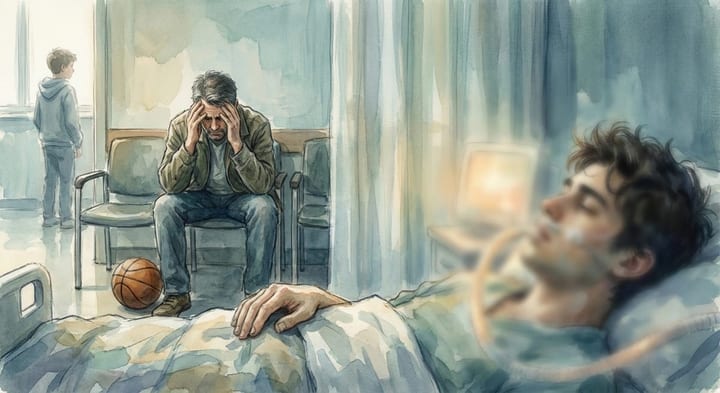
emergency-cardiology
Sudden Arrest in a College Athlete
A 19-year-old male college basketball player collapses during a preseason scrimmage and is found in ventricular…
geriatrics-palliative
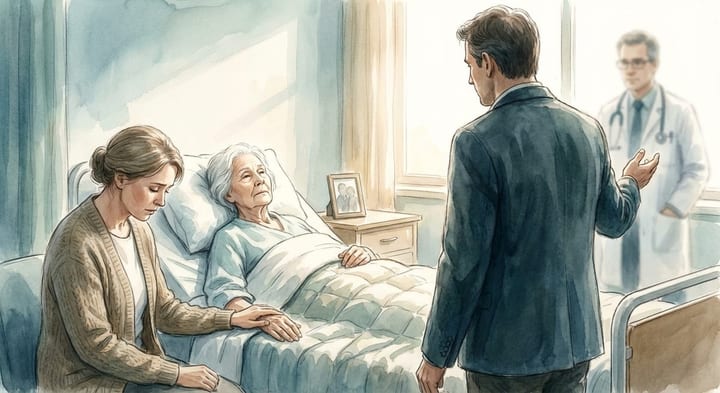
Code Status and the Son Who Came Late
An 84-year-old woman with advanced Alzheimer's disease is admitted from her nursing facility with aspiration pneumonia.…
oncology-urology
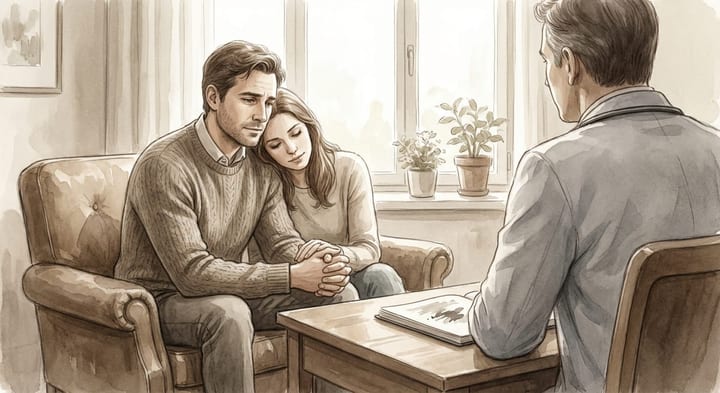
A Testicular Mass Before the Wedding
A 28-year-old man presents to urology after his fiancee found a painless testicular mass during intimacy. Ultrasound…
primary-care
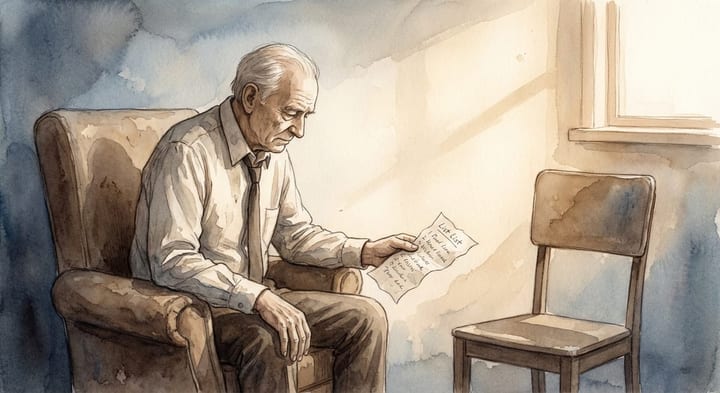
Three Weeks After Margaret
A 79-year-old man presents for a routine follow-up three weeks after his wife of 54 years died from pancreatic cancer.…
rheumatology
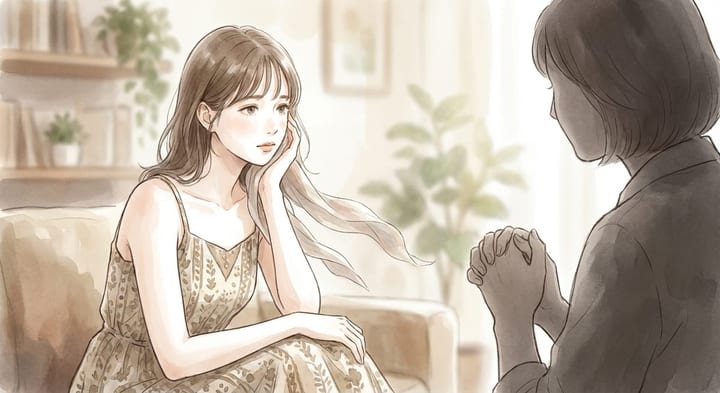
The Butterfly Rash and the First Day of School
A 26-year-old woman presents to rheumatology after a two-month workup for fatigue, joint pain, oral ulcers, and a malar…
pulmonology
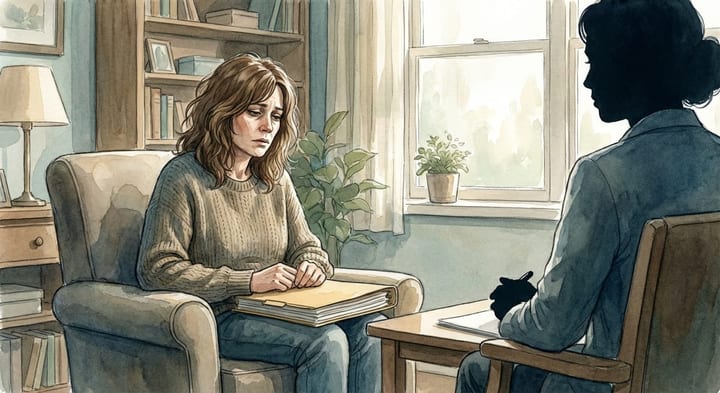
Eighteen Months Out and Still Not Back
A 43-year-old high school teacher and former marathon runner presents to a post-COVID recovery clinic 18 months after a…
orthopedic-surgery
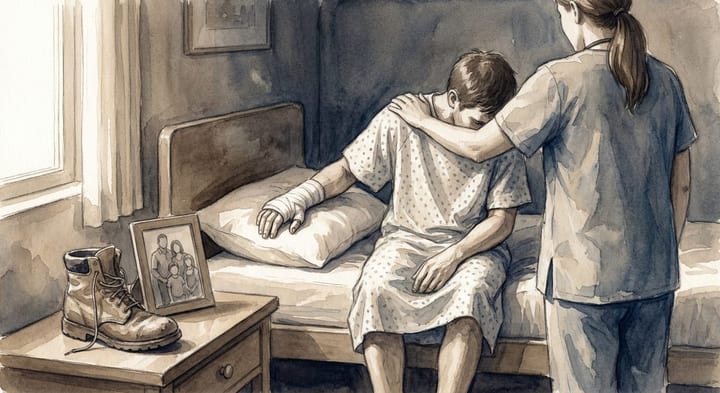
A Crushed Hand and a Family's Livelihood
A 38-year-old right-hand-dominant construction worker is brought to the trauma bay after a concrete slab fell on his…
maternal-fetal-medicine
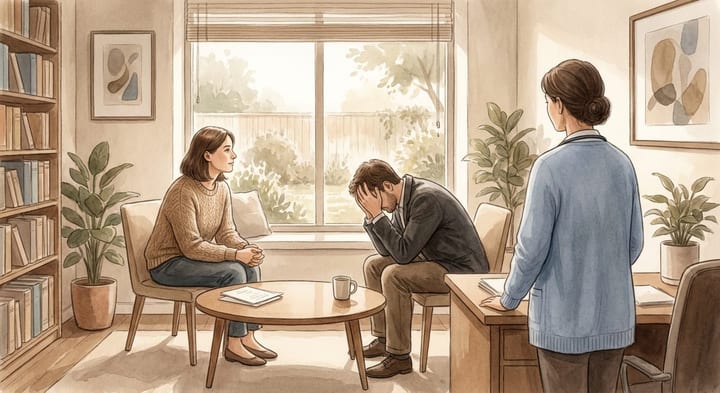
Two Parents, One Diagnosis, Two Silences
A couple at 16 weeks gestation receives a confirmed prenatal diagnosis of trisomy 21 after amniocentesis. The mother, a…
pediatric-oncology
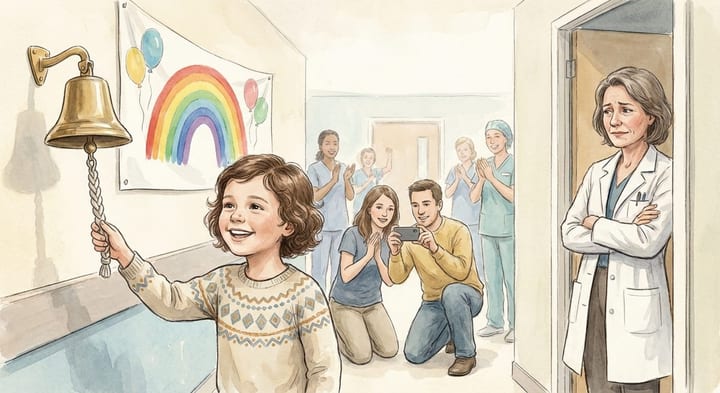
The Bell and What Follows the Ringing
A 6-year-old girl with B-cell acute lymphoblastic leukemia completes her final round of maintenance chemotherapy after…
sports-medicine
The Third Hit and Who Gets to Decide
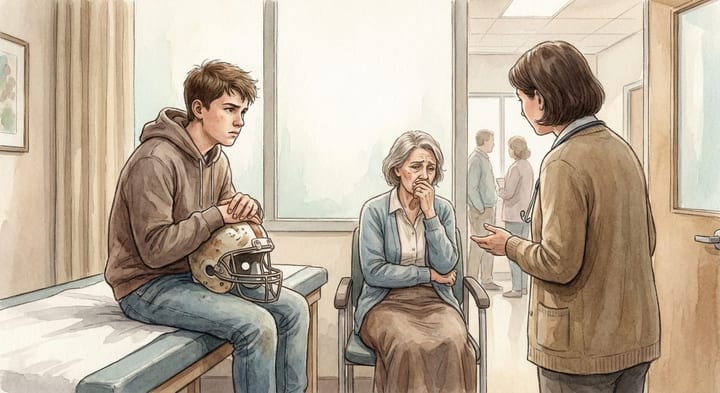
A 16-year-old varsity football player is brought to the sports medicine clinic by his mother three days after…
Questions
Inquiry & Framework
The SOAP note is the standard documentation format in Electronic Health Records. Subjective: what the patient reports — symptoms, history, concerns in their own words. Objective: measurable clinical findings — vital signs, lab results, physical exam. Assessment: the clinician’s interpretation — diagnosis, differential, clinical reasoning. Plan: the course of action — medications, referrals, follow-up, patient education.
An Electronic Health Record is the digital version of a patient’s medical chart. It contains clinical notes, lab results, medications, imaging, and administrative data. The EHR structures medical knowledge into standardized, searchable fields — a powerful tool for clinical care, but one that necessarily compresses the complexity of a human encounter into categorical data.
Narrative medicine is a clinical practice developed by Rita Charon at Columbia University that uses close reading and reflective writing to strengthen the clinician’s capacity for attention, representation, and affiliation with patients. The parallel chart — a private, reflective text written alongside the official medical record — is its signature exercise. Where the medical chart asks “what happened clinically?”, the parallel chart asks “what happened humanly?”
Physicians have written poetry for centuries. William Carlos Williams brought imagist precision to clinical observation. Rafael Campo writes formal sonnets about HIV care and identity. Jack Coulehan explores the examined life of primary care. Miroslav Holub, a Czech immunologist, treated science and poetry as parallel ways of knowing. These poems are written in that tradition — attending closely to the sensory detail of the clinical moment, finding in it something that resists the chart note’s certainty.
No. These are entirely fictional clinical scenarios generated by AI as educational and reflective exercises. No real patient information is used. The scenarios are designed to be medically plausible and emotionally authentic while remaining clearly theoretical.
Yes. These parallel charts are designed for use in medical humanities education, narrative medicine workshops, philosophy of medicine seminars, and creative writing programs. They can serve as discussion prompts, writing models, or starting points for students to create their own parallel charts.
Institutions
Where Parallel Charts Are Taught
Columbia University
Program in Narrative Medicine
Rita Charon invented the parallel chart here in 1993. Chapter 8 of her foundational text defines the method.
Program details →CUNY School of Medicine
Narrative Medicine Track
Multi-phase program building on Columbia’s model. Students complete 45 hours across semesters.
Link currently unavailable
University of Arizona
Program for Narrative Medicine
Founded 2015 within the Department of Bioethics and Medical Humanism.
Program details →University of Alberta
Family Medicine Residency
Residents wrote 10 parallel charts over 10 weeks, meeting bi-weekly for narrative inquiry.
Clandinin & Cave, Medical Education, 2008 →U.S. Department of Veterans Affairs
Whole Health Library
The largest institutional adoption outside academia. Recommends parallel charts for veteran care.
VA resource →Thomas Jefferson University
Narrative Medicine Workshop
Structured curriculum for interprofessional healthcare students.
Slater, Salzman & Frasso, 2020 →Oregon Health & Science University
Reflective Practice Curriculum
Nine required sessions across four years. Reflective writing alongside clinical experiences.
Chan et al., Teaching and Learning in Medicine, 2026 →Scholarly Evidence
The Research Behind Parallel Charts
Related Projects
Parallel Charts Online
The closest precedent we have found is a single example on the VA Whole Health Library page, where resident Chieu Foo (UT Medical School–Houston) wrote both a narrative reflection and SOAP note for the same patient encounter — displayed sequentially, not side by side. Italian pulmonologists have also published parallel chart excerpts from COPD care, though only the reflective writing, without the clinical documentation.
Several outstanding journals publish creative writing born from clinical encounters — The Intima (Columbia), Pulse, and the Bellevue Literary Review among them — but these are standalone literary works, not paired with the clinical record. Merck Manuals once hosted a student parallel charts section, but it has since been taken down.
If the three-lens format here — SOAP note, narrative prose, and poetry about the same encounter, presented in parallel — resembles work you know of, we would genuinely love to hear about it. The more examples of this form that exist in the world, the better.
Know of a parallel chart project we’ve missed? Let us know and we’ll add it here.