Research
AI & Doctoring
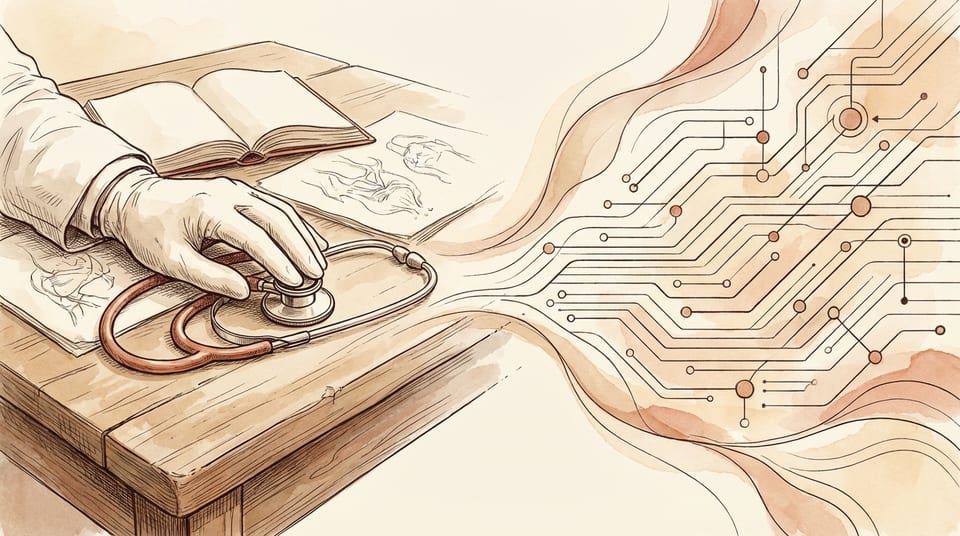
Medicine has changed many times. AI is one of the newest changes. The question is how medicine should adapt when intelligent systems enter clinical practice.
Poet Doctor examines what should be delegated, what should be redesigned, which responsibilities must be preserved, and how professional education should change.
What becomes more important
Judgment
Which forms of judgment remain distinctly physician responsibilities, and how should they be strengthened as AI systems grow more capable?
Interpretation
How should physicians interpret machine-generated outputs in ways that remain accountable to patients, context, and clinical experience?
Communication
What does it mean to explain decisions well when the pathway to a recommendation involves both human and machine reasoning?
Responsibility
How should responsibility be understood and developed when knowledge work is shared across people, systems, and tools?
Responsible inquiry
Poet Doctor's research asks what physicians should continue to notice, judge, communicate, and own — and how those capacities can be strengthened. Responsibility stays at the center.
Read essays and findings
Follow ongoing writing about physician judgment, responsibility, and the future of doctoring.