Le Regime du corps: An Old French regimen of health and bodily care, excerpted from Wellcome MS 546, ff. 1r-21r
By Aldobrandino of Siena · Published 1350 · Old French with English translation · Wellcome Collection
Historian’s note. This text records the medicine of its own time, and later evidence has replaced most of it. It is not medical advice. We read it as history, and we ask what, if anything, connects it to medicine today.
Historian’s note. This text records the medicine of its own time, and later evidence has replaced most of it. It is not medical advice. We read it as history, and we ask what, if anything, connects it to medicine today. More on how we read old medical books
We have not yet reviewed the translation of this book.
Le Regime du corps
An Old French regimen of health and bodily care, excerpted from Wellcome MS 546, ff. 1r-21r
By Aldobrandino of Siena, 1350. The edition has the page scans, the Old French text, and an English translation.
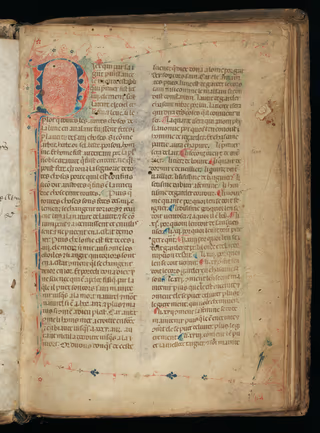
Aldobrandino of Siena wrote Le Régime du corps in Old French in 1256 for Beatrice of Savoy, widow of Raymond Berengar V of Provence. She was about to travel to see her four daughters, who had married the kings of France and England, Richard of Cornwall and Charles of Anjou. The four books cover the general rule of life, the care of each part of the body, foods and drinks, and physiognomy. This edition presents folios 1r–21r of Wellcome MS 546, a parchment manuscript copied in the middle of the 1300s.
Scholars treat the Régime as the first medical treatise composed in French rather than translated from Latin. Aldobrandino drew on Avicenna, Isaac Israeli and al-Rāzī, and he cites Isaac by name in his entries on food. Chapters cover pregnancy, recovery after childbirth and the choice of a wet nurse. The work survives in 78 known manuscripts. Zucchero Bencivenni translated it into Italian at Florence in 1310.
| Date | Place | Work | Notes |
|---|---|---|---|
| 1000s | Monte Cassino | Liber dietarum particularium By Isaac Israeli | Isaac Israeli’s book on particular foods, in the Latin translation of Constantine the African, who brought Arabic medicine to Monte Cassino and Salerno. Aldobrandino took “the argument and substance” of his third book from it. His first two books draw on Avicenna’s Canon, and his fourth translates al-Rāzī. |
| 1256 | France | Le Régime du corps By Aldobrandino of Siena | Written in Old French for Beatrice of Savoy. Aldobrandino came from Siena and died at Troyes about 1287. The Treccani biography says he “seems” to have served Louis IX as physician. An anonymous Latin version, the Liber medicine in practica, was later translated from the French. |
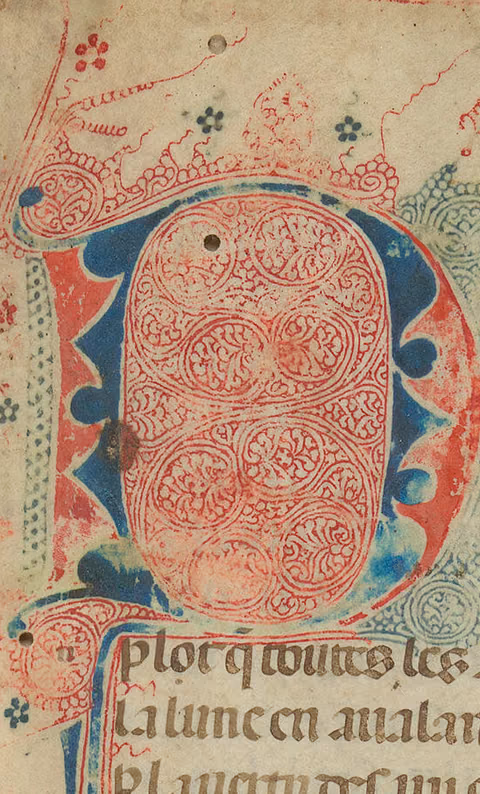
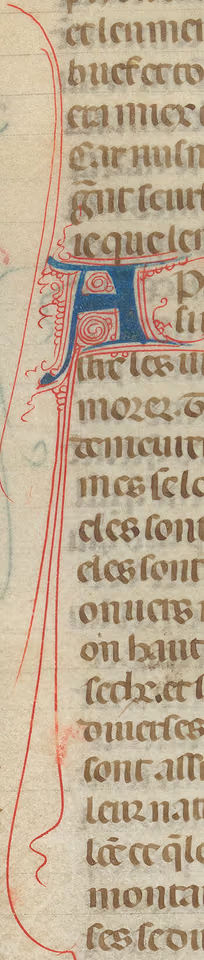
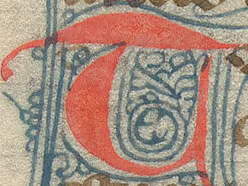
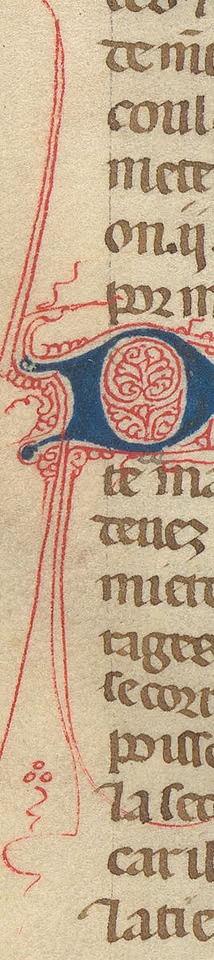
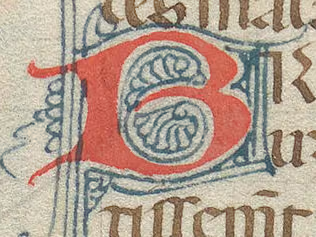
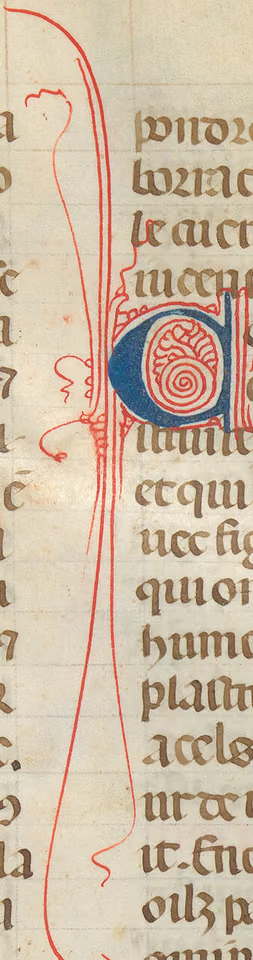
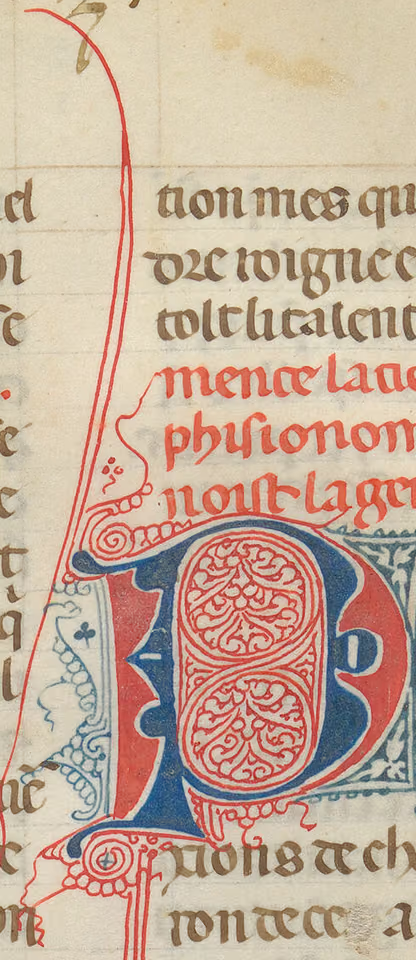
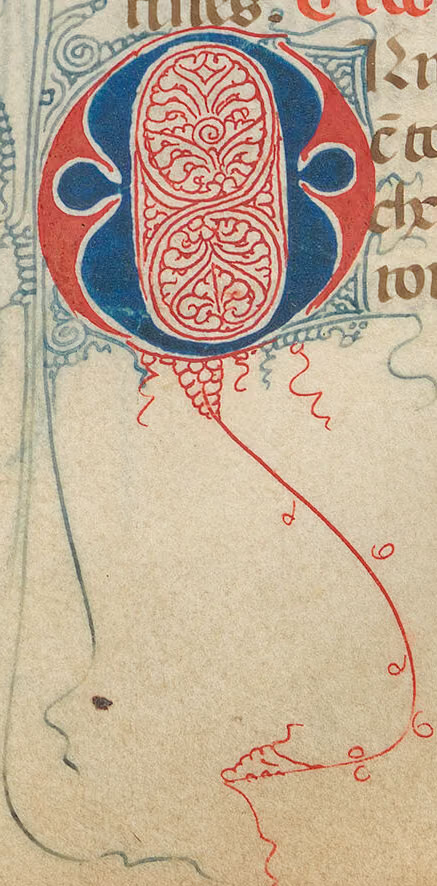
| c. 1350 | Wellcome MS 546 | A parchment manuscript of 91 leaves in double-column gothic script, with seven medical treatises in French and Latin. The Régime fills folios 1r–21r and opens with a red and blue initial D. It ends with a short uroscopy presented as a letter from Hippocrates to Caesar. Jean-Baptiste-Louis Chomel (1700–1765) owned the manuscript, and it later belonged to Édouard-François-Michel Bosquillon. |
Illustrations
100 illustrations. Each opens its page in the reader, zoomed to the picture.
-
-

-

-

tain young. **Of medicine** Since we have spoken of the science, we wish to speak of another part of medicine. Medicine is a science by which one knows all the natures of the body of man and by which one preserves the health of the body and removes diseases, and this science has two parts. One is called theoretical and the other practical. And we wish to judge that there are three manners of fevers. One occurs when the humors are corrupted, and this is called putrid fever. The other occurs in the members, which is called hectic. The third, which comes from the spirits, is called ephemera. By practice we know how one must work and preserve the body in health, and remove the disease. Now we will speak of the theoretical and will leave the practical. And we will speak first of the air. **Of the air** -

of each person. **Of drinking.** -
Now we will tell how you should use them. To drink water fasting is good, and when one is tired it is bad; rather it is fitting that one eat a little beforehand. And a sanguine man who has great ventricular heat, and drunk people when they are thirsty, can use it more boldly, provided they do not take too much all at once. Cold water gives the desire to sleep, and takes away the desire to eat. Hot water does harm to the stomach, and makes one go to the chamber well. Of other waters, how one should advise upon them, we will say no more right now, for we will leave it aside for now. Now we will speak of wine. **Of wine.** -
**For a man to labor.** -

**You must hear of sleeping:** **For a man to labor.** -

-

whoever wishes to bathe in cold water should pay attention to his nature, and this is that he be hot and young and of a moist nature, and it should be in summer, for whoever does it temperately makes the natural heat return inside the body. **On lying with a wo** **man.** Every single man who has sense and discretion must put his attention and all his power to knowing how and when one should cohabit with a woman, because it can harm and help. Know that the matter which departs from the man in doing it with the woman is a superfluity of the humours which nourish the members, and therefore we will teach you that all things that nourish man are cooked first in the stomach, and medicine calls this the first digestion, and then in the liver. And this is the second digestion, and then in the veins of the body, and this is the third digestion. And when this nourishment goes out of the members and turns to the substance of flesh, and into the members, and this is the fourth digestion, and from this departs the matter which we have named. Although Hippocrates says that it departs more from the brain than from elsewhere, for he says that whoever would cut two veins which are behind the ears, the one to whom they were cut would not have the power to engender nor to lie with a woman. -

be empty, and when he will be hot, than when he will be cold. **Of accidents.** **I**t is not necessary to speak of a thing that the physicians call *accidentia anime*. That is, because they are things more proper to the soul than to the body. And these things are ire, wrath, gladness, fear, shame, sadness, anguish, thought; and whoever does not guard against these things, they destroy the body and the soul suddenly, so everyone must guard against them to the best of their power, first of all by the spirits which first testify inside and afterwards come outside, just as you see first that a man turns pale and afterwards becomes red, and this changes the body of a man many times. Thoughts are of another manner, and you may know that thinking and staying awake, if it is not done in moderation, destroys the body. And there is another manner of things, such as melancholy, which much destroys the body, and one can remove it by purging the body of humours and by these electuaries, such as the *leticia* of Galen, and having joy and gladness. As for the others, such as having ire and wrath, it goes hard to overcome the cause from which they come. **Of bleeding.** -
**I**t is not necessary to speak of a thing that the physicians call *accidentia anime*. That is, because they are things more proper to the soul than to the body. And these things are ire, wrath, gladness, fear, shame, sadness, anguish, thought; and whoever does not guard against these things, they destroy the body and the soul suddenly, so everyone must guard against them to the best of their power, first of all by the spirits which first testify inside and afterwards come outside, just as you see first that a man turns pale and afterwards becomes red, and this changes the body of a man many times. Thoughts are of another manner, and you may know that thinking and staying awake, if it is not done in moderation, destroys the body. And there is another manner of things, such as melancholy, which much destroys the body, and one can remove it by purging the body of humours and by these electuaries, such as the *leticia* of Galen, and having joy and gladness. As for the others, such as having ire and wrath, it goes hard to overcome the cause from which they come. **Of bleeding.** -

-
-
And you should know that there are two kinds of leeches that are venomous, as the philosopher says, which are those that have large heads, and that have a colour between green and black, and that are born therein, and that are in swamps, these are bad. And those that dwell in running water or in fountains, and have a red and dark colour, and have a small head and resemble a mouse's tail, are good. Now those that are most valuable have a red belly and are reddish on the back, provided that they are in running water, these are the best. Now let us return to what they are good for. They are effective for freckles, and for those who have a bad colour, red and dark and pimply, and for a wound made a long time ago, provided that one has first been bled from a vein, as Avicenna says. The blood that they suck issues from deeper than that of cupping glasses. And you must keep them for one day after they have been caught, and put them in clear water. And it is a good thing to nourish them with lamb's milk, and to rub well the place where one must apply them, and to put there a little goat's blood so they attach more quickly. And when you wish to remove them, take a little ash, or vair bristle, or burnt flax, and put it on top, and they will fall off immediately. And then let the blood continue to purge through the bleedings of the cupping glasses, and if you wish to stanch it, take a cloth soaked in vinegar and put it on top, or powder of burnt mussel, or burnt gallnut, or well-frayed cloth, for these things stanch it. **Of purging.** -

**Of vomiting**. -
On guarding against pestilence. -
-
-
For those travelling. -
To know about the pregnant woman -
-

**Concerning each age.** -
of wine afterwards. And one must refrain from eating until it is digested. For these things delay old age, as Avicenna says, and when one passes 70 years, one must guard against purging and bleeding unless great need causes it to be done, and they use good foods that are easily digested, and drink good wine, old and red, and guard against white and new wine, and use electuaries of *dyacinimon*, *dyacitron*, *piperion*, of ginger, and all hot electuaries. **Of hair in all manners.** -

-
dregs of vinegar, and one should anoint oneself with it often; this will make the hair return. **Of the eyes, we will say how, etc.** -

Whoever wishes to preserve the health of the eyes, let him guard against dust and smoke, and from the wind, the sun, and from looking at things that are too bright and too delicate, such as small letters and all things by which the sight is strained, and from weeping, and from sleeping after eating, and from lying too much on one's back, for this is the thing that most harms the sight, and let one guard against bad foods and bad wines from which bad fumes can come, such as leeks, garlic, onions, and from things that are too salty, and from becoming drunk, and from vomiting too much, because of the humours of the head that come into the eyes. And a certain remedy to strengthen and clear the sight is to thrust one's head into clear, cold water, and to open the eyes within it. And using fennel water made in the manner of rosewater is worth much. Again, take tutty that is made into a fine powder and diluted with juice of calamint, and afterwards strain it finely, provided it has remained there for one day, and put it in the eyes, and this greatly preserves the sight and does not let any humour come there. Again, take the juice of a sweet pomegranate and the juice of another that is sour, and let them be put into two phials that are well stopped up; and one lets it stay until twenty days. Then one must remove the clear part through a cloth, and throw away the dregs, and make into powder aloe and black pepper and long pepper and sal ammoniac, of each one drachm, and let them be finely ground and equally diluted in the juice of the apples, and you will use it and strain it. And the older this medicine is, the more it will be worth. And it is a proven medicine, as Rhazes says. **Of the ears.** -
the water, you can remove it in this manner. Take a small quill or silver tube and put it into the ear and pull, and sneeze and cough; it is very good, provided that the head leans towards the ears where the water entered. Again, take cotton and put it inside the ear, provided that what is outside is moistened with a little oil, and light it, for the heat of the fire will draw the water to itself. And to preserve the health of the ears, it is very good to put in two or three drops of bitter almond oil, provided that the oil is lukewarm, for hot and cold things are harmful. And to keep the ears from abscesses and swellings that willingly appear there, if you can perceive when swellings will come to the face and the head will be hot, take juice of mercerla, mix it in vinegar and strain it, and every week put a little of it into the ears once or twice; this is a proven thing for avoiding illness. **Of the teeth.** -

-
Now we will tell you about **the stomach.** -
**Of the heart.** -

**Of the regimen of the liver.** -
Wheat is a grain temperate by nature above all grains, and its nature is divided by mixing and by the earth where it grows. And one must ensure that it is grown in good earth and clean of all things, and between old and new, and kept in a house where the wind can enter. For the blood that is engendered is more temperate than the others, and the bread is hotter than the wheat, and it depends on the oven. **Of bread.** -

members by the will of our Lord, and the heart is also like a fountain to the other members, and the form of the heart is wide below and sharp above in the manner of a pinecone. And it rests in the body of man inverted. For the head rests towards the feet and the root towards the head, and although it is in the middle of the chest, the head hangs a little more towards the left. And to guard the heart and maintain the body, I will tell you the natural complexion of each. The signs of the naturally hot complexion of the heart are having a hot and hairy chest, and a strong and rapid pulse, and deep breath. And he is bold and fierce of will. They must guard against hot things. The sign of the cold complexion is having a narrow chest, if it does not have faults of other members. That is to say, the heart hot and the brain cold, so that because of the heat of the heart the chest could not be wide, but instead is narrow because of the coldness of the brain, and the pulse small and narrow, and the body slow and fearful, and he will resemble a woman in all ways. The signs of the moist complexion are similar to those of the cold. And if the complexion of the heart is hot and dry, or hot and moist, or cold and dry, or cold and moist, the signs will mix as we have said, and each shall use things according to his natural complexion. And the special medicines for the heart are jet, gold, and silver, bugloss, basil. Hot things for the cold heart are ginger, diamber, silk, saffron, cloves, cubebs, Indian leaf, pearls, marguerites, sandalwood, white coral. These are things to maintain the heart in health. **Here begins the second part** -

-
-

Wine is divided in many ways according to its substance, and according to whether it is new or old. White, greenish, and clear wine is less hot and makes one urinate well, and those can use it who have a hot liver, and one should use it in summer. Clear and red wine is hotter. Black and thick [wine] is not as hot, but it swells the stomach. And for those who have diarrhea to bind, it is good to use. Sweet, thick, and new wine heats and gives nourishment above all others. Old wine swells and easily corrupts in the body. Wine of one year, or of two, has a nature contrary to that one, but -

Oats and spelt are cold and have a bitter substance, and are worth more to those who are of a hot nature, and to remove illness than to preserve health, and are useful for swelling which comes about through windiness, if one puts them on top, and for those who are hectic and emaciated and wish to fatten up. In this manner, take flour of oats or of spelt and mix it with a decoction of wheat bran with hot water, and with almond milk, and with sugar, and with candy, and with penides, and two egg yolks. And have it cooked in the manner of gruel. And this is good for those who wish to fatten up and who are emaciated due to hot illnesses. **Of bran.** -

...not well in the stomach and makes the belly rumble and engenders stones and blocks the pathways of the liver. And if the wheat is hot with milk it makes good blood, and the bread that is worth most is that which cooks soonest in the stomach, provided that it is well leavened and a little salted, this is the best. **Of barley.** -
Oats and spelt are cold and have a bitter substance, and are worth more to those who are of a hot nature, and to remove illness than to preserve health, and are useful for swelling which comes about through windiness, if one puts them on top, and for those who are hectic and emaciated and wish to fatten up. In this manner, take flour of oats or of spelt and mix it with a decoction of wheat bran with hot water, and with almond milk, and with sugar, and with candy, and with penides, and two egg yolks. And have it cooked in the manner of gruel. And this is good for those who wish to fatten up and who are emaciated due to hot illnesses. **Of bran.** -

**Of apple wine.** -
**Of ale.** -

**Of meats.** -

**Of ale.** -

**Of meats.** -

**Of ale.** -
-

Onions are hot and dry and cause thirst and engender thick humours, and they strengthen the nature for intercourse with a woman, and it is beneficial to make a plaster upon the bite of a rabid dog, and it is good to eat with bad foods to remove the harm. **On garlic.** Garlic is hot and dry in the beginning of the fourth degree, and removes ventosity and quenches thirst and makes a man lustful, and it is bad for those of a hot nature to use them, because they make the head ache; and when it is cooked and one holds it in their mouth, it assuages the pain of the teeth and clears the voice and removes a heavy cough. **On scallions.** -
Garlic is hot and dry in the beginning of the fourth degree, and removes ventosity and quenches thirst and makes a man lustful, and it is bad for those of a hot nature to use them, because they make the head ache; and when it is cooked and one holds it in their mouth, it assuages the pain of the teeth and clears the voice and removes a heavy cough. **On scallions.** -

Goat's meat is cold and dry, and it is not good to use for those who are of cold natures, and one should not use it except when it is young. Meat of fallow deer and stag are cold and dry and engender thick and melancholic blood, but stag meat, when it is young, is better than all. Hare meat is dry and engenders melancholy. **On geese.** -
-

Geese are of diverse kinds and engender thick blood and melancholy and bad breath. And the broth, when drunk, is beneficial to those who are bitten by a rabid dog, and the dung, when it is drunk fasting, lets no one get drunk. **On leeks.** -

Goat's meat is cold and dry, and it is not good to use for those who are of cold natures, and one should not use it except when it is young. Meat of fallow deer and stag are cold and dry and engender thick and melancholic blood, but stag meat, when it is young, is better than all. Hare meat is dry and engenders melancholy. **On geese.** -

Goat's meat is cold and dry, and it is not good to use for those who are of cold natures, and one should not use it except when it is young. Meat of fallow deer and stag are cold and dry and engender thick and melancholic blood, but stag meat, when it is young, is better than all. Hare meat is dry and engenders melancholy. **On geese.** -

-
-

-
-

-

Fennel is hot and dry in the second degree, and it is valuable to use in all fevers of cold humours, and it breaks the stone of the kidneys and of the bladder. **Of parsley.** -

Hyssop is of two **Of hyssop.** kinds: one grows in gardens, the other in mountains. That of the gardens is hot and dry in the third degree, and it makes for good color, and it is valuable for those who cough and who have a congested chest. Especially whoever drinks waters or figs in which hyssop has been cooked. **Of watercress.** -
-
-

nourish themselves in flowing rivers, that breathe pure and healthy air, and are of good flavor. And they should not be too fat, and should have firm flesh. And one must beware of those that are in ponds where there is mud and filth. Those that come out of the sea and go into fresh water are the best, because their flesh is not too fat. And understand generally that all sea fish are better than freshwater fish, because they have firmer flesh; and those that have thick flesh are much better than those that have none. **Of eggs.** -

Cheese, according to Isaac, is generally all bad, for it engenders pain in the epigastrium and pain in the sides and stone in the kidneys; and he who eats it fresh, it has the nature of cooling the epigastrium; and the cheese that is best is between old and new, which has a good flavor. **Of milk.** -

Cheese, according to Isaac, is generally all bad, for it engenders pain in the epigastrium and pain in the sides and stone in the kidneys; and he who eats it fresh, it has the nature of cooling the epigastrium; and the cheese that is best is between old and new, which has a good flavor. **Of milk.** -
Cheese, according to Isaac, is generally all bad, for it engenders pain in the epigastrium and pain in the sides and stone in the kidneys; and he who eats it fresh, it has the nature of cooling the epigastrium; and the cheese that is best is between old and new, which has a good flavor. **Of milk.** -
meſtier nen a . De poiure. -
Cloves are hot and dry in the third degree and have the nature of comforting the virtue of the body, and they destroy windiness and bad humors, and they are valuable to those who have lost their breath in such a manner: take gum tragacanth and have it soaked for a night in barley water, and take cloves and mastic and gum arabic, and make a powder of them, and mix it with the gum tragacanth and make pills of them, and the sick person shall hold them for a long time in his mouth, and use the wine in which cloves will be cooked. And it heats and strengthens the brain. **Of galangal.** -
powder of galangal with borage juice, it is valuable to those who have a weak heart, before they eat. **Of cumin.** -

-

Cinnamon is hot and dry in the second degree, and there are two kinds of it. Milk should be used fasting, and one must not eat afterwards until it has departed from the stomach. Ass's milk is above all others thinner and is valuable to use for those who thick and thin. The thick is not as hot, and grows in India, and one can keep it for sixty years, and it comforts the stomach and the liver and gives the desire to eat, and it comforts the brain and makes good breath. The thick is not as good as the other. **Of cloves.** -

-
Salt is hot and dry in the first degree and in the second degree, and there are many kinds, but we only use two: that which is made from the sea and is cooked in the heat of the sun, and the other which is made from wells and from ponds, boiling in cauldrons, and in French it is called *sel delice*, and in some countries, saline. And the other must be clear and white and of stones and other things, and gives appetite to eat, and removes abomination, but whoever uses it to excess, it engenders scabies and bad colour, and takes away the desire to use a woman. **Here begins the fourth part which is called physiognomy, by which one knows the complexion of man.** -

Salt is hot and dry in the first degree and in the second degree, and there are many kinds, but we only use two: that which is made from the sea and is cooked in the heat of the sun, and the other which is made from wells and from ponds, boiling in cauldrons, and in French it is called *sel delice*, and in some countries, saline. And the other must be clear and white and of stones and other things, and gives appetite to eat, and removes abomination, but whoever uses it to excess, it engenders scabies and bad colour, and takes away the desire to use a woman. **Here begins the fourth part which is called physiognomy, by which one knows the complexion of man.** -

-
Salt is hot and dry in the first degree and in the second degree, and there are many kinds, but we only use two: that which is made from the sea and is cooked in the heat of the sun, and the other which is made from wells and from ponds, boiling in cauldrons, and in French it is called *sel delice*, and in some countries, saline. And the other must be clear and white and of stones and other things, and gives appetite to eat, and removes abomination, but whoever uses it to excess, it engenders scabies and bad colour, and takes away the desire to use a woman. **Here begins the fourth part which is called physiognomy, by which one knows the complexion of man.** -

Salt is hot and dry in the first degree and in the second degree, and there are many kinds, but we only use two: that which is made from the sea and is cooked in the heat of the sun, and the other which is made from wells and from ponds, boiling in cauldrons, and in French it is called *sel delice*, and in some countries, saline. And the other must be clear and white and of stones and other things, and gives appetite to eat, and removes abomination, but whoever uses it to excess, it engenders scabies and bad colour, and takes away the desire to use a woman. **Here begins the fourth part which is called physiognomy, by which one knows the complexion of man.** -
Salt is hot and dry in the first degree and in the second degree, and there are many kinds, but we only use two: that which is made from the sea and is cooked in the heat of the sun, and the other which is made from wells and from ponds, boiling in cauldrons, and in French it is called *sel delice*, and in some countries, saline. And the other must be clear and white and of stones and other things, and gives appetite to eat, and removes abomination, but whoever uses it to excess, it engenders scabies and bad colour, and takes away the desire to use a woman. **Here begins the fourth part which is called physiognomy, by which one knows the complexion of man.** -
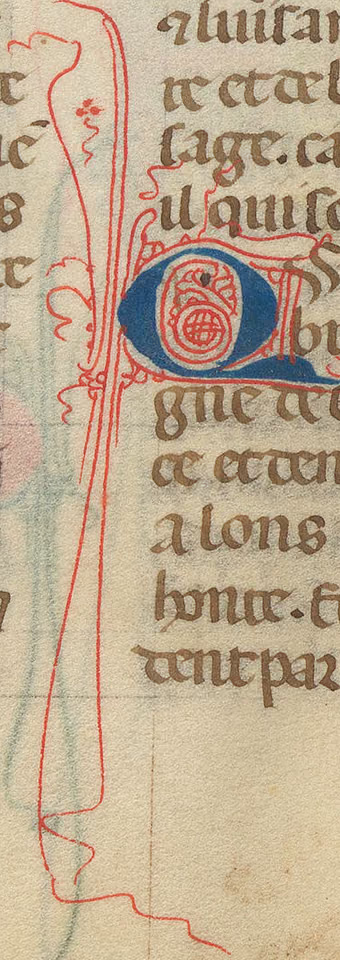
**W**hoever has dull and large eyes, he must be slow and lazy. And whoever has them swollen and small, he must be malicious and deceitful. And whoever has them strong and large, he is foolish and a great talker and does not fear shame. Whoever has very black pupils is lazy. And whoever has green eyes like a goat is foolish. And whoever has them moving and looks cunningly, he is treacherous, deceitful, and fickle. And whoever has them moving, and who looks steadily at one place, he is wise and crafty. And whoever looks just like a woman and whose eyes laugh readily and who always seems happy in the face, this one must be lecherous and modest and of a long life and of good morals. Whoever has large, big, and trembling eyes, he is slow and of a long life and a lover of women. Whoever has red and burning eyes, he is wicked and of bad habits. Whoever has trembling, small, and green eyes, he is easily angered and is a lover of women. Those who have them green and have them mixed as with the color of saffron, they are of bad habits and of a bad nature. And whoever has them small and prominent, it is a sign of foolishness and of a man who wants to do his own will. And whoever has them deep-set, small, and moving, and whose eyelids close and open readily, he is of a bad and venomous nature. Those that are black, and a little blue-grey, and are neither red nor citrine, but are clear and shining, they are of a good nature and of good habits and wise, for these are the best eyes that exist. **Of the eyebrows.** -
-

He who has a large mouth is a great eater and bold. He who has large lips is foolish and sluggish. And if they are poorly colored, it is a sign of illness. He who has small and weak teeth, and they are not thick, it is a sign of weakness and a short life. He who has them long and strong must be a great eater and of an evil nature. **Of faces.** -

**He who laughs willingly.** -
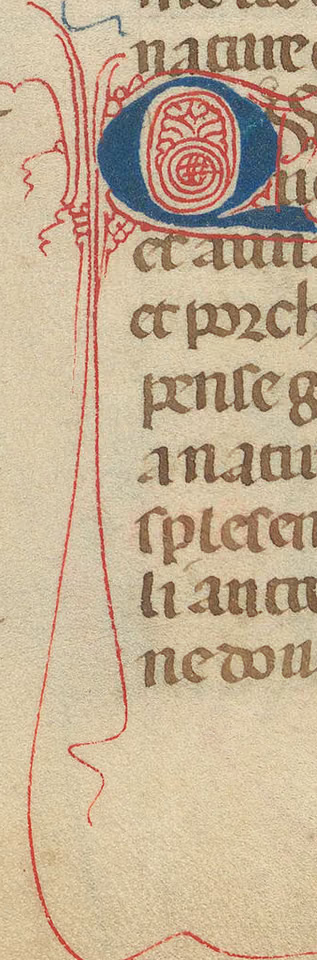
**He who laughs willingly.** -
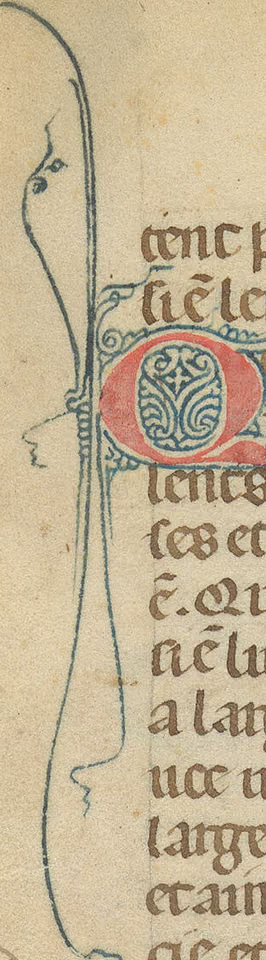
-

-

hang down toward the temples is sluggish and shameless. **Of the nostrils.** -

-

-

-
-
when he laughs and forcefully catches his breath, he is boastful. **Of walking.** -

when he laughs and forcefully catches his breath, he is boastful. **Of walking.** -

-
**Here begin the urines.** -

**This is the book that Hippocrates sent to Caesar, the emperor of Rome. Rubric.** -

-
-

-

**This is the book that Hippocrates sent to Caesar, the emperor of Rome. Rubric.**