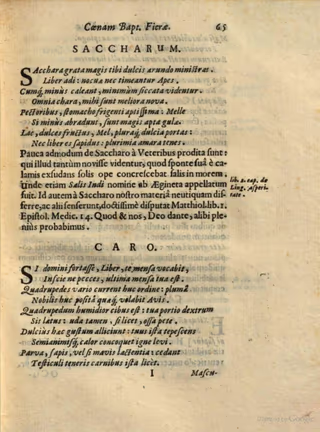
S A C C H A R U M.

Poet
Baptista Fiera
Form
Elegiac couplet
Open the page in the book
The page this poem fills. Each opens in the Coena, sive De cibariorum virtutibus reader.

Hover or tap a word to see its match.

THE sweet reed supplies you with more pleasing sugars.

Approach, Book: and let not the harmful bees be feared.

And since they heat less, they seem least dried out.

All are dear, new ones are better to me.

Most fitting for chests, for a chilling stomach: than honey

If they scrape less, they are more fitting for the gullet.

Milk, sweet fruits, honey, and many sweet things you bring:

Yet you are not a tasty book: you hold many bitter things.

SAcchara grata magis tibi dulcis arundo ministrat.

Liber adi: nocuæ nec timeantur Apes.

Cumq́; minùs caleant, minimùm siccata videntur.

Omnia chara, mihi sunt meliora nova.

Pectoribus, stomacho frigenti aptissima: Melle

Si minùs abradunt, sunt magis apta gulæ.

Lac, dulces fructus, Mel, pluraq́; dulcia portas:

Nec liber es sapidus: plurima amara tenes.
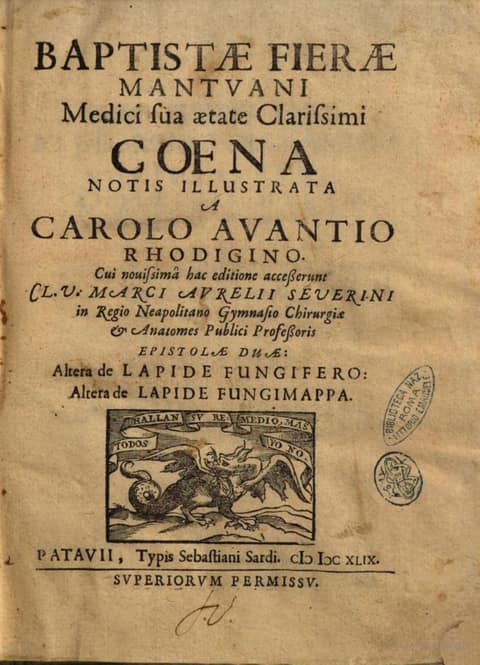
Title page of Coena, sive De cibariorum virtutibus
Title page of Coena, sive De cibariorum virtutibus , 1649

About this text

Provenance

This digital edition is derived from the Internet Archive copy of Battista Fiera's 1649 _Coena, sive De cibariorum virtutibus_, a Latin medical dinner poem with Carlo Avanzi's notes and related material.

Methodology

Each scan is treated as a page-level unit. The page image remains the authority for the edition. Local Kraken OCR used the Reichenau Latin early-print model as a reading aid, then Gemini generated scan-grounded Latin transcription and scholarly English translation from the images, the OCR aid, and the approved glossary. Word links connect the English translation to the Latin transcription and locations on the scans. 32 uncertain word-link decisions remain unlinked. Some links highlight only the text because the source word could not be located on the scan.

Rights

The Internet Archive metadata and IIIF manifest record the digital surrogate under the Creative Commons Public Domain Mark 1.0. Poet Doctor's presentation adds generated OCR, transcription, translation, navigation metadata, and editorial context.

Original scans: Internet Archive / Google Books ( Public Domain Mark 1.0 ).

Historian’s note. This text records the medicine of its own time, and later evidence has replaced most of it. It is not medical advice. We read it as history, and we ask what, if anything, connects it to medicine today. More on how we read old medical books