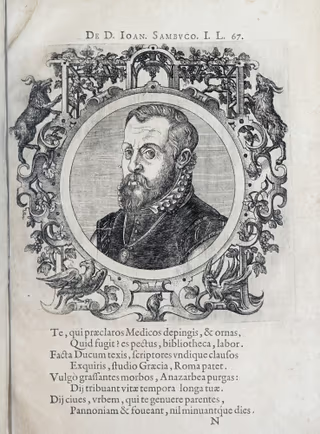
ON MASTER JOANNES SAMBUCUS. I. L. 67.

DE D. IOAN. SAMBVCO. I. L. 67.

Poet
I. L.
Form
Elegiac couplet
Open the page in the book
The page this poem fills. Each opens in the Icones veterum aliquot, ac recentium medicorum, philosophorumque elegiolis suis editae reader.

Hover or tap a word to see its match.

You, who depict and adorn outstanding physicians,

what escapes you? You are intellect, library, and labor.

You weave the deeds of leaders, you seek out writers hidden away

everywhere; through your study, Greece and Rome lie open.

You purge commonly raging diseases, you correct the Anazarbean writings:

may the gods grant long periods of time to your life.

May the gods cherish the citizens, the city, the parents who bore you,

and Pannonia, and may the days diminish nothing.

Te, qui præclaros Medicos depingis, & ornas,

Quid fugit? es pectus, bibliotheca, labor.

Facta Ducum texis, ſcriptores vndique clauſos

Exquiris, ſtudio Græcia, Roma patet.

Vulgò graſſantes morbos, Anazarbea purgas:

Dij tribuant vitæ tempora longa tuæ.

Dij ciues, vrbem, qui te genuere parentes,

Pannoniam & foueant, nil minuantq́ue dies.
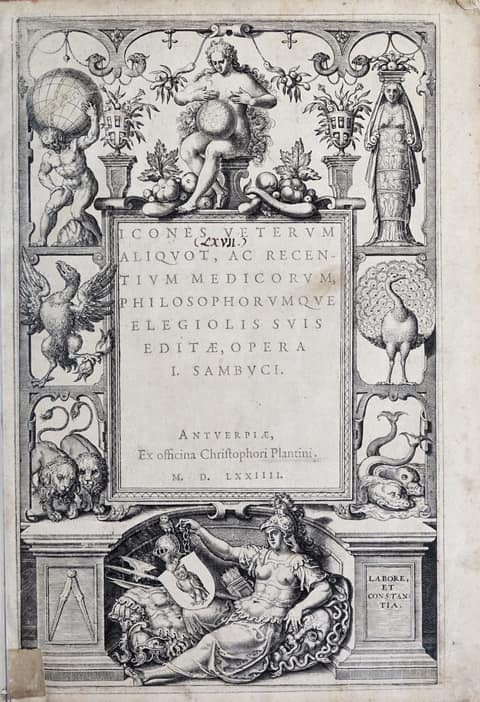
Title page of Icones veterum aliquot, ac recentium medicorum, philosophorumque elegiolis suis editae
Title page of Icones veterum aliquot, ac recentium medicorum, philosophorumque elegiolis suis editae , 1574

About this text

Provenance

This digital edition is derived from the Getty Research Institute copy of Joannes Sambucus's 1574 portrait anthology, made available through Internet Archive. The source record is the Antwerp Plantin edition of portraits of ancient and recent physicians and philosophers with accompanying elegiac poems.

Machine translation and features may contain errors.

Rights

The source work is in the public domain. The rights evidence for this Internet Archive-derived copy points to a Public Domain Mark record. Poet Doctor's presentation adds generated OCR, transcription, translation, navigation metadata, and editorial context.

Original scans: Getty Research Institute copy via Internet Archive ( Public Domain Mark 1.0 ).

Historian’s note. This text records the medicine of its own time, and later evidence has replaced most of it. It is not medical advice. We read it as history, and we ask what, if anything, connects it to medicine today. More on how we read old medical books