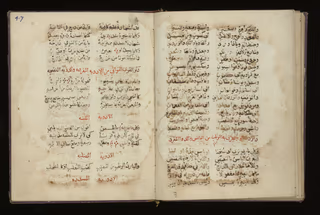
Mention of a rule by which the moist is known from the dry, and the simple drug

ذكر دستور يعرف به الرطب من اليابس والدوا المفرد

Poet
Ibn Sina
Form
Rajaz
Open the page in the book
The page this poem fills. Each opens in the Ibn Sina's Urjuza fi al-tibb and other medical works in MS Arabic 129 reader.

Hover or tap a word to see its match.

And whatever is claimed to be hot / Or dry, determine it, or soft

The dry is known by putrefaction / And the soft by the loosening of the softener

And the ancients had a disagreement regarding the degrees / And the matter in their disagreement has been resolved

Whatever its alteration is intelligible / Then it is from the degrees in the first [degree]

And whenever you feel its alteration / And it is not intense when touched

Its testimony upon it is sufficient / Then it is from the degrees in the second [degree]

And whenever its alteration is intense / But its corruption is remote

A testimony mixed with its truth / That it is from the third in degree

And whenever it corrupts or alters / From the intensity of sweat or narcotic

Then do not worry about the saying of the one who extracted / For it is from the fourth in the degrees

وكل ما يدعى به سخنا / او يابس جده او لينا

يعرف اليابس بالتعفين / واللين بالارخاء للملين

وللاوايل خلاف في الدرج / والامر في خلافهم قد انفرج

ما كان تغييره معقولا / فانه من درج في الاولى

وكلما بتغيره تحس / وليس بالشديد ان يمس

قد اشهاده عليه كافيه / فانه من درج في الثانيه

وكلما تغييره شديد / لكنما افساده :: بعيد

شهادة بصدقه ممزوجه / بانه من ثالث في درجة

وكلما يفسد او :: يغير / من شدة عرق او مخدر

فما عليك قول من خرّج / فانه من رابع في الدرج
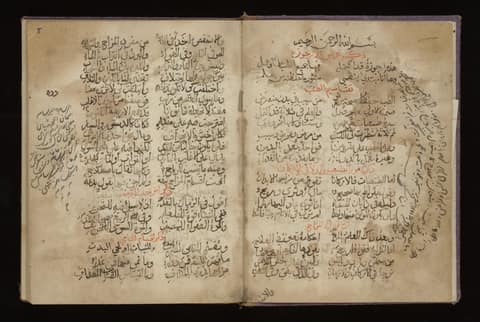
Title page of Ibn Sina's Urjuza fi al-tibb and other medical works in MS Arabic 129
Title page of Ibn Sina's Urjuza fi al-tibb and other medical works in MS Arabic 129 , 1700

About this text

Provenance

MS Arabic 129 is a handwritten Arabic medical volume held by Wellcome Collection in London. It is a composite manuscript: a single volume that brings together 11 separate works. They cover bloodletting, circumcision, the seasons, anatomy, the pulse, and urine, and most are in verse. Most of the verse in this edition is Ibn Sina's Urjuza fi al-tibb, a long poem on medicine, identified from the catalog card in the scans and from the poem's opening lines. Wellcome also names Ibn al-Tilmidh and Ibn Makki among the authors. Shams al-Din ibn Makki wrote three short poems here, and some pieces cannot be identified from the book. The manuscript is undated, and Wellcome estimates it as 18th century.

Methodology

Each scan is treated as a page-level unit. The page image remains the authority for the edition. Local Arabic Kraken OCR was weak and used only as auxiliary context; Gemini generated scan-grounded Arabic transcription and English translation primarily from the manuscript images and the approved glossary. Some word links remain uncertain, and some words have no reliable location on the scan.

Rights

The Wellcome Collection source record marks the digital surrogate with the Public Domain Mark 1.0. Poet Doctor's presentation adds generated OCR, transcription, translation, navigation metadata, and editorial context.

Original scans: Wellcome Collection ( Public Domain Mark 1.0 ).

Historian’s note. This text records the medicine of its own time, and later evidence has replaced most of it. It is not medical advice. We read it as history, and we ask what, if anything, connects it to medicine today. More on how we read old medical books