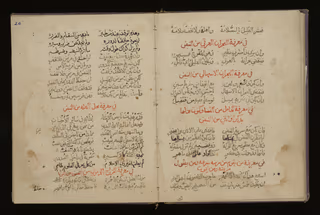
في معرفة من يقوم من مرضه بسرعه ومن يطول مرضه ومن يموت

Form
Rajaz
Open the page in the book
The page this poem fills. Each opens in the Ibn Sina's Urjuza fi al-tibb and other medical works in MS Arabic 129 reader.

Hover or tap a word to see its match.

Listen, may God guide you, O possessor of understanding / to what the past people of knowledge have tested:

If after five beats / the pulse of a healthy person stops and alters,

And this stop is an indicator / of what is in him of sickness and harm.

Then it returns, preserving its cycle / and does not deviate from its beating and its course,

And it continues like that for the whole of its time / adhering to the pulse and its regulation.

And if you find it stops after four / for its rest in illness, do not fear,

But on the condition that it preserves the cycle / and the recovery of this [person] is among the nearest of things.

And if it is three [beats] that the pulse has stopped / in illness, do not fear,

But the illness of the patient will be prolonged / if it preserves the cycle, clearing the malady.

And if after two beats / the pulse stops truly,

Then beware of treating the one who has this description / for his death and demise are near.

اسمع هداك الله يا ذا الفهم / ما جرب الماضون اهل العلم

ان بَعْدَ خمس ضربات يَقِفْ / من الصحيح نابض ويختلف

وهذه الوقفه عند مُخْبِرِ / ما بِهِ من السقام والضرر

ثم يعود حافظا للدوره / ولم يَحِدْ عن ضربه وسيره

ولم يزل كذاك طول وقته / ملازم للنبض وضبطه

وان تجده بعد اربع يقف / لراحته في مرض فلا تخف

لكن بشرط حفظه للدور / وبرؤ ذا من اقرب الأمور

وان يكن ثلاثه قد وقف / النبض في مرض فلا تخف

لكن يطول مرض العليل / ان حفظ الدور مجلي الغليل

وان يكن من بعد ضربتين / قد وقف النابض دون مين

فاحذر تعالج من يكن ذا وصفه / فعن قريب موته وحتفه
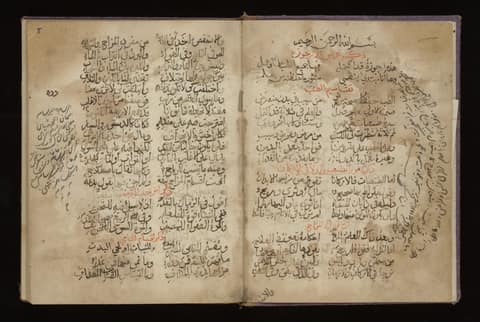
Title page of Ibn Sina's Urjuza fi al-tibb and other medical works in MS Arabic 129
Title page of Ibn Sina's Urjuza fi al-tibb and other medical works in MS Arabic 129 , 1700

About this text

Provenance

MS Arabic 129 is a handwritten Arabic medical volume held by Wellcome Collection in London. It is a composite manuscript: a single volume that brings together 11 separate works. They cover bloodletting, circumcision, the seasons, anatomy, the pulse, and urine, and most are in verse. Most of the verse in this edition is Ibn Sina's Urjuza fi al-tibb, a long poem on medicine, identified from the catalog card in the scans and from the poem's opening lines. Wellcome also names Ibn al-Tilmidh and Ibn Makki among the authors. Shams al-Din ibn Makki wrote three short poems here, and some pieces cannot be identified from the book. The manuscript is undated, and Wellcome estimates it as 18th century.

Methodology

Each scan is treated as a page-level unit. The page image remains the authority for the edition. Local Arabic Kraken OCR was weak and used only as auxiliary context; Gemini generated scan-grounded Arabic transcription and English translation primarily from the manuscript images and the approved glossary. Some word links remain uncertain, and some words have no reliable location on the scan.

Rights

The Wellcome Collection source record marks the digital surrogate with the Public Domain Mark 1.0. Poet Doctor's presentation adds generated OCR, transcription, translation, navigation metadata, and editorial context.

Original scans: Wellcome Collection ( Public Domain Mark 1.0 ).

Historian’s note. This text records the medicine of its own time, and later evidence has replaced most of it. It is not medical advice. We read it as history, and we ask what, if anything, connects it to medicine today. More on how we read old medical books