Hover or tap a word to see its match.
And the genus of the count of the vessel's beats, it has in variation whatever difference
They vary in five beats, and its condition is of two types upon division
Regular in beating, and what has no regularity; the soul does not find for it a resultant
And the regular one, of it is what recurs, and its condition is explained by our saying:
It beats what it beats, then returns to that which it was beating previously
And of it is what is not seen of its recurrences, and of it is what is called the mouse's tail
And of it is its opposite in its beat, when a beat intervenes over that
And of it is the proportionate and what is not proportioned, and our saying on it is about the named ones
And what has two strikes in its beat, and what has more, striking
And of it is the worm-like and the saw-like, likewise the ant-like and the wave-like
And of it is what is named the trembling, and of it is what is described as the spindle-like
And every genus has under it two types of these, both being opposites
Between them is a moderate one, which descends in status from both of them
The matter in difference is upon two extremes; for they are in variation intermediate
And you know the pulse by the moderate pulse, until you see to which side it inclines
And every pulse departing from its norm, then attribute it to the temperament of its possessor
Like the pulse in age, season, and land, and temperament, complexion, and the male
And know its types in the ages / And in the seasons of the year, then the countries
And in the temperament of people and the complexion / And in men, and from it in women
So what necessitates its speed to magnitude / And similar to it is the age of youth and the male
And the southern country and the slender / And the pregnant woman and the summer
And coldness in it [causes] smallness and slowness / And similar to it are the elderly and winter
Likewise women, the obese, the flabby / And similar to it from the countries is the north
And every dry [person], his pulse is hard / And every soft [person], his pulse is moist
And every possessor of a balanced temperament / Its likeness is the pulse of the complete spring
And from the climes of the countries is the fourth / For it follows this temperament
And the infant, his pulse is fast [and] moist / And the middle-aged, his pulse is slow [and] hard
And every body carrying a humor / Its pulse is full to excess
And every body empty of its opposite / The pulse from it is empty, possessing a blockage
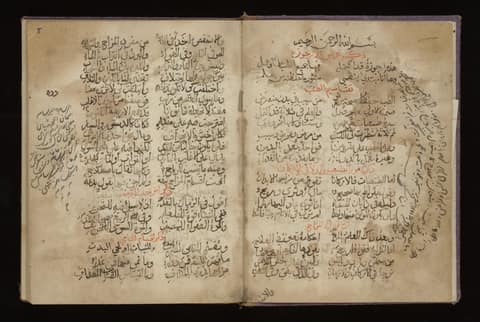
وحنس عد نبضات العرق فله في الاختلاف اي فرق
تختلف في نبضات خمسة وحالة نوعان عند القسمة
منتظم الخفق ومالا نظام له لم تلف النفس له محصلة
وذو النظام منه ما يدور وحاله من قولنا تفسير
ليقرع ما يقرع ثم يرجع الي الذي قد كان قبلا يقرع
ومنه ما لم ير من ادواره ومنه ما يدعى بذنب الفاره
ومنه ما خلافه في نبضه اذا اعترضت فوق ذاك نبضه
ومنه منسوب وما لم ينسب وقولنا فيه علي الملقب
وماله في نبضه قرعان وماله اكثر مطرقان
ومنه دودي ومنشاري كذلك النملي والموجي
ومنه ما يلقب بالمرتعشي ومنه ما يرسم بالمسلي
وكل جنس تحته نوعان من هذه كلاهما ضدان
بينهما واحدة معتدلة تنزل من كليهما منزلة
الامر في الخلف على فرطين فالهما في الاختلاف وسطين
وتعرف النبض بنبض المعتدل حتى ترى لاي جانب عدل
وكل نبض خارج من واجبه فنسبة الى مزاج صاحبه
كالنبض في السن والفصل والبلد والمزاج والسحنة والذكر
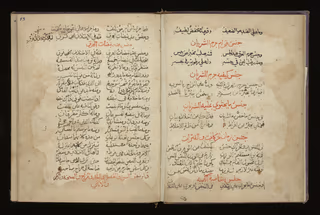
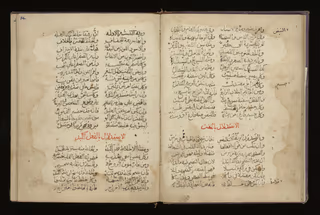
واعرف ضروباته في الاسنان / وفي فصول العام فالبلدان
وفي مزاج الناس والسحناء / وفي الرجال ومنه في النساء
فموجبه سرعة الى كبر / ومثله سن الشباب والذكر
والبلد الجنوب والقضيف / والمرأة الحامل والمصيف
والبرد فيه الصغر والابطاء / ومثله الشيوخ والشتاء
كذا النساء السمين الترهل / ومثله من البلاد الشمال
وكل يبيس نبضه صليب / وكل لين نبضه رطيب
وكل ذي مزاج معتدل / شبهه نبض الربيع المكتمل
ومن أقاليم البلاد الرابع / فانه لذا المزاج تابع
والطفل نبضه سريع رطب / والكهل نبضه بطي صلب
وكل جسم حامل للخلط / فنبضه ممتلئ بفرط
وكل جسم فارغ من ضده / فالنبض منه فارغ ذو سده