Hover or tap a word to see its match.
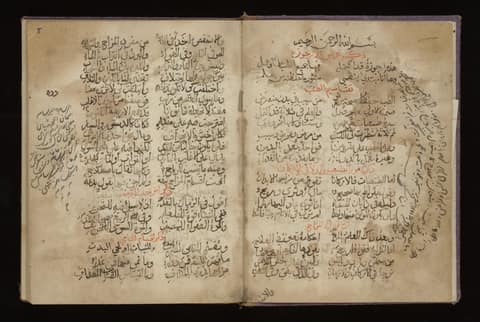
Every vessel whose pulse is in its beating / its origin and its action are from his heart
So four and six in number / from them is life with the granting of lifespan
In the left of the heart is a single entering one / likewise, and in it is a single dividing vessel
So one divides into branches / ignited, throwing flame from each
So some of it ascends towards its base / and some of it travels to its foundation
And when it ascends on the path / it accompanies the axillary [vein] like a companion
The seeker feels it from the resting places / because it is constricting in every organ
Then you see it as branches like hair / marvel if you deny them in my poetry
Then you see it on the exterior of the wrists / as if in the pulse it is like a disputant
And the exterior of the ankle for the one who looks at it / is felt by touch, and sometimes by sight
And paired, the paired one divides / until it is seen in a form like an arch
And a branch is nearer to the nerves / animating the brain, the spinal cord, and the nerve
And it weaves the unseen at its path / over the brain a form like a net
Two vessels from it come traveling to the brain / as if they are a protector for its preservation
And a branch divides into two parts / its channel is to the face and the two eyes
And its pulse is in the interior of the temples / and sometimes on the exterior of the ears
And one comes towards the entryways / and one is known as the carotid
And one descending in its division in color / and it animates and you find its action with help
And a branch is straight at the origin / it travels, and you find its action for the lung
And a branch is extended in its form / to the liver, the side, and the mouth of the stomach
And a branch divides to many [parts] / to the spleen, the penis, and the uterus
And the two testicles after that, and the omentum / so marvel at the creation of God with all wonder
And in the bladder, as was said, are branches / animating what was in it of the nerves
And a branch distributed into two parts / for the back and abdomen with the two legs
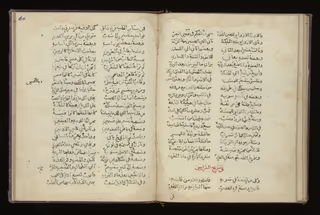
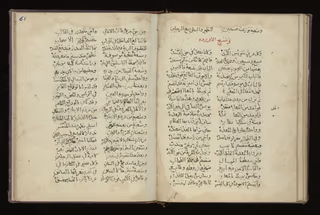
وكل عرق نبضه في ضربه / فاصله وفعله من قلبه
فاربع وستة في العدد / منها الحياة مع مواتاة الامد
في يسار القلب فرد داخل / كذا وفيه فرد عرق فاصل
فواحد منقسم الي شعب / متوقد عن كل يرمي اللهب
فبعضه يصعد نحو اسه / وبعضه يسري الي اساسه
وعند ما يطلع في الطريق / يصاحب الابطي كالرفيق
يحسه الطالب من المرابض / لانه في كل عضو قابض
ثم تراه شعبا كالشعر / اعجب ان انكرتها في شعري
ثم تراه ظاهر المعاصم / كانه في النبض كالمخاصم
وظاهر الكعب لمن فيه نظر / يحس باللمس وحينا بالنظر
ومزوج ينقسم المزدوج / حتي يري في هيئة مثل الارج
وشعبة ادنا الي العصب / يحيي الدماغ والنخاع والعصب
وينسج الغيب عند مسلكه / علي الدماغ هيئة كالشبكة
عرقان منها اتي للدماغ ساتية / كانها لحفظها كالواقية
وشعبة تقسم علي قسمين / مجراها للوجه والعينين
ونبضه في باطن الصدغين / وتارة في ظاهر الاذنين
وواحد نحو الموالج ياتي / وواحد يعرف بالسباتي
ونازل في قسمته في لون / ويحيي وتلقي فعله بالعون
وشعبة في الاصل مستوية / تسري فتلقي فعلها للرية
وشعبة في شكلها ممتدة / للكبد والجنب وفم المعدة
وشعبة الي كثير تنقسم / الي الطحال والقضيب والرحم
والانثيين بعدها والثرب / فاعجب لصنع الله كل العجب
وفي المثانة كما قيل شعب / يحيي الذي كان بها من العصب
وشعبة توزعت قسمين / للظهر والبطن مع الرجلين