Hover or tap a word to see its match.
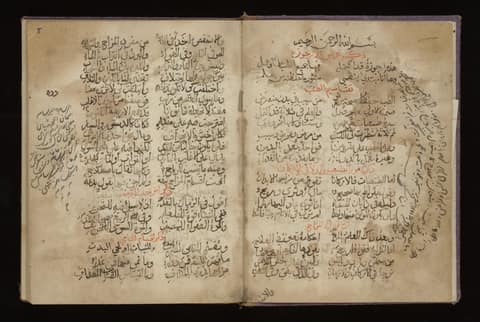
And the total of the nerves is ten distinguished / into seven and seven they have been combined.
From the brain is the origin of seven / the Creator of creations created them for mankind.
So the first of the pairs descended to the eye / hollow, perfected in the hiding of vision
And the second of the pairs is like a net / from it comes movement to the eyes
And a third arises after the second / and some of it goes to the tongue
And some of it tends to his chest / to the nose, the lip, and the tongue
And the temple, and the hinderer after deliberation / in the opinion of Galen, after the lung
And four ascend to the palate / providing it with sensation when sensation is confused
And a fifth divides for sensation / in the ear and the jaw, and some for touch
And a sixth travels on its path / from behind it, and the neck with its veins
And some of it, in its division, is equal / in the heart, the esophagus, and the body of the lung
And a seventh, its totality is secured / until it appeared in a form like a shield
And what arises from the spinal cord to the body / is twenty-five to everyone
And six followed by a single nerve / these are attached to the one who stands upright
In the head and the neck and in part of the shoulder / are seven and a pair, so listen to what I describe
And twelve large ones travel / preserving [and] securing the back
And six from its cavity to the hip / preserving the human lest he disjoint
Three from his sacrum are allocated / and the like of them emerge from his coccyx
And the exit of the nerve from it at the extremity / is solitary, coming at this extremity
وجملة الاعصاب عشر ميزت / في سبعة وسبعة قد جمعت
من الدماغ سبعة منشاها / باري البرايا للوري انشاها
فالاول الازواج للعين انحدر / مجوف أحكم في تخفي البصر
وثاني الازواج بشبه الشبكة / تاتي الي العينين منه الحركة
وثالث ينشي بعد الثاني / وبعضها تاتي الي اللسان
وبعضه لصدره يعاني / للانف والشفة واللسان
والصدغ والمانع بعد الروية / براي جالينوس بعد الرية
واربع ترتفع الي الحنك / يفيده الحس اذا الحس ارتبك
وخامس ينقسم للحس / في الاذن والفك وبعض للمس
وسادس يسلك في طريقه / من خلفه والعنق مع عروقه
وبعضه في قسمه سويه / في القلب والمري وجرم الريه
وسابع جملته هي موثقة / حتي بدا في هيئة كالدرقة
وما نشا من النخاع للجسد / خمس وعشرون الي كل احد
وستة يليها فرد عصب / فهذه يلحقها من انتصب
في الراس والعنق وفي بعض الكتف / سبع وزوج فاستمع ما قد اصف
واثني عشر كبار تسري / حافظة موثقة للظهر
وستة من جوفه الي الورك / حافظة الانسان ليلا ينفرك
ثلاثة من عجزه مخصصة / ومثلها يخرجن من عصعصة
ومخرج العصب منه في الطرف / منفرد أياتي في هذا الطرف