Hover or tap a word to see its match.
The total of the bones is the method of composition / without doubt and without contradiction
In the head, there are six supporting ones / and a single nail-like one as the base
From them to his fontanelle are two bones / and likewise the two ears are perfected
In the forehead of a person is a single bone / and the wedge is firmly established in the arrangement
And six in his two eyes are pliable / and every bone is firmly set in the cheek
And the passageway of the nostril is in two bones / penetrating to the path of the mouth
And two are like a platform for the teeth / and near them are two in the [same] place
And the roots of the teeth are in two bones / without doubt and without falsehood
The teeth are mounted above them / ten and ten, and after them eight
And four may be added in wisdom / their roots being square in some of them
And the back is perfected in the arrangement of the vertebrae / and the restraint and protection in it are secure
In them are enough foramina for them / by their rule the spinal cord runs through them
So seven are in the neck of a person / and twelve are counted for the chest
And five are in the loin as a foundation / preserving the whole like anchors
And the sacrum is counted as three, well-protected / and the coccyx bone is counted similarly
And for the collarbones is a single convex bone / containing what is beneath it of nerves
And the shoulder blade is a bone whose description and form / follow toward the back, broad in its shape
The head of the humerus enters its cavity / and the humerus is a single, solitary bone
And the sternum is patched from seven bones / joined in cavities to the ribs
And twelve is the number for each side / of the ribs, their covering is with veils
And the forearm is composed of two bones / and the wrist of eight in two rows
And the metacarpus of four linked [bones] / above which are dominant fingers
The Creator has perfected for each finger / three erected in four [fingers]
And after that, the three of the thumb / empty, you bend them completely
It stands in action in the place of the four / because in action it is like the compliant one
And every thigh is a single bare bone / with its head in its middle is a circular socket
And every leg is composed of a pair / the smaller of them is to preserve it from crookedness
And for the leg, at the eye of the knee / its roundness prevents every injury
And the ankle and the heel have firm ligaments / for extension and flexion, they are well-engineered
Running over the ankle from solid matter / is a bone resembling a boat of the Euphrates.
And the tarsus in the foot is unlike the hand / of four firmly set in a row.
And above them are five metatarsal bones / secured in their tightening and binding.
And four like four in the palm / but they are devoid of space.
And the big toe is composed of two bones / which assist in an elegant posture.
And if the big toe is attached to the index toe / it is contrary to what is in the hand for writing.
And each bone of the flank bones / has three present aspects.
So the direction of the seat is the pubic bone / and the direction of the buttocks is for the "pomegranate".
And the creation of the two hips in everyone / is from the act of one Lord, unique, eternal.
In the heart and likewise the larynx / the people of piety and experience have counted them.
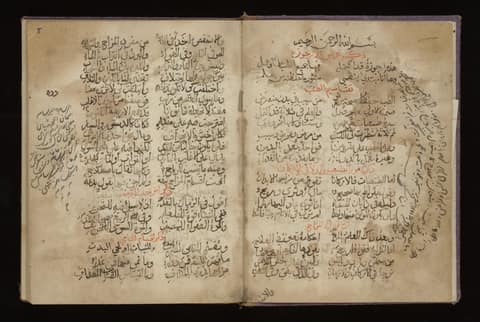
جملة العظام نهج الالف بغير شك وبغير خلف
في الرأس منها ستة مساعدة واوحد مسمري كالقاعدة
منها الي يافوخه عظمان وهكذا احكمت الاذنان
في جبهة الانسان فرد عظم والوتد حكما في النظم
وستة في مقلتيه لدنة وكل عظم محكم في الوجنة
ومعبر المنخر في عظمين الي سبيل الفم نافذين
واثنان كالدكة للاسنان وعندها اثنان في المكان
ومنبت الاسنان في عظمين بغير شك و بغير مين
قد ركبت من فوقها الاسنان عشر وعشر بعدهما ثمان
وقد تزيد في الحجا اربعة اصولها في بعضها مربعة
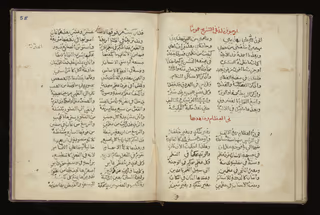
والظهر قد احكم في نظم الخرز واستوثق المانع فيه والحرز
فيها من الاثقاب ما يكفيها بحكمها يسري النخاع فيها
فسبعة في عنق الانسان واثني عشر عددت للجينان
وخمسة في الحقو كالاساس حافظة للكل كالمراسي
والعجز معدود ثلاثا قد حمي ومثلها يعد عظم العصعصي
وللتراقي فرد عظم محدب يحوي علي ما تحته من العصب
والكتف عظم وصفه وصورته تلي الي الظهر عريض هيئته
يدخل في نقرته رأس العضد والعضد عظما واحدا قد انفرد
والقص من سبع عظام مرقعه في نقر الي الضلوع ملصقه
واثني عشر عدة لكل جنب من الضلوع سترها بالحجب
والزند قد ركب من عظمين والرسغ من ثمان في صفين
والمشط من اربعة مرتبطة من فوقها اصابع مسلطة
قد احكم الباري لكل اصبع ثلاثه منصوبة في اربع
وبعدها ثلاثة الابهام خالية تثنيها علي التمام
تقوم في الفعل مقام الاربع لانه في الفعل كالمتطبع
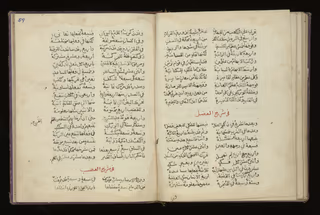
وكل فخذ فرد عظم عاري برأسه في وسطه حق داير
وكل ساق ركب من زوج اصغرها لحفظها من عوج
وللساق بعين الركبة تدويرها يمنع كل نكبة
وللكعب والعقب ربط محكمة للبسط والقبض بها مهندمة
تجري على الكعب من الجماد / عظم شبيه بزورق الفرات
والرسغ في الرجل خلاف الكف / من اربعة محكمة في الصف
وفوقها خمس عظام المشط / موثقة في شدها والربط
واربعة كاربعة في الراحة / لكنها تخلو عن المساحة
وركب الابهام من عظمين / قد استظهرا في قوام زين
وان نيط الابهام بالمسبابة / خلاف ما للكف للكتابة
وكل عظم من عظام الخاصرة / له ثلاثة من معان حاضرة
فوجهة المقعد عظم العانة / ووجهة الاست للرمانة
وخلقة الوركين في كل احد / من فعل رب واحد فرد صمد
في القلب وكذلك الحنجرة / عدهما اهل التقى والمخبرة