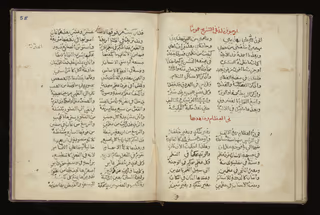
ارجوزة له في التشريح عموماً

Poet
Ibn Sina
Form
Rajaz
Open the page in the book
The page this poem fills. Each opens in the Ibn Sina's Urjuza fi al-tibb and other medical works in MS Arabic 129 reader.

Praise be to God for guiding me / and protecting me from straying by His guidance

My Guardian, who saved me from my ignorance / and my Protector after parting from my family

And after praising Him, take this brief tract / I have written a poem from my own verse, constructing it

I completed what the beginner composed / in the art of anatomy, so that he may be guided

I summarized what I say from the words of the former [scholars] / for fear of falling short of it and causing boredom

So let us begin with the description of the bones / and I will mention the organs in order

And I will mention the nerves and the muscles / and all that is contained in the vein

And I will mention all the ligaments and the tendon / and every organ that covers them all

And I will follow the spinal cord fully with the nerves / and I will clarify the arrangement in the composition

And after that, what was said regarding the buttocks / until the wisdom of the Wise One is enumerated

الحمد لله على تهديتي وعاصمي من التيه بتهديتي

مهيمني خلصني من جهلي وحافظي بعد فراق اهلي

وبعد ما احمده خذ النبذة كتبت من نظمي قصيداً بيته

اكملت ما نظمه المبتدي في صنعة التشريح كيما يهتدي

اوجزت ما اقول من قول الاول مخافة الاقصار عنه والملل

فلنبتدي في صفة العظام واذكر الاعضا في النظام

واذكر الاعصاب والعضل وكل من في العرق قد حصل

واذكر الربط جميعاً والوتر وكل عضو للجميع قد ستر

واتبع النخاع بالعصب وفي وابين الترتيب في التأليف

وبعدها ما قيل في الالية حتي تعد حكمة الحكيمة
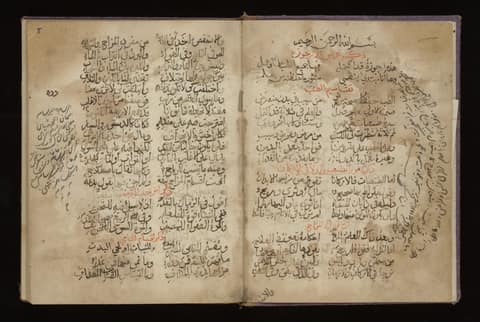
Title page of Ibn Sina's Urjuza fi al-tibb and other medical works in MS Arabic 129
Title page of Ibn Sina's Urjuza fi al-tibb and other medical works in MS Arabic 129 , 1700

About this text

Provenance

MS Arabic 129 is a handwritten Arabic medical volume held by Wellcome Collection in London. It is a composite manuscript: a single volume that brings together 11 separate works. They cover bloodletting, circumcision, the seasons, anatomy, the pulse, and urine, and most are in verse. Most of the verse in this edition is Ibn Sina's Urjuza fi al-tibb, a long poem on medicine, identified from the catalog card in the scans and from the poem's opening lines. Wellcome also names Ibn al-Tilmidh and Ibn Makki among the authors. Shams al-Din ibn Makki wrote three short poems here, and some pieces cannot be identified from the book. The manuscript is undated, and Wellcome estimates it as 18th century.

Methodology

Each scan is treated as a page-level unit. The page image remains the authority for the edition. Local Arabic Kraken OCR was weak and used only as auxiliary context; Gemini generated scan-grounded Arabic transcription and English translation primarily from the manuscript images and the approved glossary. Some word links remain uncertain, and some words have no reliable location on the scan.

Rights

The Wellcome Collection source record marks the digital surrogate with the Public Domain Mark 1.0. Poet Doctor's presentation adds generated OCR, transcription, translation, navigation metadata, and editorial context.

Original scans: Wellcome Collection ( Public Domain Mark 1.0 ).

Historian’s note. This text records the medicine of its own time, and later evidence has replaced most of it. It is not medical advice. We read it as history, and we ask what, if anything, connects it to medicine today. More on how we read old medical books