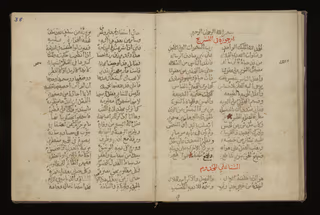
ارجوزة في التشريح

Poet
Ibn Sina
Form
Rajaz
Open the page in the book
The page this poem fills. Each opens in the Ibn Sina's Urjuza fi al-tibb and other medical works in MS Arabic 129 reader.

Hover or tap a word to see its match.

Praise be to God, the Sovereign, the Creator / Lord of the heavens, the Exalted, the Glorious

And the blessings of God, the Possessor of Majesty / Upon a prophet of truthful message

Whom He has endowed with the message / And thus saved people from error

Pouring light upon our intellects / Until the hidden aspects of our intellect became manifest

And the most rational of people with a rational soul / Possessing life and truthful witnessing

Knowledge is revealed to him through perception / Just as the hidden is seen through deduction

And the most rational of all by nature / So his wondrous wisdom is complete

He distributed intellect among creation / And goodness and life equitably

So he who purified the soul from vice / Attained virtue from that

Conforming to his innate intellect / With truth, possessing proof, from what is heard

And he was like the light of the eye of perception / Connected to the full moon or the sun

He perceived the distant and the near / And was not doubtful in his opinion

Its good is distinguished from its bad / And the truthful one overcomes its liar

Reason overcomes his desire / And he prefers the hereafter over his worldly life

He follows the path of truth with a shining light / And suppresses whoever transgresses with a decisive word

الحمد لله المليك الواجد / رب السموات العلي الماجد

وصلوات الله ذي الجلاله / على نبي صادق الرساله

من قد حباه بالرساله / فانقذ الناس من الضلاله

مفيض النور على عقولنا / حتى بدا الخفي من معقولنا

واعقل الناس بنفس ناطقه / ذات حياة وشهود صادقه

يوحى اليه العلم باحساس / كما يرى الخفي بالقياس

واعقل الجميع بالطبيعه / فكملت حكمته البديعه

وقسم العقل على البريه / والحسن والحياة بالسويه

ففاز من ذالك بالفضيله / من نزه النفس عن الرذيله

مطابق لعقله المطبوع / بالحق ذي البرهان من مسموع

وكان مثل نور عين الحس / اتصلت بالبدر او بالشمس

وادرك البعيد والقريبا / ولم يكن في رأيه مريبا

طيبه يمتاز من خبيثه / ويظهر المصدق على كذيبه

ويغلب العقل على هواه / ويوثر الاخرى على دنياه

وينهج الحق بنور ساطع / ويقمع من بغى بقول قاطع
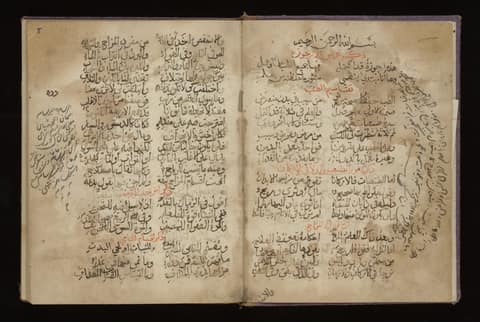
Title page of Ibn Sina's Urjuza fi al-tibb and other medical works in MS Arabic 129
Title page of Ibn Sina's Urjuza fi al-tibb and other medical works in MS Arabic 129 , 1700

About this text

Provenance

MS Arabic 129 is a handwritten Arabic medical volume held by Wellcome Collection in London. It is a composite manuscript: a single volume that brings together 11 separate works. They cover bloodletting, circumcision, the seasons, anatomy, the pulse, and urine, and most are in verse. Most of the verse in this edition is Ibn Sina's Urjuza fi al-tibb, a long poem on medicine, identified from the catalog card in the scans and from the poem's opening lines. Wellcome also names Ibn al-Tilmidh and Ibn Makki among the authors. Shams al-Din ibn Makki wrote three short poems here, and some pieces cannot be identified from the book. The manuscript is undated, and Wellcome estimates it as 18th century.

Methodology

Each scan is treated as a page-level unit. The page image remains the authority for the edition. Local Arabic Kraken OCR was weak and used only as auxiliary context; Gemini generated scan-grounded Arabic transcription and English translation primarily from the manuscript images and the approved glossary. Some word links remain uncertain, and some words have no reliable location on the scan.

Rights

The Wellcome Collection source record marks the digital surrogate with the Public Domain Mark 1.0. Poet Doctor's presentation adds generated OCR, transcription, translation, navigation metadata, and editorial context.

Original scans: Wellcome Collection ( Public Domain Mark 1.0 ).

Historian’s note. This text records the medicine of its own time, and later evidence has replaced most of it. It is not medical advice. We read it as history, and we ask what, if anything, connects it to medicine today. More on how we read old medical books