Hover or tap a word to see its match.
Praise be to God, the Wise, the **Healer** / Knower of the unseen, the Omniscient, the Sufficient
I praise Him for the abundance of His grace / I thank Him for the perfection of His wisdom
And thereafter: this is an urjuza / useful, elegant, and brief
In it is mentioned whatever you bleed / for a disease, for a symptom you target
And whatever is targeted for **diseases** / and what the phlebotomist targets for symptoms
Seven and twenty, and ten designated / and six of the pulsating veins
So you bleed the crown of the head for headache / and every persistent and spreading disease
And you bleed the forehead extending lengthwise / and the inner corner of the eye cures pannus and ophthalmia
And for vitiligo, bleeding the tip of the nose / and melasma on his cheek that has discolored it
And bleeding is for tumors and bad temperament / and in the tongue is a gap for its recognition
The two arteries of the temples for migraine / and bleeding them is the utmost truth
As for the tongue, its bleeding is for the throat / and this is after he has suffered
And you bleed the chin if the mouth aches / and this is a clarifier preparing the skin
And in the jugular it is prepared for leprosy / and cancer, along with several matters
And you bleed the hepatic vein if he gets jaundice / and the abdomen swells and nothing is thinner
And in the spleen, and for abundant matters / from its vein, or a disease that has generalized
And their bleeding for the head is in the cephalic / and after it, for every upper organ
And bleeding the basilic is for breathing / and every disease trapped in the diaphragm
And its benefit is for the liver, then the lung / for excess blood and pneumonia
And the median cubital shares with the cephalic / and shares with the axillary in afflictions
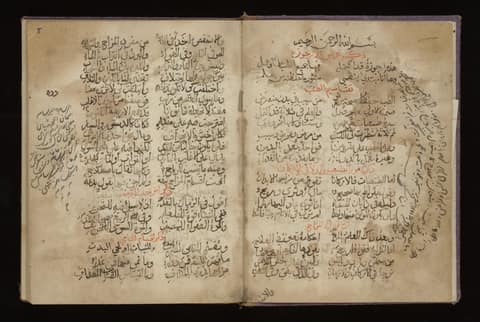
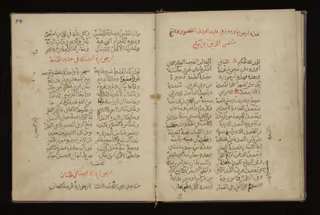
الحمد لله الحكيم **الشافي** / العالم الغيب العليم الكافي
أحمده على سبوغ نعمته / أشكره على بلوغ حكمته
وبعد فهذه أرجوزة / مفيدة لطيفة وجيزة
يُذكر فيها كلما تفصده / من مرض لعرض تقصده
وكلما يقصد **للامراض** / ويقصده الفاصد للاعراض
سبع وعشرون وعشر قاصدة / وستة من العروق النابضة
فتقصد الهامة للصداع / وكل داء واقف وساعي
وتقصد الجبهة طولا يمتد / والماق يشفي سبلا ورمد
وللبهاق فصد الارنبة / وكلف في خده قد خضبه
والفصد للاورام وسواء / وفي اللسان فجة لتعرفة
شرياني الصدغين للشقيقة / وفصده في غاية الحقيقة
اما اللسان فصده للحلق / وهذه من بعد ما شقي
وتقصد الذقن اذا لم القل / وهذه مجلى مهيئ البشر
وفي الوداج للجذام معدة / والسرطان مع امور عدة
وتقصد عرق الكبد اذا يرق / وانتفخ البطن ولا شيء ارق
وفي الطحال ولامور جمة / من عرقه أو مرض قد عمه
وقصدهم للراس في القيفال / وبعده لكل عضو عالي
والباسليق فصده للتنفس / وكل داء في الحجاب احتبس
ونفعه للكبد ثم الرية / لكثرة الدم وذات الرية
وشارك الاكحل للقيفال / وشارك الابطي في الاهوال