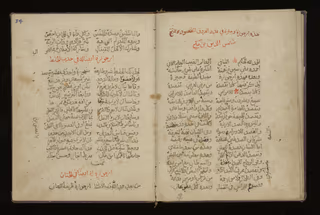
Also an urjuza by him on extracting the humor

ارجوزة ايضا له في جذب الخلط

Poet
Shams al-Din ibn Makki
Form
Rajaz
Open the page in the book
The page this poem fills. Each opens in the Ibn Sina's Urjuza fi al-tibb and other medical works in MS Arabic 129 reader.

Hover or tap a word to see its match.

For extracting the humor there are widespread conditions / famous, and eleven encompass them

First, an organ and the state of pushing / is unnatural, and a source has sprung forth

And second, when there is no possible exit / route, or it passes a great [vessel] it wounds

And third, that it is not nascent / and fourth, flabbiness is nothing

And fifth, that one does not see in its essence / any affliction occurring in its life

And sixth, that this cutting does not pass / in its opposite, like the throat preventing sight

And seventh, that they do not reject the transfer / from that which defending it enlivens the blade

And eighth, excessive fullness of the body / prevents [it], or in the organ, O sagacious brother

And measure the distance on both sides / and incline to the further of these two

So that is a ninth and tenth condition / that you do not see in it apparent acceptance

And pain, calm it before the extraction / so that is the eleventh, this is the core

Its compiler and versifier is b. Makki / with utmost completion and excellent composition

لجذب الخلط شروط شايعة / مشهورة واحدى عشر تجمعه

أولا عضوا وحالة الدفع / غير طبيعي ومقر قد نبع

وثانياً اِبان لا طريق مخرج / يمكن أو يمر عظيم يجرح

وثالثا أن لا يكون ناشئ / ورابعا الترهل لا شي

وخامسا أن لا يرى في ذاتها / من آفة تحدث في عمرها

وسادسا ان لا يمر ذا الفري / في عكسها كالحلق مانع النظر

وسابعا ان لا يردوا النقل / عما الذب عنه يحيي النصل

وثامنا فرط امتلاء البدن / يمنع او في العضو يا اخى الفطن

وقس قياس البعد في الجانبين / ومل الى الابعد من هذين

فذاك شرط تاسع وعاشر / ان لا ترى فيه قبول ظاهر

ووجع سكنه قبل الجذب / فذاك حادي عشر هذا اللب

جامعها ناظمها بن مكي / بفرط انجاز وحسن سبك
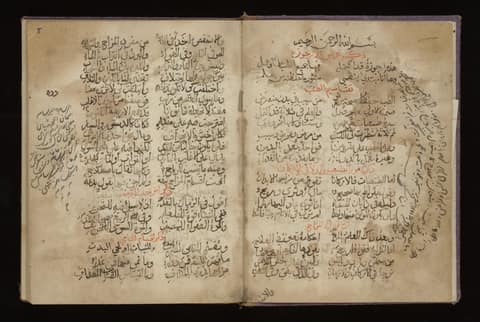
Title page of Ibn Sina's Urjuza fi al-tibb and other medical works in MS Arabic 129
Title page of Ibn Sina's Urjuza fi al-tibb and other medical works in MS Arabic 129 , 1700

About this text

Provenance

MS Arabic 129 is a handwritten Arabic medical volume held by Wellcome Collection in London. It is a composite manuscript: a single volume that brings together 11 separate works. They cover bloodletting, circumcision, the seasons, anatomy, the pulse, and urine, and most are in verse. Most of the verse in this edition is Ibn Sina's Urjuza fi al-tibb, a long poem on medicine, identified from the catalog card in the scans and from the poem's opening lines. Wellcome also names Ibn al-Tilmidh and Ibn Makki among the authors. Shams al-Din ibn Makki wrote three short poems here, and some pieces cannot be identified from the book. The manuscript is undated, and Wellcome estimates it as 18th century.

Methodology

Each scan is treated as a page-level unit. The page image remains the authority for the edition. Local Arabic Kraken OCR was weak and used only as auxiliary context; Gemini generated scan-grounded Arabic transcription and English translation primarily from the manuscript images and the approved glossary. Some word links remain uncertain, and some words have no reliable location on the scan.

Rights

The Wellcome Collection source record marks the digital surrogate with the Public Domain Mark 1.0. Poet Doctor's presentation adds generated OCR, transcription, translation, navigation metadata, and editorial context.

Original scans: Wellcome Collection ( Public Domain Mark 1.0 ).

Historian’s note. This text records the medicine of its own time, and later evidence has replaced most of it. It is not medical advice. We read it as history, and we ask what, if anything, connects it to medicine today. More on how we read old medical books