Hover or tap a word to see its match.
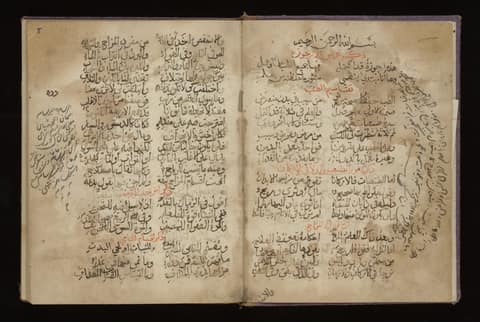
And all that is cut, like spongy bones / and like warts and like *nasāsh*
And all that putrefies of extremities / and like the *siyāja* of the noses
And an extra finger or one that adheres / and the eyelid of an eye when it does not separate
And a staphyloma if it adheres / and the prepuce of the urethra in what it encloses
And the flesh of an ulcer when it becomes malignant / and the ulcer of the eye when it putrefies
And the excess in the tongue is cut / likewise that which occurs in the ears
And what elongates of the uvula / and all that is excess of the gums
And flesh is cut over glass / and arrows and arrowheads in extraction
And the testicles are cut in men / and what is seen in the leg of varicose veins
And whatever there is of hemorrhoids / and what has putrefied of fistulas
And what has blackened of fats / and what has putrefied of flesh
And flesh is cut for the Medina vein / and whenever an ear is blocked for us
And whatever has exceeded above the vision / and what you see begins from a pterygium
And facial palsy, and ingrown hair, and pterygium / and the penis of a hermaphrodite, and the splitting of the navel
And all that you cut for a benefit / and the like of it from outside has occurred
Then by suturing is the treatment of what is wounded / and by the healing of every organ that has ulcerated
And all that has blackened for us of a prepuce / and all that is blocked of a passageway
وكلما يقطع كالمشاش / وكالثاليل وكالنساش
وكلما يعفن من اطراف / ومثل سياجة الاناف
واصبع تزيد او تلصق / وجفن عين حين لا يفترق
وعنبة ان اما التصقت / وقلفة الاحليل فيما اغلفت
ولحم قرحة اذا ما خبثت / وقرة العين اذا ما عفنت
ويقطع الزايد في اللسان / كذا الذي يقع في الاذان
وما طال من اللهاة / وكلما زاد من اللثات
ويقطع اللحم علي الزجاج / والنبل والنصول في الاخراج
وتقطع الانثاء في الرجال / وما يري في الساق من دوالي
وكلما كان من البواسر / وما تعفن من النواصر
وما قد اسود من الشحوم / وما تعفن من اللحوم
ويقطع اللحم لعرق مدني / وكلما انسد لنا من اذن
وكلما قد زاد فوق النظر / وما تراه ندامن ظفر
ولقوة وشعرة وظفرة / وذكر الخنثى وشق السرة
وكلما تقطعه لنفعا / ومثله من خارج قد وقعا
فبالخياطة علاج ما انجرح / وباندماج كل عضو التحم انقرح
وكلما اسود لنا من قلفة / وكلما انسد من المنفذة