Hover or tap a word to see its match.
And every vein has its origin from the liver / and as it acts regarding the body
Seven, seventy, and fifty in number / so understand the words of a discerning physician
Some of them are hidden from the eyes / the portal vein branches it, then the vena cava
The portal is for the chyle so that it attracts it / and the ascending vena cava goes above to the *dharba*
The portal vein is drawn in its place / dividing into five to its intestines
So these penetrate the intestine / then surround the duodenum
Then we see after this a second [group] / of veins, their number is eight
And one penetrates from the intestine / delivering the clear [fluid] to the base of the liver
And it found from the intestine a number / extracting the essence of the stomach
And six in its path is its arrangement / circulating, through which the bones are irrigated
And one folds over the stomach / until you see it prepared with food
And in the spleen, a single one connects / and another separates from its head
And part of it divides for what is necessary / irrigating the ribs, and it attracts to the heat
And it irrigates the stomach with the turbid humor / and attracts the bile from towards the liver
And another is bent in its path / divided within the entirety of the spleen
And the right side has four in it / impressing its action and imprinted
And a fifth surrounds the intestine / and a sixth receives the food
And the vena cava divides in all humans / to their upper parts and what is below
Two parts: a part seeking the upper regions / and another descending immediately
The ascending one entering the diaphragm / is divided like a ring of clouds
To the heart and the lung in what remained / it mixes with the chest and pushes away the excess
And a great described branch / appears, known when it is covered
For they are the station of the axillary basilic / and one safeguards it so it does not miss
And the cephalic branch from his hands / and its kind from both sides of his hands
And one irrigates the brain and the membrane / and it, without doubt, originated from the cephalic
And part of it circulates to the internal tissues [*al-'ashāyir*] / they called it the deep jugular
And one is for his face and the eye / in the head, the nostril, and the right
The scholar knows them by the hidden signs / and it is sometimes called the superficial jugular
And the median cubital known in men / is from the axillary vein and the cephalic
And a branch from the axillary vein / is the cord of the arm, like a straight spear
And a branch from its posterior part / the *usaylim* [salvatella] appears at the little finger
And two branches for the esophagus and the kidneys / circulating like a gatherer in the pocket of the kidneys
Two veins irrigate the testicles and the penis / thus reported a physician who mentioned [it]
And they irrigate the abdomen and relate to the womb / so these signs are a blessing for creation
And after this, it divides into two parts / sufficient for the muscles of the two legs
And its part is integrated in the leg / and every organ remains in [its] place
And a branch, its appearance is like the saphenous / in his ankle, you know it as the saphenous
And prominent in the ankle above the vein / is a vein called the sciatic, confirmed
And the head is a roof for the vapor of the body / to it it ascends and in it it is contained
If it circulates in it and is in proportion / and is neither harsh nor contains turbidity
And its flow is easy for the superfluity / and there is no delay in expelling the superfluity
The faculties of the soul are granted their great status / for they have authority over the body
And you see no stubbornness from it / and it is not submissive to nature
So use stratagem in dissolving it / until the superfluity flows from its path
And the head, knots may be tied over it / if the cold ascends to it from them
And whatever ascends of the vapor / increases dryness beyond the measure
And that is what necessitates insomnia / while its moisture increases sleep
And pure, noble souls / have light, continuous wakefulness
And the dull, heavy soul / is sleepy, unhealthy, and weary
And from the soundness of the head / is the softness of nature and keeping
The stomach short of the limit / of satiety.
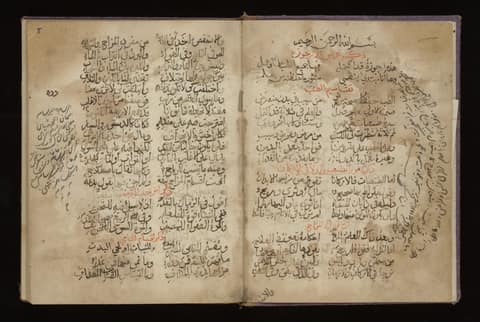
وكل عرق منبته من الكبد / وكما يفعل في حق الجسد
سبع وسبعون وخمسين العدد / فافهم كلاماً من حكيم منتقد
بعضها عن العيون يخفى / الباب قد يشعبه فالاجوف
فالباب للكيموس كي يجذبه / والاجوف الطالع فوق للذربه
فالباب في موضعه قد ارتسم / خمس الي امعائه قد انقسم
فهذه تنفذ في المعى / ثم تحيط بالمعا الاثنعشري
ثم نري من بعد هذا ثانية / من العروق عدها ثمانية
فواحد من المعا ينفذ / يوصل الصافي الي قعر الكبد
واوجد من المعا عدة / مجتذب خلاصة المعدة
وستة في سلكها نظامه / سارية تروي بها العظام
وواحد يطوى علي المعدة / حتي تراها بالغذا معتدة
وفي الطحال مفرد قد اتصل / وآخر من رأسه قد انفصل
فبعضه منقسم لما يجب / يسقي الجراح ولحري يجتذب
وتروي المعدة بالخلط الكدر / ويجذب المرة من نحو الكبد
واخر منعطف المجال / منقسم في جملة الطحال
والجانب الايمن فيه أربع / منطبع في فعله وطابع
وخامس يحيط بالمعاء / وسادس يقبل للغذاء
وانقسم الاجوف في كل البشر / لاعلاهم وما قد ائتسر
جزوين جزء طالب الاعالي / وآخر منحدر في الحال
فالطالع الداخل في الحجاب / منقسم كحلقة السحاب
للقلب والرية فيما قد فضل / يخالط الصدر فيدفع الفضل
وشعبة عظيمة موصوفة / تظهر عند سترها معروفة
فانهم محط الباسليق الابطي / وواحد أمنه كيلا يخطي
وشعبة القيفال من يديه / وجنسها من جانبي يديه
وواحد يسقي الدماغ والغشا / وهو من القيفال لا شك نشا
وبعضه يسري علي العشاير / قد لقبوه بالوداج الغاير
وواحد لوجهه والعين / في الرأس والمنخر واليمين
يعرفها العالم بالضماير / وقد تكنى بالوداج الظاهر
والأكحل المعروف في الرجال / من عرق الابطي والقيفال
وشعبة من عرق الابطي / حبل الذراع كالقنا الخطي
وشعبة من بعضه الموخر / اسيلم يظهر عند الخنصر
وشعبتان للمرىء والكلى / تدوار كالجامع في جيب الكلى
عرقان تسقي الانثيين والذكر / فهكذا اخبر حكيم قد ذكر
وتسقي البطن وتعزوا للرحم / فهذه الايات للخلق نعم
وبعد هذا تنقسم قسمين / كافية في عضل الرجلين
وجزؤها مندمج في الساق / وكل عضو في المكان باق
وشعبة منظرها كالصافن / في كعبه تعرفها بالصافن
وظاهر في الكعب فوق العرق / عرق يكني بالنسا محقق
والرأس سقف لبخار البدن / اليه يستعلي وفيه يحتقن
فان سرت فيه وكانت بقدر / ولم يكن جافي ولا فيها كدر
وسهل السيل فيها للفضل / ولم يكن في دفعه الفضل مطل
منحت قوى النفس العظيم شانها / لان للبدن سلطا بها
وما رايت منه ذا عناد / وليس للطبع بذي انقياد
فاستعمل الحيلة في تحليله / حتى يسيل الفضل من سبيله
والرأس قد تعقد عليه العقد / ان صعدت منها اليه البردة
وكان ما يسموا من البخار / يزيد في اليبس على المقدار
فذاك مما يوجب السهاد / ورطبه يكثر الرقاد
والانفس الزكية الشريفة / بيقظة مشاهرة خفيفة
والنفس البليدة الثقيلة / منومة وخيمة كليلة
ومن صلاح الرأس / لين الطبع وقصري
المعدة عن حد / الشبع