Hover or tap a word to see its match.
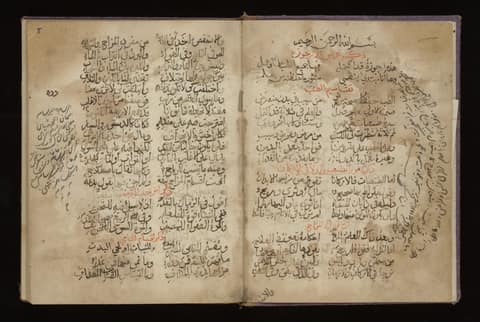
How many a secret has remained stored away / hidden among mankind, concealed
It is hidden from every ear and eye / except to a physician experienced in matters
Like that which Hippocrates has broadcast in his selection / from his secrets and his wisdom
And they are the twenty-five propositions / a judgment on death before it occurs
Aqlīs confirmed them in diseases / with all the symptoms they contain
The first of them: if there is a swelling in the face / which has no feeling, nor is there any pain in it
And he is playfully tampering with it / fearfully, and pointing with his finger
Then he, after three is counted / and after twenty days, will perish
He will die in them, without the physician's doubt / and His immense decree has made it inevitable
And if you find severe illness / in his knees while he is shivering
Especially with sweating of the limbs / if that happens to him at the onset
Then he, on the eighth day, / will neighbor the dead in the tombs
And whoever you find in his illness / with a pulsation rising above his clavicle
Small, above the neck vein, / swollen, domed in its shape
Then he is reckoned for fifty days, / and after that, not a day more, he departs
And the sign indicating it is that he thirsts / at the beginning of the illness, morning and evening
And if you see on the tongue a pustule / settled like a castor bean
Then the man is perishing on his day / and departing from his family and his people
And the sign of swift, descending death / is his craving for sweets among foods
If you see a small pustule, / black on the finger, not large,
Causing sunken eyes in the person, / he dies without a doubt within two days
And the sign of death, when it draws near, / is that his hands become paralyzed, to the observer
And the pustule of the patient as a sign / on his left hand upon his thumb
Like two eyeballs in shape to the beholder, / dusty in its color to the observer
Then judge with the judgment of certain truth / that he will die on the sixth day
And a sign of death in this symptom / is excessive dryness of nature at the onset of the illness
And he said in the clear following words: / If there appears in the middle of the toes
Of the right foot, something like a pustule, / spotted, dusty in its color,
Then he will die on the twelfth [day] / from the beginning of his condition, if one considers it
And the sign of death in him is that he abandons / his appetite for pungent things among what is eaten
And lividity of the extremities immediately / if followed by a pustule on the forehead
Then on the fourth day / he dies, so acknowledge the most binding of judgments
And the sign of death and the greatness of its harm / is the patient yawning during his sneezing
And if you see on the jaw a pustule / that spreads when touched, reddened,
Then he will perish on the fourth day, / having neither escape nor prevention
And the sign of death, drawing near to him, / is if excessive yawning afflicts him
And lividity appearing in his feet, / like a nipple, to which it is similar
Along with lividity visibly appearing in the eye, / then he shall join those in the graveyards
On the fifth from the day it began; / and the sign of death is that you see him
Urinating in his clothes frequently, / his appearance being repulsive, abundantly
And among the informing evidence of perdition: / three pustules on the forehead
One is black in its color, / and one has a livid red color
And after it, one that is yellowish; / then that patient has ended his life
On the seventh day after ten, / counted from after the beginning of the condition
And the sign of death is that you see him, / his sputum gathering at its onset
And if you find a swelling with a color / that is black, having appeared on the eyelids
Intense in color to the beholder, / then decree death for the person
After two days upon what has already passed / from the day the person fell ill
And sleep at its onset, clear, / is a sign of his death by evidence
And it is that the two excretions are like blood, / and its color is red like brazilwood
Along with a pustule on his right hand, / white in appearance, possessing milk
Then truly, up to three [days], / he will join the dead in the graves.
And a sign of swift, descending death / is his turning away from all foods.
If you see redness along the length / in the left thigh of the sick person,
Causing pain upon touching the place, / and its length is three fingers,
And he is craving vegetables, / then he will perish shortly.
And his death is exactly after two days, / counted from two days since the illness began.
And a sign of death is that you **see him** / constantly scratching his limbs.
And if he has a black pimple / behind the left ear,
Then his death must inevitably **be** / on his twenty-fourth day.
And a sign of death is drinking water / continuously in the morning and evening.
And if you find a pimple like a chickpea / in the left ear without difficulty,
Hard to the touch like a stone, / truly, up to twenty days, he will depart.
And the inevitable sign of death for him / is the man's frequent urination at the onset of the disease.
And if you find behind his right ear / a red pimple like a fava bean,
Reddened, resembling a fire burn, / mixed in color with redness,
And that is after seven [days] of counting, / the spirit and body will be separated from him.
And excessive feeling is among the signs, / and a witness from him of death.
And the patient's beard, if you find it / like a fava bean, and his pulse beneath it,
Then after two days up to fifty, / he is driven to meet death and demise.
And a sign of death is the stench of phlegm / at the beginning of the illness inevitably, so understand.
And a sign of the armpits, if we see / in it red abscesses, definitively.
Then on the seventh [day] he will die inevitably. / And a sign [is] that yawning increases.
And if you find a black pimple on the ankle, / then death is approaching swiftly.
And that is in twenty and eight [days], / departing from companions openly.
And a sign of death is that he sleeps / for a day with certainty before these days.
And the yellow pimple on a cheek / is indicative of the end of his term.
But up to forty in his count; / and a sign of death is his intense scratching.
And if you find a black pimple on the head, / that does not hurt when touched,
Soft, like an almond in size, / then the end of his life has drawn near to him.
In forty nights since the illness began / in him in life, by count.
And know that a sign of death / for the patient is excessive lethargy.
And the black swelling on the chests, / if it is like a bird's egg,
Then the owner of the illness, at that point, / will perish within twenty days.
And a sign of death, based on what has been decreed, / is his craving for watermelon in this pain.
And the eyelid, if a pimple is found on it, / in the left of the eyes, having yellowness,
And witnessing a white spot in his eye, / then he will meet death and passing away.
And a sign of swift, descending death / is his craving for all foods.
So this is the entirety of what was stored / of the secret of Hippocrates the physician, and consider [it].
So memorize it, if you are retentive and understanding, / [and] you will be eminent in medicine like a banner.
يا رب سر لم يزل مخزونا / مكتتما بين الورى مكنونا
خفا به عن كل سمع وبصر / غير حكيم بالامور مختبر
مثل الذي قد بث في منتخبه / بقراط من اسراره وحكمه
وهى القضايا الخمس والعشرونا / على الممات قبل ان يكونا
صادقها اقليس في الامراض / بكل ما يحوى من الاعراض
اولها ان كان في الوجه / ليس له حس ولا فيه اله
وكان عباثا يغير به / خوفا يومي باصبعه
فانه بعد ثلث يحسب / وبعد عشرين يوما يعطب
يموت فيها دون شك الحكيم / واوجبت قضاوه العظيم
وان وجدت مفرط الامراض / في ركبتيه وهو في انتقاض
لاسيما في غرق الاعضا / ان كان ذاك منه في ابتداء
فانه في ثامن الايام / يجاور الاموات في الرجام
وكل من وجدته في علته / ذابتة تعلو على ترقوته
صغيرة من فوق عرق الرقبة / وارمة في شكلها مقببة
فهو الى خمسين يوما حُسِبُ / وبعدها يوما سوى يذهب
وآية دليله أن يعطشا / في أول العلة صُبْحاً ومَسَا
وان رايت في اللسان بثرة / كحبة الخروع مستقرة
فالمرء هالك في يومه / وراحل عن أهله وقومه
وآية الموت الوحي النازل / شهوته الحلوا من المأكل
فان رايت بثرة صغيرة / سوداء في الاصبع لاكبيرة
تؤثر في الشخص خليف العين / يموت بلاشك الي يومين
واية الموت اذا جاء لامره / أن تشل اليدين منه للمعتد
وبثرة المريض كالعلامة / في يده اليسرى على ابهامه
كالمقلتين شكلها للناظر / مغبرة في لونها للآمر
فاحكم بحكم الآمر المتباين / بانه يموت يوم السادس
واية لمات في هذا العرض / كثرة يبس الطبع في بدء المرض
وقال في الكلم المبين التابع / اذا بدا في وسط الاصابع
من ايمن الرجلين مثل البثره / مقعة في لونها مغبرة
فانه يموت في الثانى عشر / في ابتداء أمره إذا اعتبره
وآية الموت به إن يترك / شهوته للحرث مما يوكل
وكمد الاطراف في الحين / اذا تلاه البثر في الجبين
فانه في رابع الايام / يموت فاقرا اوجب الاحكام
واية الموت وعظم باسه / تثاوب المريض في عطاسه
وان رأيت في الفك بثرة / تدب اذا ما لمست محمرة
فانه يتلف يوم الرابع / وماله من هرب ومانع
وآية الموت لة المقارب / اذا اعتراه كثرة التثاؤب
وكمد يظهر في رجليه / كمثل حلمة انها مشبه
مع كمد في العين منه ظاهر / فانه يلحق بذي المقابر
في خامس من يوم مبتداه / وآية الموت بأن لا تراه
يبول في ثيابه كثيرا / مستكره منظره غريرا
ومن دليل الهلك المخبر / ثلاث بثرات على الجبين
واحدة في لونها سوداء / وذات لون كمد حمراء
وبعدها واحدة مُصْفَرّة / فقد قضى ذاك المريض عُمْرَهُ
في سابع الايام بعد عشر / يعد من بعد ابتداء الامر
وآية الموت بان تراه / بصاقه يحوى في ابتداءه
وان وجدت ورما ذا لون / اسود قد لاح على الجفون
مشتدا في اللون للمرائي / فاقضى على الانسان بالمنون
من بعد يومين على ما قد مضى / من يوم كان المرء فيه مرضا
ونومة في بدوه التبين / علامة لموته بدليل
وهي بأن المخرجين كالدم / ولونه احمر كالعندمي
مع بثرة في يده اليمين / بيضا في المنظر ذات لبن
فانه حق الى ثلاثة / يجاوز الاموات في الاجداث
واية الموت الوحي النازل / اعراضه عن ساير الماكل
فان رايت حمرة بالطول / في الفخذ الايسر من العليل
تألم عن لمسها المكانه / وطولها اسابع ثلاثه
وكان مشتاق الى البقول / فانه يهلك عن قليل
وموتة من بعد يومين سواء / يعد من يومين بالسقم ابتدا
واية الممات ان **تراه** / يحك حكا دايما اعضاه
وان يكن ذا بثرة سوداء / في الاذن اليسرى من وراء
فموته لابد ان **يكونا** / في يومه الرابع والعشرونا
واية الممات شرب الماء / متصلا في الصبح والمساء
وان وجدت بثرة كالحمصه / في الاذن اليسرى بغير غصه
حاسدة في لمسها كالرجل / حقا الى عشرين يوما يرحل
واية الموت عليه المفترض / كثرة بول المرء في بادي المرض
وان وجدت خلف اذنه اليمنى / ببثرة حمرا كالباقلا
محمرة تشبه حرق النار / مشوبة في اللون باحمرار
وذاك بعد سبعة من العد / يحال بين الروح منه والجسد
وكثرة التحسّس الايات / وشاهد منه على الممات
ولحية المريض ان وجدتها / كالباقلا ونبطه من تحتها
فبعد يومين الى خمسنا / مسوق يلاقي الحتف والمنونا
واية الممات نتن البلغم / في اول العلة حتما فافهم
واية الابطين ان عاينا / به خراجا حمرا حكما
فان في السابع يقضي حتما / واية ان يكثر التثاوب
وان وجدت بثرة في الكعب / سودا فالموت سريع القرب
وذاك في عشرين مع ثمانيه / مفارق الاصحاب بالعلانيه
واية الممات ان يناما / يوما يقينا قبل ذا الايام
والبثرة الصفرا فوق وجنه / دالة على انقضا مدته
لكن الى اربعين من عدته / واية الموت عظيم حكته
وان وجدت بثرة في الراس / سوداء لا تولم في الامساس
لينه كوزنه في القدر / فقد دنا منه انقضا العمر
في اربعين ليله منذ ابتدا / به السقام في الحياة عددا
واعلم بان اية الممات / على المريض كثرة السبات
والورم الاسود في الصدور / ان كان مثل بيضة الطيور
فصاحب العلة عند ذلك / يكن الى عشرين يوما هالك
واية الموت على ما قد حُكِم / شهوته البطيخ في هذا الالم
والجفن ان وجد فيه بثرة / في ايسر العينين ذات صفرة
وشاهدا في عينه بيضاء / فسوف يلقى الموت والفناء
واية الموت السريع النازل / شهوته لساير المآكل
فهذه جملة ما كان ادّخر / من سر بقراط الحكيم واعتبر
فاحفظه ان كنت حفيظا فهما / تكون في الطب رفيعا كالعلم