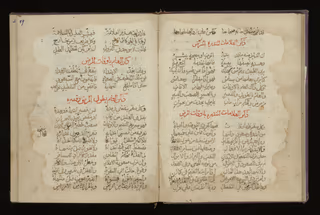
ذكر العلامات المنذرة باوقات المرض

Poet
Ibn Sina
Form
Rajaz
Open the page in the book
The page this poem fills. Each opens in the Ibn Sina's Urjuza fi al-tibb and other medical works in MS Arabic 129 reader.

Hover or tap a word to see its match.

And every illness has times / in which are death and life

Of beginning, ascent, and end / and death is possible in all of them

And a return called decline / in which there is no death except from errors

The beginning is the impairment of functions / and their weakness from other activities

Until you see concoction in the spittle / the expectoration, the feces, and the urines

Then the ascent is seen in the durations / of the bouts of fever and in the functions

And the end is after this state / when you see concoction in perfection

And the diseases do not increase in the bouts / but level off in amount and symptoms

And the disease begins to decrease / and perhaps resolves with a crisis

If you see this sign / then give the sick person good tidings of safety

Or an epidemic in the air like gusts of wind / and every harm that afflicts from outside

For death is not found in the descent / unless it is from an error in the sick person

وكل سقم فله اوقات / فيها يكون الموت والحياة

من ابتدا وصعود وانتها / والموت ممكن على جميعها

وراجع يدعى بالانحطاط / لاموت فيه من سوى الاغلاط

فالابتدا ضرر الافعال / وضعفها عن ساير الاشغال

حتى ترى النضج في التفال / النفث والبراز والابوال

ثم يرى الصعود في الاطوال / من نوب الحمى وفي الافعال

والانتها بعد هذا الحال / اذا رايت النضج في كمال

ولم تزد في النوب الامراض / بل استوت في القدر والاعراض

وياخذ المرض في النقصان / وربما انقضى على بحران

فان رايت هذه العلامة / فبشر العليل بالسلامة

او وبا في الجو كالمنافح / وكل ضر يعتري من خارج

فالموت لا يوجد في النزول / ان لم يكن لخطا في العليل
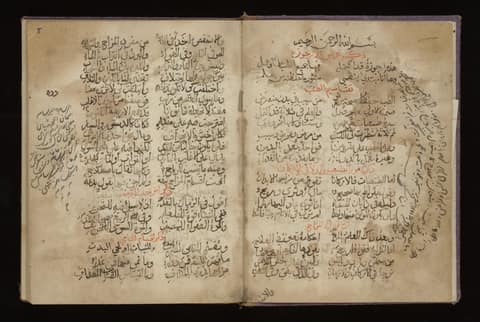
Title page of Ibn Sina's Urjuza fi al-tibb and other medical works in MS Arabic 129
Title page of Ibn Sina's Urjuza fi al-tibb and other medical works in MS Arabic 129 , 1700

About this text

Provenance

MS Arabic 129 is a handwritten Arabic medical volume held by Wellcome Collection in London. It is a composite manuscript: a single volume that brings together 11 separate works. They cover bloodletting, circumcision, the seasons, anatomy, the pulse, and urine, and most are in verse. Most of the verse in this edition is Ibn Sina's Urjuza fi al-tibb, a long poem on medicine, identified from the catalog card in the scans and from the poem's opening lines. Wellcome also names Ibn al-Tilmidh and Ibn Makki among the authors. Shams al-Din ibn Makki wrote three short poems here, and some pieces cannot be identified from the book. The manuscript is undated, and Wellcome estimates it as 18th century.

Methodology

Each scan is treated as a page-level unit. The page image remains the authority for the edition. Local Arabic Kraken OCR was weak and used only as auxiliary context; Gemini generated scan-grounded Arabic transcription and English translation primarily from the manuscript images and the approved glossary. Some word links remain uncertain, and some words have no reliable location on the scan.

Rights

The Wellcome Collection source record marks the digital surrogate with the Public Domain Mark 1.0. Poet Doctor's presentation adds generated OCR, transcription, translation, navigation metadata, and editorial context.

Original scans: Wellcome Collection ( Public Domain Mark 1.0 ).

Historian’s note. This text records the medicine of its own time, and later evidence has replaced most of it. It is not medical advice. We read it as history, and we ask what, if anything, connects it to medicine today. More on how we read old medical books