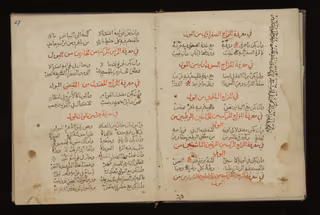
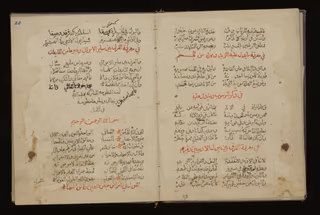
On diagnosing an overview of urine colors

في معرفة جمل من الوان البول

Form
Rajaz
Open the page in the book
The pages this poem fills. Each opens in the Ibn Sina's Urjuza fi al-tibb and other medical works in MS Arabic 129 reader.

Hover or tap a word to see its match.

And if the urine deviates from the usual, / being thin and visibly black,

And there is acridity in it, then the disease / has been caused by the yellow bile.

And if it has thinness and greenness, / and a color comes mixed with yellowness,

Then the body contains black bile, / and the hot and moist is its medicine.

And if you find the patient's urine green, / and it attains turbidity in its consistency,

Then the absolute cold has conquered the body, / and the malignancy of this disease is well-known to us.

And if it is moderate along with blackness, / O friend, in its consistency, and does not incline,

Then blood and yellow bile have dominated the body, / and perhaps the patient's death has become inevitable.

And if there is thickness in it along with greenness, / and its color is conjoined with blackness,

Then the two biles are in the body; / by the power of the Creator, he will surely die.

And if its color is as mentioned, / and it is thin, luminous, and not turbid,

Then the absolute of the two moistures has overcome the body, / and has brought his body to annihilation.

والبول ان حاد عن المعتاد / وهو رقيق ظاهر السواد

وكان فيه حدة فالداء / قد احدثته المرة الصفراء

وان يكن ذا رقة وخضرة / ولون أتي مشوبة بصفرة

فالجسم فيه المرة السوداء / والحار والرطب له دواء

وان تجد بول العليل اخضرا / وحاز في قوامه تكدرا

فمطلق البارد للجسم قهر / وخبث هذا الداء عندنا اشتهر

وان يكن مع السواد معتدلا / يا صاح في قوامه فلم يمل

فالدم والصفرا علي الجسم غلب / وربما موت العليل قد وجب

وان يكن مع خضرة فيه ثخن / وبالسواد لونه قد اقترن

فالجسم فيه المرتان قد هما بقدرة الباري يموت حكما

وان يكن في لونه كما ذكر وهو رقيق مشرق غير كدر

فمطلق الرطبين بالجسم غلب وبجسمه الي الفناء قد جلب
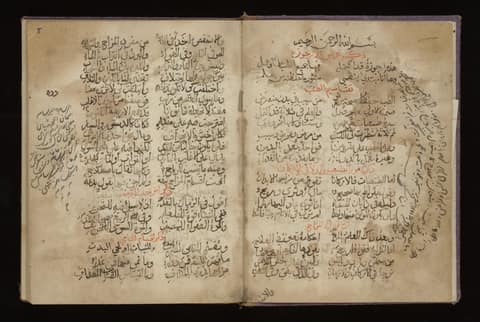
Title page of Ibn Sina's Urjuza fi al-tibb and other medical works in MS Arabic 129
Title page of Ibn Sina's Urjuza fi al-tibb and other medical works in MS Arabic 129 , 1700

About this text

Provenance

MS Arabic 129 is a handwritten Arabic medical volume held by Wellcome Collection in London. It is a composite manuscript: a single volume that brings together 11 separate works. They cover bloodletting, circumcision, the seasons, anatomy, the pulse, and urine, and most are in verse. Most of the verse in this edition is Ibn Sina's Urjuza fi al-tibb, a long poem on medicine, identified from the catalog card in the scans and from the poem's opening lines. Wellcome also names Ibn al-Tilmidh and Ibn Makki among the authors. Shams al-Din ibn Makki wrote three short poems here, and some pieces cannot be identified from the book. The manuscript is undated, and Wellcome estimates it as 18th century.

Methodology

Each scan is treated as a page-level unit. The page image remains the authority for the edition. Local Arabic Kraken OCR was weak and used only as auxiliary context; Gemini generated scan-grounded Arabic transcription and English translation primarily from the manuscript images and the approved glossary. Some word links remain uncertain, and some words have no reliable location on the scan.

Rights

The Wellcome Collection source record marks the digital surrogate with the Public Domain Mark 1.0. Poet Doctor's presentation adds generated OCR, transcription, translation, navigation metadata, and editorial context.

Original scans: Wellcome Collection ( Public Domain Mark 1.0 ).

Historian’s note. This text records the medicine of its own time, and later evidence has replaced most of it. It is not medical advice. We read it as history, and we ask what, if anything, connects it to medicine today. More on how we read old medical books