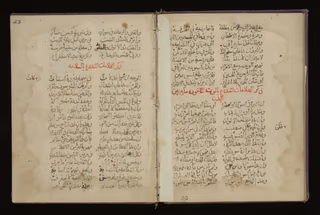
ذكر العلامات المنذره بالموت الماخوذه مما يبرز من البدن

Poet
Ibn Sina
Form
Rajaz
Open the page in the book
The page this poem fills. Each opens in the Ibn Sina's Urjuza fi al-tibb and other medical works in MS Arabic 129 reader.

Hover or tap a word to see its match.

If the feces are black or yellow / or fetid, or greasy, or red

And like water, or frothy feces / and white, all of them are a bad matter

And if it appears varying in colors / then it is death, if it is not from a crisis

And if his appetite is weak / and something similar in pure feces

And pieces of old blood in it / and pieces of flesh that follow it

And if stinging appears after the bile / as if it bites every time

And if his feces appear melancholic / after his body is emaciated by disease

And his bowels are constipated in burning fever / for that is troubling to the brain

And if he appears vocalizing out of an inability to speak / and it was not customary, then it is fatal

Thin, black, scant urine / is death if the sick person urinates it

And delirium with thin urine / is the greatest terror that befalls him

And vomiting and epistaxis in blackness / and in fetor, are from corruption

Scant expectorations in the sputum / in consumption is of bad malignancy

And sputum of various colors and colic / in a cough, are from an approaching death

And sweat specific to the brain / and it does not relieve after the evacuation

ان البراز اسودا او اصفرا / او نتنا او دسما او احمرا

ومثل ماء او براز زبدي / وابيض جميعها امر ردي

وان بدا مختلف الالوان / فالموت ان لم يك من بحران

وان شهوته في ضعف / ونحو ذلك في براز صرف

وقطع اللحم العتيق فيه / وقطع اللحم الذي يليه

وان بدا الذب بعد المرة / كانما يلدغ كل مرة

وان بدا برازه سوداوي / بعد نهوك جسمه بداء

واعتقلت طبيعته في المحرقة / فان تلك للدماغ مقلقة

وان بدا مصوتا و من عي / ولم يكن من عادة فمومي

بول رقيق اسود قليل / موت اذا يبوله العليل

وهذيان مع رقيق بول / اعظم ما يصيبه من هول

والقي والرعاف في سواد / وفي نتونة فمن فساد

نواثق قلت في النفث / في مرض السل ردي الخبث

والنفث ذا الوان والمغص / في سعلة من منية قريبة

وعرق مختص بالدماغ / ولا يريح بعد الاستفراغ
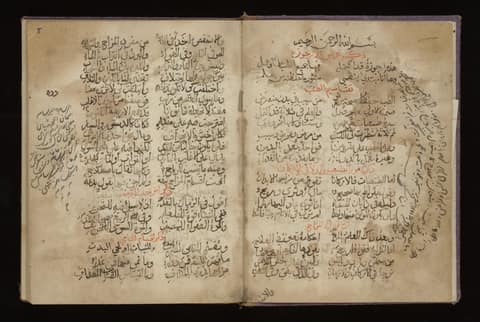
Title page of Ibn Sina's Urjuza fi al-tibb and other medical works in MS Arabic 129
Title page of Ibn Sina's Urjuza fi al-tibb and other medical works in MS Arabic 129 , 1700

About this text

Provenance

MS Arabic 129 is a handwritten Arabic medical volume held by Wellcome Collection in London. It is a composite manuscript: a single volume that brings together 11 separate works. They cover bloodletting, circumcision, the seasons, anatomy, the pulse, and urine, and most are in verse. Most of the verse in this edition is Ibn Sina's Urjuza fi al-tibb, a long poem on medicine, identified from the catalog card in the scans and from the poem's opening lines. Wellcome also names Ibn al-Tilmidh and Ibn Makki among the authors. Shams al-Din ibn Makki wrote three short poems here, and some pieces cannot be identified from the book. The manuscript is undated, and Wellcome estimates it as 18th century.

Methodology

Each scan is treated as a page-level unit. The page image remains the authority for the edition. Local Arabic Kraken OCR was weak and used only as auxiliary context; Gemini generated scan-grounded Arabic transcription and English translation primarily from the manuscript images and the approved glossary. Some word links remain uncertain, and some words have no reliable location on the scan.

Rights

The Wellcome Collection source record marks the digital surrogate with the Public Domain Mark 1.0. Poet Doctor's presentation adds generated OCR, transcription, translation, navigation metadata, and editorial context.

Original scans: Wellcome Collection ( Public Domain Mark 1.0 ).

Historian’s note. This text records the medicine of its own time, and later evidence has replaced most of it. It is not medical advice. We read it as history, and we ask what, if anything, connects it to medicine today. More on how we read old medical books