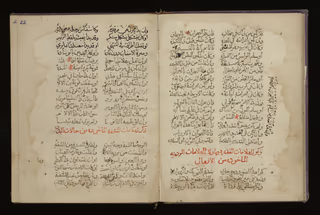
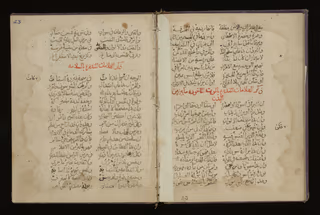
Mention of the warning signs taken from the states of the body

ذكر العلامات المنذره المأخوذه من حالات البدن

Poet
Ibn Sina
Form
Rajaz
Open the page in the book
The pages this poem fills. Each opens in the Ibn Sina's Urjuza fi al-tibb and other medical works in MS Arabic 129 reader.

Hover or tap a word to see its match.

The face, how much it resembles the face of the dead / and the sinking of the temple from hardship

And the ears contract from their coldness / and the eyes invert and sink

And the redness of the eye and its blackness / or if they bulge, or if their strabismus appears

Or they become still, or cold, or stare / or their eyelids become diminished

And the nose is snubbed, and the folding of the forehead / and a shrinking is apparent at the edge of the lip

And coldness in the extremities of a person / and ulcers and blackness in the tongue

With agitation, and matters are troubling / for they are bad in burning fever

And redness and greenness of the nails / and the blackest of marks on the body

And jaundice coming before the seventh [day] / with emaciation appearing in the false ribs

And coldness, if it appears on the surface of the body / while heat has become latent within it

Especially if this remains / upon a principal organ

Swelling of the face along with the extremities / before two weeks is a sufficient matter

For this person's demise is swift / and he will not be seen reaching two weeks

Or the fever subsides without relief / or he is seen intensifying in distress

الوجه ما اشبه وجه الميته / ولصق الصدغ من المشقه

وانقبضت من بردها الاذنان / وانقلبت وغارت العينان

وحمرة العين واسودادها / او ان نتت او ان بدا احولالها

او سكنت أو بردت او شخصت / او كانت الاجفان منها نقصت

واخنس الانف وطي الجبهة / وبان تقليص بحد الشفة

والبرد في الاطراف من انسان / والقرح والسواد في اللسان

مع اضطراب والامور مقلقة / فانها رديّة في المحرقة

وحمرة وخضرة الاظفار / واسود ما في الجسم من اثار

ويرقان قبل سابع اتى / الي هزال في الشراسيف بدى

والبرد ان بدا على سطح البدن / والحر في داخله لقد كمن

لا سيما ان كان ذا بقاء / على رئيسية من الاعضاء

تهيج الوجه مع الاطراف / من قبل اسبوعين امر كافي

فان ذا المرء سريع الحين / فلا يري يبلغ اسبوعين

او تسكن الحمى بلا انفراج / او ان يري يشتد في الازعاج
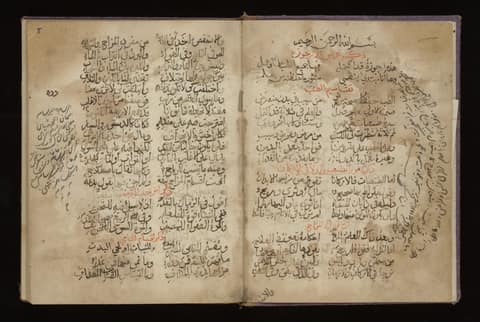
Title page of Ibn Sina's Urjuza fi al-tibb and other medical works in MS Arabic 129
Title page of Ibn Sina's Urjuza fi al-tibb and other medical works in MS Arabic 129 , 1700

About this text

Provenance

MS Arabic 129 is a handwritten Arabic medical volume held by Wellcome Collection in London. It is a composite manuscript: a single volume that brings together 11 separate works. They cover bloodletting, circumcision, the seasons, anatomy, the pulse, and urine, and most are in verse. Most of the verse in this edition is Ibn Sina's Urjuza fi al-tibb, a long poem on medicine, identified from the catalog card in the scans and from the poem's opening lines. Wellcome also names Ibn al-Tilmidh and Ibn Makki among the authors. Shams al-Din ibn Makki wrote three short poems here, and some pieces cannot be identified from the book. The manuscript is undated, and Wellcome estimates it as 18th century.

Methodology

Each scan is treated as a page-level unit. The page image remains the authority for the edition. Local Arabic Kraken OCR was weak and used only as auxiliary context; Gemini generated scan-grounded Arabic transcription and English translation primarily from the manuscript images and the approved glossary. Some word links remain uncertain, and some words have no reliable location on the scan.

Rights

The Wellcome Collection source record marks the digital surrogate with the Public Domain Mark 1.0. Poet Doctor's presentation adds generated OCR, transcription, translation, navigation metadata, and editorial context.

Original scans: Wellcome Collection ( Public Domain Mark 1.0 ).

Historian’s note. This text records the medicine of its own time, and later evidence has replaced most of it. It is not medical advice. We read it as history, and we ask what, if anything, connects it to medicine today. More on how we read old medical books