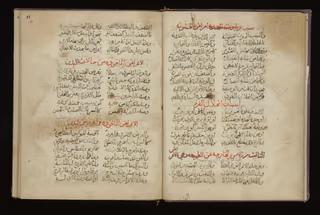
Symptoms derived from what is excreted from the body

الاعراض الماخوذه مما يبرز من البدن

Poet
Ibn Sina
Form
Rajaz
Open the page in the book
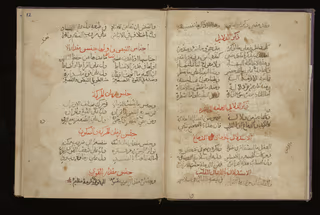
The pages this poem fills. Each opens in the Ibn Sina's Urjuza fi al-tibb and other medical works in MS Arabic 129 reader.

Hover or tap a word to see its match.

And the symptom derived from what is excreted / is also manifested through the five senses.

Like urine that is red and black, / and expectoration that is white, and froth.

And some of what exits by release, / like wind, sneezing, and hiccups.

And vomit may be found to have sourness, / or bitterness, or astringency.

And urine, if found to have a stench, / indicates ulcers in the bladder.

And sweat, when it exits, may be felt / as cold and hot, or thin, being mixed.

And these symptoms in the one with the illness / are his symptoms, and for us, they are signs.

My mention of what is beneficial has passed / and here I mention them in detail.

والعرض الماخوذ مما يبرز بالخمسة الحواس ايضا يبرز

كالبول من احمر والاسود والنفث من ابيض والزبد

ومنه ما يخرج بالاطلاق كالريح والعطاس والفواق

والقي قد يصاب ذا حموضه وذا مراره وذا قبوضه

والبول ما اصيب ذات نتنه دل على القروح في المثانه

وعرق يحس منه ان خرج بردا وحرا او رقيقا يمزج

وهذه الاعراض في ذي العلة اعراضه وعندنا ادلة

وقد مضى ذكرى لما يفيد / وها انا اذكرها تفصيلا
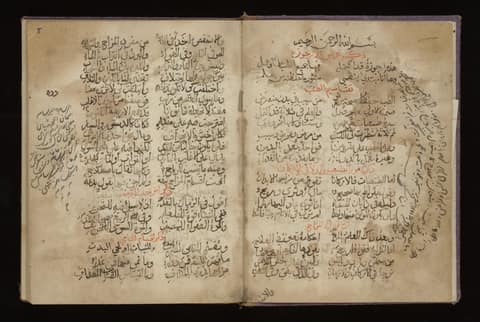
Title page of Ibn Sina's Urjuza fi al-tibb and other medical works in MS Arabic 129
Title page of Ibn Sina's Urjuza fi al-tibb and other medical works in MS Arabic 129 , 1700

About this text

Provenance

MS Arabic 129 is a handwritten Arabic medical volume held by Wellcome Collection in London. It is a composite manuscript: a single volume that brings together 11 separate works. They cover bloodletting, circumcision, the seasons, anatomy, the pulse, and urine, and most are in verse. Most of the verse in this edition is Ibn Sina's Urjuza fi al-tibb, a long poem on medicine, identified from the catalog card in the scans and from the poem's opening lines. Wellcome also names Ibn al-Tilmidh and Ibn Makki among the authors. Shams al-Din ibn Makki wrote three short poems here, and some pieces cannot be identified from the book. The manuscript is undated, and Wellcome estimates it as 18th century.

Methodology

Each scan is treated as a page-level unit. The page image remains the authority for the edition. Local Arabic Kraken OCR was weak and used only as auxiliary context; Gemini generated scan-grounded Arabic transcription and English translation primarily from the manuscript images and the approved glossary. Some word links remain uncertain, and some words have no reliable location on the scan.

Rights

The Wellcome Collection source record marks the digital surrogate with the Public Domain Mark 1.0. Poet Doctor's presentation adds generated OCR, transcription, translation, navigation metadata, and editorial context.

Original scans: Wellcome Collection ( Public Domain Mark 1.0 ).

Historian’s note. This text records the medicine of its own time, and later evidence has replaced most of it. It is not medical advice. We read it as history, and we ask what, if anything, connects it to medicine today. More on how we read old medical books