Hover or tap a word to see its match.
And next, we begin to mention the muscles / some are for shape, some have an advantage.
And their number in kind is five hundred / and then a quarter of a hundred may follow them.
Followed by four separate ones / and you, listen to this detailed.
So seven are in his face and the eye / and twelve for each eye.
And four with four, not neglected / move the jaw which is from below.
And twelve for each jaw / without falsehood and without doubt.
Two tens in the head, with an addition to them / three assisting in their action.
And four are mounted in the trachea / for the lung of man like a band.
And six and seven in the larynx / understood, known, and famous.
And indeed the 'lam' in Greek has been mentioned / so seven labor for its action.
And in the tongue are nine composed / but in their action they are different.
In the throat a pair has become mounted / and four have assisted the neck.
And every shoulder has for movement / fourteen shared.
And the elbow of man has in it like a protector / with four for every action it has been sufficed.
And twelve to strengthen the forearm / and five assist in its action.
Nine and seven for the hand / help in moving it and stopping (it).
And his chest has moved eight / and nine are equal to their action.
In the chest from them are four and four / and forty in the place are useful.
Moving the abdomen to eight / from them to the neck of the bladder coming.
And for the penis four are decreed / and for the testicles the like of it is known.
And four surround the border of the anus / so that if the person relaxes them, it opens
.
And six and six in the hip / followed by one in the thread.
And nine and nine are inclined / in their action they benefit the eye of the knee.
And the ankle, He made it firm and secured it / with nine after nine secured.
In the lower leg are seven, then seven after them / so whoever explains them firmly has counted them.
And the Creator made firm the lower leg of the foot / and after them ten and ten in the mouth.
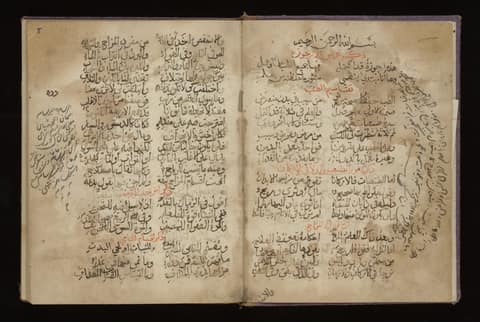
وبعدما نشرع في ذكر العضل / فبعضها للشكل للبعض فضل
وعدها في الضرب خمسمائة / وثم قد يتبعها ربع المائة
يتبعها اربعة منفصلة / وانت فاسمع هذه مفصلة
فسبعة في وجهه والعين / واثني عشر لكل عين
واربع مع اربع لم تهمل / تحرك اللحي الذي من اسفل
واثني عشر لكل فك / بغير مين وبغير شك
عشرتين في الراس عليها زايدة / ثلاثة بفعلها مساعدة
واربع ركبت في القصبة / لرية الانسان مثل العصبة
وستة وسبعة في الحنجرة / مفهومة معلومة مشتهرة
وقد ذكرت اللام باليوناني / فسبعة لفعلها تعاني
وفي اللسان تسعة مولفة / لكنها في فعلها مختلفة
في الحلق زوج قد غدت مركبة / واربع قد ساعدت للرقبة
وكل كتف فله للحركة / اربعة وعشرة مشتركة
ومرفق الانسان فيه كالحفي / باربع لكل فعل قد كفي
واثني عشر لشد الساعد / وخمسة في فعلها تساعد
تسعة وسبعة للكف / تعين في تحريكها وتكف
وصدره قد حرك ثمانية / وتسعة لفعلها مساوية
في الصدر منها اربعة واربع / واربعون في المكان تنفع
تحرك البطن الى ثمانية / منها الى عنق المثانة اتية
وللقضيب اربع محتومة / والانثيين مثلها معلومة
واربعة تحوط بجد الشرج / حتى اذا ارخا بها الشخص اهم
وستة وستة في الورك / تتبعهم واحدة في السلك
وتسعة وتسعة منكبة / في فعلها تنفع عين الركبة
والكعب قد احكمه ووثقه / بتسعة من بعد تسع موثقة
في الساق سبع ثم سبع بعدها / فمن شرحها محكما قد عدها
فاحكم الباري لساق القدم / وبعدها عشر وعشر في الفم