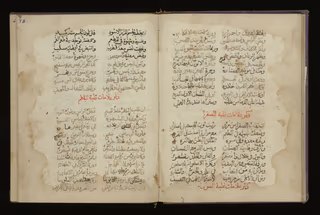
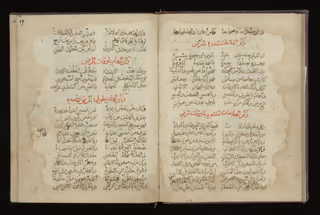
Mention of the signs of the dominance of phlegm

ذكر علامات غلبة البلغم

Poet
Ibn Sina
Form
Rajaz
Open the page in the book
The pages this poem fills. Each opens in the Ibn Sina's Urjuza fi al-tibb and other medical works in MS Arabic 129 reader.

Hover or tap a word to see its match.

If phlegm dominates the humor of the body then heaviness of the head and length of sleep

And laziness and decrease in appetite and repletion with corruption of strength

And laziness in walking or dullness to an unusual flaccidity

And his color is towards an ugly whiteness and the flow of saliva and puffiness

And the pulse in it has a slow thickness and the urine is thick, viscous, unconcocted

And thirst does not afflict him, and if it does then it is a salty phlegm or has putrefaction in it

And an abundance of moist food and the age of an old man and the times of winter

Without exercise or a bath and perhaps he has been excessive in food

And the region of cold and rains and his sleep, he dreams of rivers

And he complains in his sleep of nightmares and does not find digestion for chyle

So if you see the constant symptoms from the necessities in diseases

If they persist in a state of health / then be insistent upon their removal

ان غلب البلغم خلط الجسم فثقل الراس وطول النوم

وكسل وقلة في الشهوة والامتلا بفساد القوة

وكسل في المشي او بلاده الي رخاوة بغير عاده

ولونه الي بياض يسمج وسيلان الريق والتهيج

والنبض فيه غلظ بطي والبول خاثر غليظ ني

ولا يصيبه عطشا وان يكن فبلغم مالح او فيه عفن

وكثرة من رطب الغذاء وعمر الشيخ واوقات الشتاء

بلا رياضه ولا حمام وربما اسرف في الطعام

والبلد ذي البرد والامطار ونومه يحلم في الانهار

ويشتكي في نومه الكابوسا ولا يجد هضما لكيلوسا

فان رايت لازم الاعراض من الضروريات في الامراض

قد لزمت في حاله صحاحا / فكن على زوالها ملحاحا
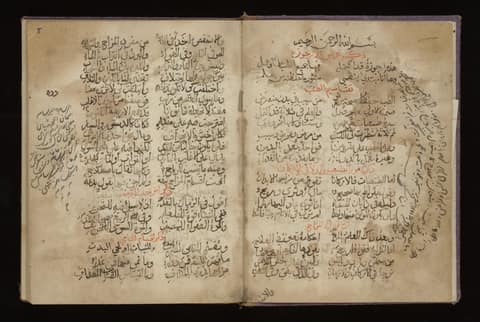
Title page of Ibn Sina's Urjuza fi al-tibb and other medical works in MS Arabic 129
Title page of Ibn Sina's Urjuza fi al-tibb and other medical works in MS Arabic 129 , 1700

About this text

Provenance

MS Arabic 129 is a handwritten Arabic medical volume held by Wellcome Collection in London. It is a composite manuscript: a single volume that brings together 11 separate works. They cover bloodletting, circumcision, the seasons, anatomy, the pulse, and urine, and most are in verse. Most of the verse in this edition is Ibn Sina's Urjuza fi al-tibb, a long poem on medicine, identified from the catalog card in the scans and from the poem's opening lines. Wellcome also names Ibn al-Tilmidh and Ibn Makki among the authors. Shams al-Din ibn Makki wrote three short poems here, and some pieces cannot be identified from the book. The manuscript is undated, and Wellcome estimates it as 18th century.

Methodology

Each scan is treated as a page-level unit. The page image remains the authority for the edition. Local Arabic Kraken OCR was weak and used only as auxiliary context; Gemini generated scan-grounded Arabic transcription and English translation primarily from the manuscript images and the approved glossary. Some word links remain uncertain, and some words have no reliable location on the scan.

Rights

The Wellcome Collection source record marks the digital surrogate with the Public Domain Mark 1.0. Poet Doctor's presentation adds generated OCR, transcription, translation, navigation metadata, and editorial context.

Original scans: Wellcome Collection ( Public Domain Mark 1.0 ).

Historian’s note. This text records the medicine of its own time, and later evidence has replaced most of it. It is not medical advice. We read it as history, and we ask what, if anything, connects it to medicine today. More on how we read old medical books