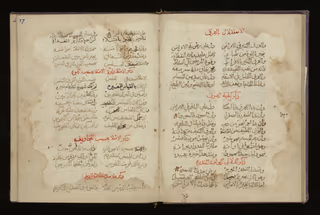
Mentioning the quality of sweat

ذكر كيفية العرق

Poet
Ibn Sina
Form
Rajaz
Open the page in the book
The page this poem fills. Each opens in the Ibn Sina's Urjuza fi al-tibb and other medical works in MS Arabic 129 reader.

Hover or tap a word to see its match.

If the sweat appears white / it indicates phlegm in diseases

If it appears yellow, then yellow bile / and if black, then black bile

If it appears red, it is from blood / and similarly, it indicates to us in diet

Subtle sweat is from its subtlety / and thick sweat is from its thickness

If it covers the body, it is good / and if it is restricted to a place, it is bad

And if it comes in its proper time / its crisis accompanying the crisis

It is a good and praiseworthy sign / and the opposite of this, its goodness is remote

وان بدا العرق ذا ابيضا / دل علي البلغم في الامراض

وان بدا اصفر فالصفراء / وان اسود فالسوداء

وان بدا احمر فهو من دم / ومثل ذا يدلنا في المطعم

والعرق اللطيف من لطافته / والعرق الكثيف من كثافته

وان يعم الجسم فهو خير / وان يخص موضعا فشر

وهو اذا يجي في اوانه / ملتزما للبحران بحرانه

فهو دليل جيد محمود / وضد هذا خيره بعيد
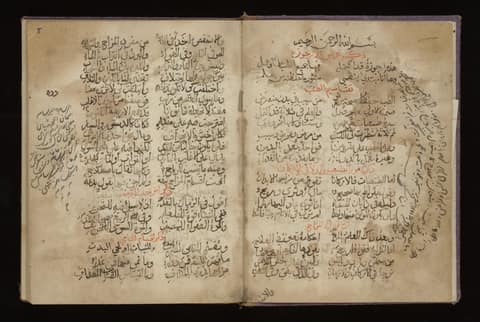
Title page of Ibn Sina's Urjuza fi al-tibb and other medical works in MS Arabic 129
Title page of Ibn Sina's Urjuza fi al-tibb and other medical works in MS Arabic 129 , 1700

About this text

Provenance

MS Arabic 129 is a handwritten Arabic medical volume held by Wellcome Collection in London. It is a composite manuscript: a single volume that brings together 11 separate works. They cover bloodletting, circumcision, the seasons, anatomy, the pulse, and urine, and most are in verse. Most of the verse in this edition is Ibn Sina's Urjuza fi al-tibb, a long poem on medicine, identified from the catalog card in the scans and from the poem's opening lines. Wellcome also names Ibn al-Tilmidh and Ibn Makki among the authors. Shams al-Din ibn Makki wrote three short poems here, and some pieces cannot be identified from the book. The manuscript is undated, and Wellcome estimates it as 18th century.

Methodology

Each scan is treated as a page-level unit. The page image remains the authority for the edition. Local Arabic Kraken OCR was weak and used only as auxiliary context; Gemini generated scan-grounded Arabic transcription and English translation primarily from the manuscript images and the approved glossary. Some word links remain uncertain, and some words have no reliable location on the scan.

Rights

The Wellcome Collection source record marks the digital surrogate with the Public Domain Mark 1.0. Poet Doctor's presentation adds generated OCR, transcription, translation, navigation metadata, and editorial context.

Original scans: Wellcome Collection ( Public Domain Mark 1.0 ).

Historian’s note. This text records the medicine of its own time, and later evidence has replaced most of it. It is not medical advice. We read it as history, and we ask what, if anything, connects it to medicine today. More on how we read old medical books