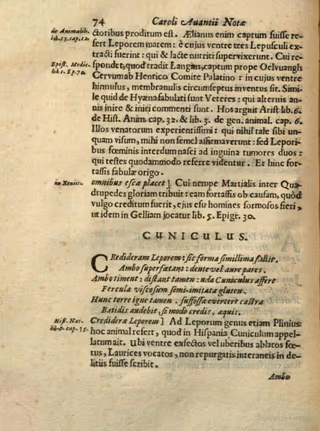
C U N I C U L U S .

Poet
Baptista Fiera
Form
Elegiac couplet
Open the page in the book
The page this poem fills. Each opens in the Coena, sive De cibariorum virtutibus reader.

Hover or tap a word to see its match.

I had thought it a Hare: thus a very similar form deceives.

Both superfetate: they are equal in tooth or ear.

Both are fearful: yet they differ: the Rabbit brings moist

Dishes half-imitating viscous glue.

Yet roast this one with fire. It will dare to overturn undermined camps

Into the waters of the Baetis, if only you believe it.

C Redideram Leporem : ſic forma ſimillima fallit .

Ambo ſuperfœtant : dente vel aure pares .

Ambo timent : diſtant tamen : uda Cuniculus affert

Fercula viſcoſum ſemi-imitata gluten .

Hunc torre igne tamen . ſuffoſſa evertere caſtra

Bætidis audebit , ſi modò credis, aquis.
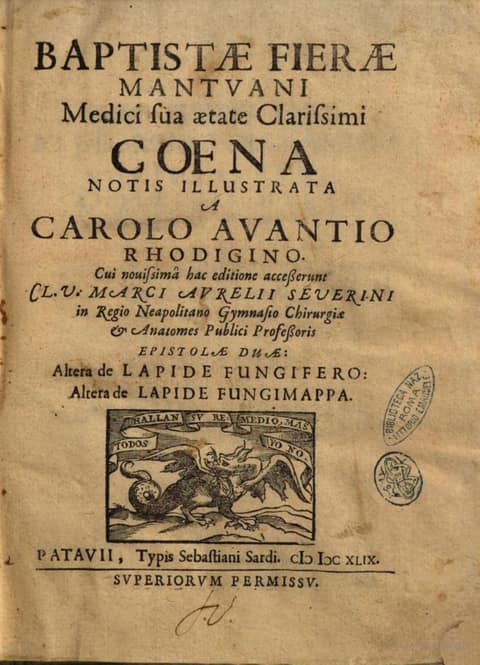
Title page of Coena, sive De cibariorum virtutibus
Title page of Coena, sive De cibariorum virtutibus , 1649

About this text

Provenance

This digital edition is derived from the Internet Archive copy of Battista Fiera's 1649 _Coena, sive De cibariorum virtutibus_, a Latin medical dinner poem with Carlo Avanzi's notes and related material.

Methodology

Each scan is treated as a page-level unit. The page image remains the authority for the edition. Local Kraken OCR used the Reichenau Latin early-print model as a reading aid, then Gemini generated scan-grounded Latin transcription and scholarly English translation from the images, the OCR aid, and the approved glossary. Word links connect the English translation to the Latin transcription and locations on the scans. 32 uncertain word-link decisions remain unlinked. Some links highlight only the text because the source word could not be located on the scan.

Rights

The Internet Archive metadata and IIIF manifest record the digital surrogate under the Creative Commons Public Domain Mark 1.0. Poet Doctor's presentation adds generated OCR, transcription, translation, navigation metadata, and editorial context.

Original scans: Internet Archive / Google Books ( Public Domain Mark 1.0 ).

Historian’s note. This text records the medicine of its own time, and later evidence has replaced most of it. It is not medical advice. We read it as history, and we ask what, if anything, connects it to medicine today. More on how we read old medical books