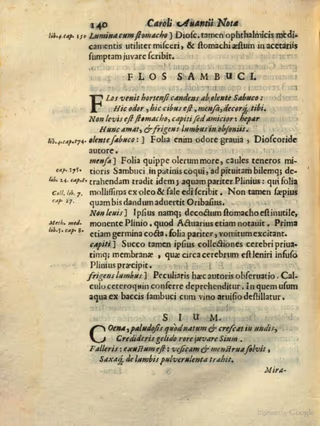
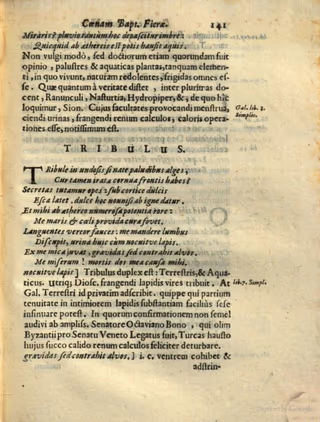
S I U M.

Poet
Baptista Fiera
Form
Elegiac couplet
Open the page in the book
The pages this poem fills. Each opens in the Coena, sive De cibariorum virtutibus reader.

Hover or tap a word to see its match.

Because it is born and grows in marshy waters, O Coena,

You might have believed Sium helps with its cold dew.

You are deceived: it is burnt: it loosens the bladder and menses,

And draws powdery stones from the loins.

Are you surprised? It feeds only on the rainy shower:

Whatever it can, it has drawn from ethereal waters.

COena, paludoſis quòd natum & creſcat in undis,

Credideris gelido rore juvare Sium.

Falleris: exuſtum eſt: veſicam & menſtrua ſolvit,

Saxaq́; de lumbis pulverulenta trahit.

Miràris? pluvio tantùm hoc depaſcitur imbre:

Quicquid ab æthereis eſt potis hauſit aquis.
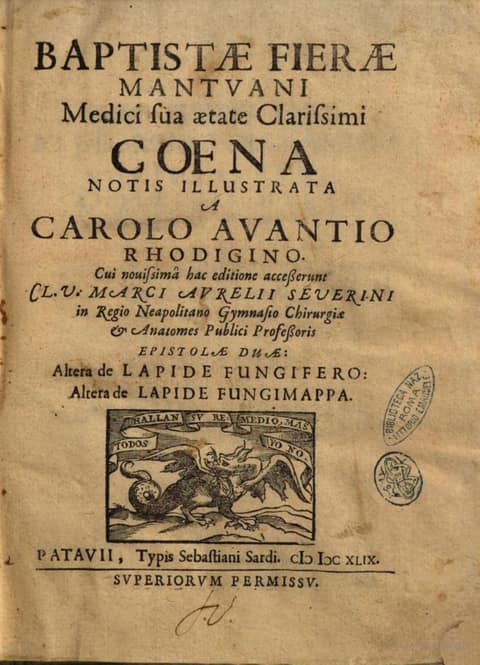
Title page of Coena, sive De cibariorum virtutibus
Title page of Coena, sive De cibariorum virtutibus , 1649

About this text

Provenance

This digital edition is derived from the Internet Archive copy of Battista Fiera's 1649 _Coena, sive De cibariorum virtutibus_, a Latin medical dinner poem with Carlo Avanzi's notes and related material.

Methodology

Each scan is treated as a page-level unit. The page image remains the authority for the edition. Local Kraken OCR used the Reichenau Latin early-print model as a reading aid, then Gemini generated scan-grounded Latin transcription and scholarly English translation from the images, the OCR aid, and the approved glossary. Word links connect the English translation to the Latin transcription and locations on the scans. 32 uncertain word-link decisions remain unlinked. Some links highlight only the text because the source word could not be located on the scan.

Rights

The Internet Archive metadata and IIIF manifest record the digital surrogate under the Creative Commons Public Domain Mark 1.0. Poet Doctor's presentation adds generated OCR, transcription, translation, navigation metadata, and editorial context.

Original scans: Internet Archive / Google Books ( Public Domain Mark 1.0 ).

Historian’s note. This text records the medicine of its own time, and later evidence has replaced most of it. It is not medical advice. We read it as history, and we ask what, if anything, connects it to medicine today. More on how we read old medical books