Hover or tap a word to see its match.
And after that, the knowledge of the temperament / its rules aid in the treatment
As for the temperament, its powers are four / the physician separates them or combines them
Of hot, cold, and dry / and soft which the touch of the feeler perceives
They are counted in the elements and the times / and in that which grows and in the human
With the element, I begin concerning the quiddity / of the singulars of the temperament and the structure
Hot is in fire and in the air / and cold is in the earth and the water
And dry is between fire and earth / and soft is between water and air
Between their essences is a difference / decreeing for us repulsion and attraction
And they differed so they would not be singular / and they aligned so they would not be seen as opposed
And whatever is other than the element, of a compound / in our species, its temperament is according to the predominant
You make the balanced one a rule / which has gathered the four categories
They mixed in it in proportion / so it was like the constitution and the probe
So all of it is characterized by deviation / and inclined from one of the extremities
So if it is pure of the powers / but they are in it on a non-equal basis
It is called, mostly, fiery / or earthy or of flowing water
And from it is what is attributed to the winds / and all of them are said by convention
I affirmed the divisions of the temperament as nine / and I do not dispute in them with an utterance of innovation
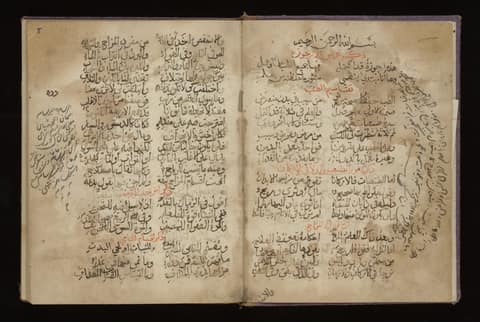
وبعد ذاك العلم بالمزاج / احكامه تعين في العلاج
اما المزاج فقواه اربع / يفردها الحكيم أو يجمعها
من سخن وبارد ويابس / ولين ينال حسن اللامس
تعد في الاركان والازمان / وفي الذي ينمي وفي الانسان
بالاستقصى اخذ في الماهيه / من مفردي المزاج والبنيه
الحر في النار وفي الهواء / والبرد في التراب والماء
واليُبْسُ بين النار والتراب / واللين بين الماء والهواء
بين جواهرها اختلاف / تقضي لنا بالرد والائتلاف
واختلفت كي لا تكون مفرده / وائتلفت كي لا ترى مضاده
وما سوى العُنصُرِ من مركب / في صنفنا مزاجه كالاغلب
معتدلا تجعله قانونا / قد جمع الاربعة الفنونا
امتزجت فيه على مقدار / فكان كالدستور والسبار
فكله أُخُص بالانحراف / ومال عن احدى ذوات الطراف
فان يكون خالصا من القوى / لكنها فيه على غير السوي
يُدعى على الاغلب بالناري / او التراب او لماء الجاري
ومنه ما ينسب للرياح / وكلها تقال باصطلاح
اثبت اقسام المزاج تسعة / ولا اماري فيها بقول بدعة