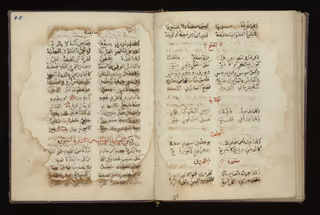
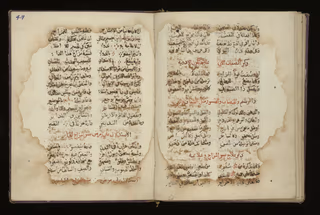
ذكر القوى الثوالث من الادوية المفردة

Poet
Ibn Sina
Form
Rajaz
Open the page in the book
The pages this poem fills. Each opens in the Ibn Sina's Urjuza fi al-tibb and other medical works in MS Arabic 129 reader.

Hover or tap a word to see its match.

And whatever occurring [effects] I mention after this, / take them from the tertiary powers.

Like the crushing of the stone in the kidneys, / from everything you find to be a resolvent,

Resolvent, attenuating, and softening, / and let there be no mistake in this, with certainty.

Like asparagus root and reed root, / and like polypody roots, and fenugreek.

And like that, possessing some heat, / and its stinging expels what is in the chest.

If it is moderate in heat / it generates milk,

And whatever has effects in expelling / that is an expeller of menses,

And if it increases in heat, do not fear / for that in its effects may desiccate,

And all of these promote urine / and every acrid thing is more prone to that.

وما ذكرت بعد ذا من حادث / خذه عن القوى الثوالث

كمثل تفتيت الحصاة في الكلا / من كل ما تجده محللا

محللا ملطفا ملينا / ولا يغلط فيه ذا يقينا

كاصل هليون واصل قصب / وكسفنج عروق وحلب

ومثل ذا وفيه بعض الحر / ولذعه يخرج ما في الصدر

وإن يكن معتدلا في السخن / فإنه مولد للبن

وكلما أفعاله في النفض / فإن ذاك مخرج للطمث

وإن زاد في الحرّ فلا يخف / فذاك في أفعاله قد ينشف

وكل هذه تدرّ البولا / وكل حريف بذاك أولى
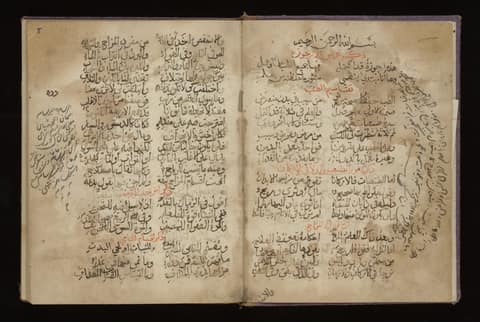
Title page of Ibn Sina's Urjuza fi al-tibb and other medical works in MS Arabic 129
Title page of Ibn Sina's Urjuza fi al-tibb and other medical works in MS Arabic 129 , 1700

About this text

Provenance

MS Arabic 129 is a handwritten Arabic medical volume held by Wellcome Collection in London. It is a composite manuscript: a single volume that brings together 11 separate works. They cover bloodletting, circumcision, the seasons, anatomy, the pulse, and urine, and most are in verse. Most of the verse in this edition is Ibn Sina's Urjuza fi al-tibb, a long poem on medicine, identified from the catalog card in the scans and from the poem's opening lines. Wellcome also names Ibn al-Tilmidh and Ibn Makki among the authors. Shams al-Din ibn Makki wrote three short poems here, and some pieces cannot be identified from the book. The manuscript is undated, and Wellcome estimates it as 18th century.

Methodology

Each scan is treated as a page-level unit. The page image remains the authority for the edition. Local Arabic Kraken OCR was weak and used only as auxiliary context; Gemini generated scan-grounded Arabic transcription and English translation primarily from the manuscript images and the approved glossary. Some word links remain uncertain, and some words have no reliable location on the scan.

Rights

The Wellcome Collection source record marks the digital surrogate with the Public Domain Mark 1.0. Poet Doctor's presentation adds generated OCR, transcription, translation, navigation metadata, and editorial context.

Original scans: Wellcome Collection ( Public Domain Mark 1.0 ).

Historian’s note. This text records the medicine of its own time, and later evidence has replaced most of it. It is not medical advice. We read it as history, and we ask what, if anything, connects it to medicine today. More on how we read old medical books