Icones veterum aliquot, ac recentium medicorum, philosophorumque elegiolis suis editae: Portraits of physicians and philosophers with elegiac poems

Compiled by Joannes Sambucus (János Zsámboky) · Published 1574 · Latin with English translation · Getty Research Institute copy via Internet Archive

Historian’s note. This text records the medicine of its own time, and later evidence has replaced most of it. It is not medical advice. We read it as history, and we ask what, if anything, connects it to medicine today.

Historian’s note. This text records the medicine of its own time, and later evidence has replaced most of it. It is not medical advice. We read it as history, and we ask what, if anything, connects it to medicine today. More on how we read old medical books

We have not yet reviewed the translation of this book.

● Front matter·scan 6

Facsimile

Source: Internet Archive page images from the Getty Research Institute copy

Loading facsimilescan 6 · scan 6

Icones veterum aliquot, ac recentium medicorum, philosophorumque elegiolis suis editae

Portraits of physicians and philosophers with elegiac poems

Compiled by Joannes Sambucus (János Zsámboky), 1574. The edition has the page scans, the Latin text, and an English translation.

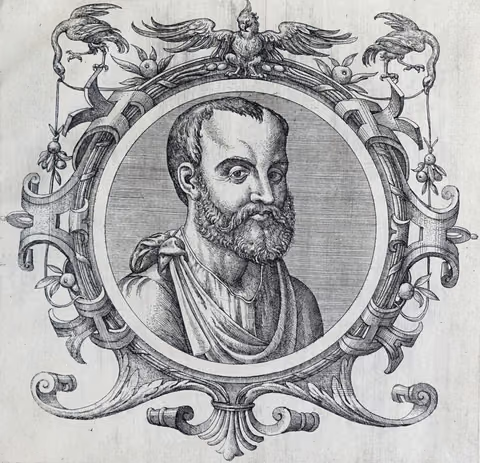
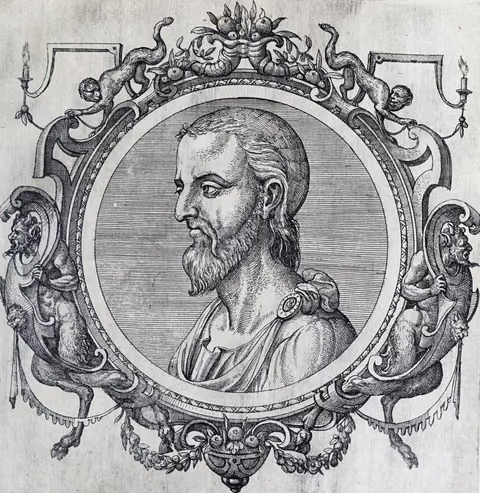
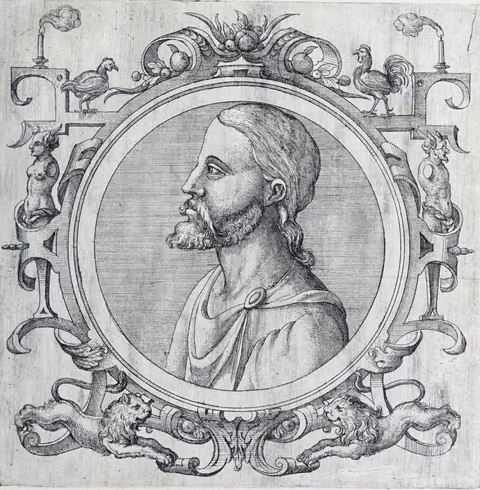
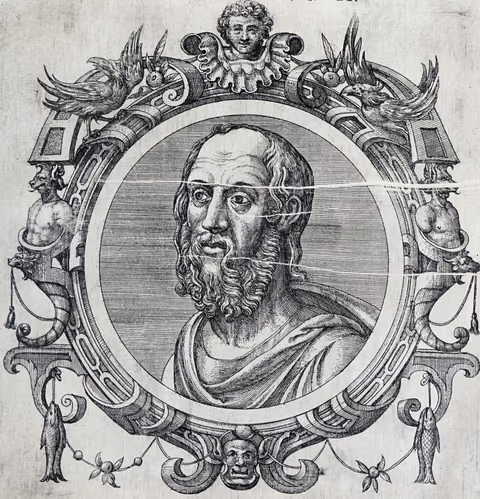
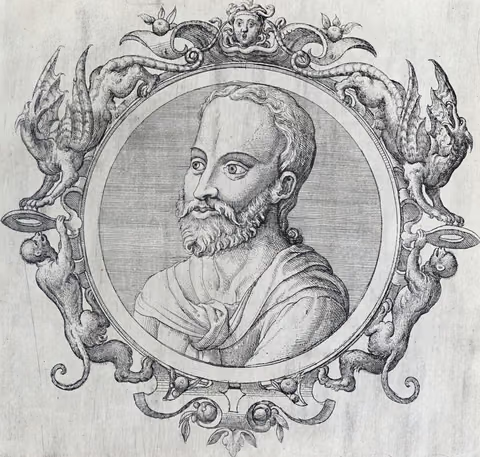
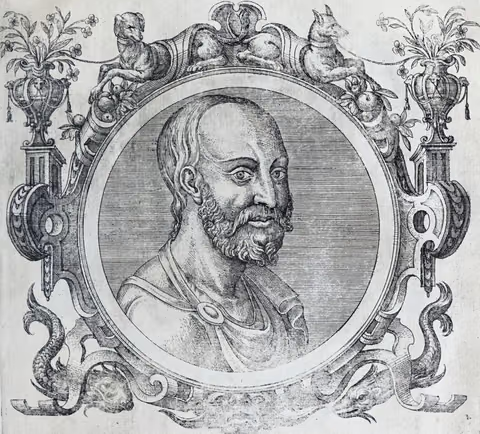
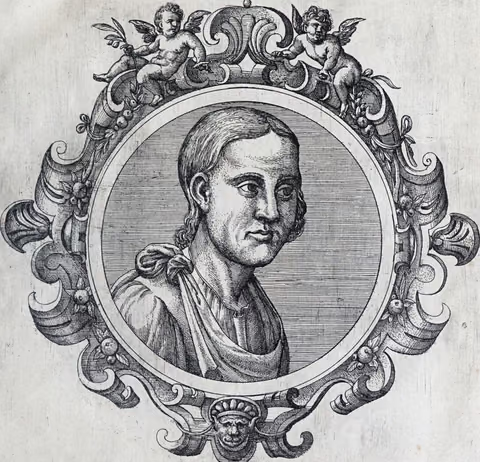
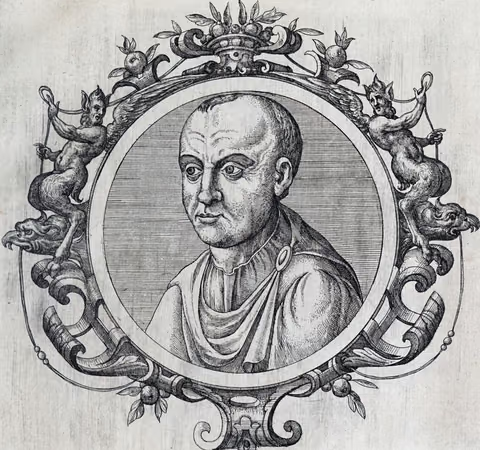
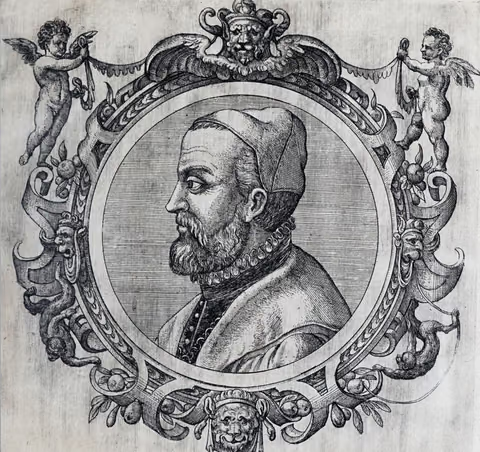
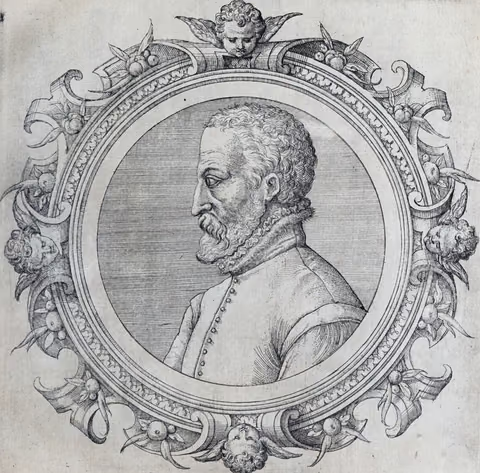
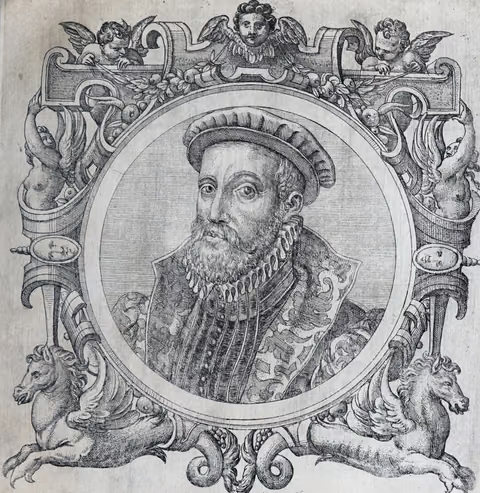
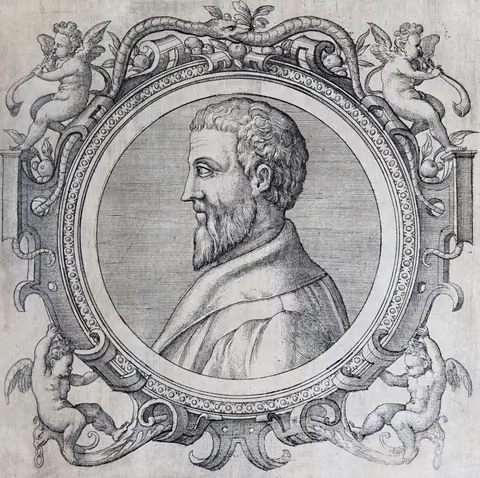
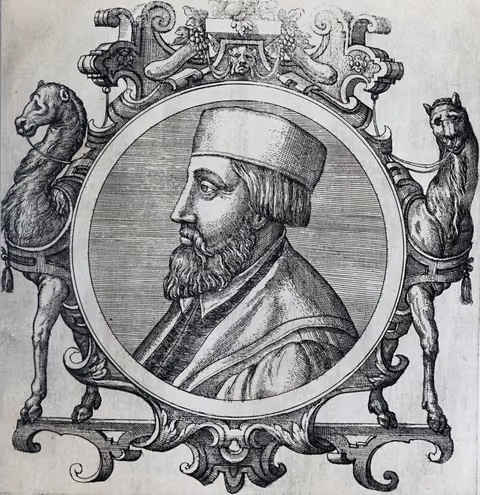
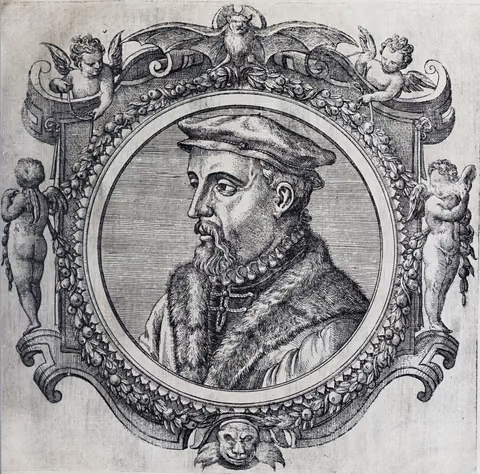
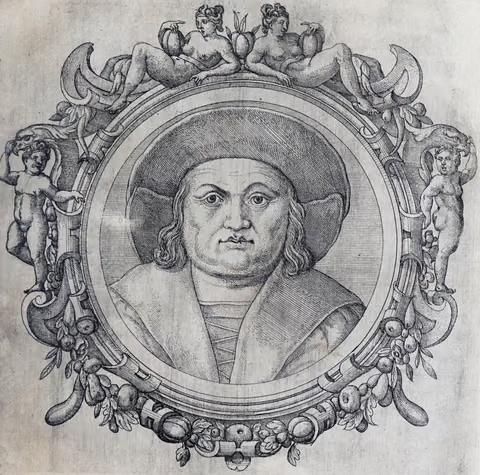
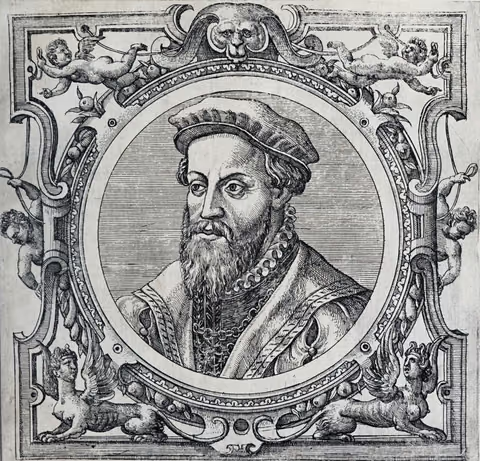
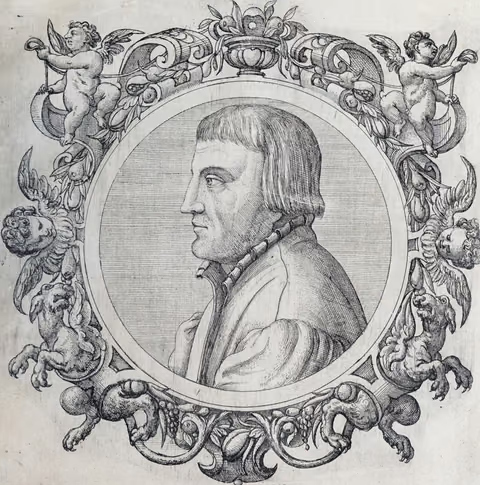
Joannes Sambucus (János Zsámboky, 1531–1584) was a Hungarian humanist who took his medical licence at Padua in 1555. At Vienna he served three Habsburg emperors as court physician and historian. His Icones, printed by Christophe Plantin at Antwerp in 1574, has 67 numbered portraits of physicians and philosophers, each with a short Latin poem in elegiac couplets, nearly all by Sambucus. The sequence begins with Hygieia, Apollo and Asclepius and passes through Hippocrates, Galen and Dioscorides to recent physicians such as Vesalius, Gessner and Fuchs. It ends with a poem on Sambucus himself, signed “I. L.”

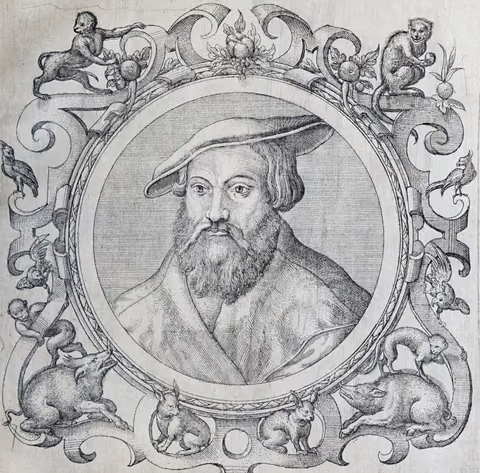
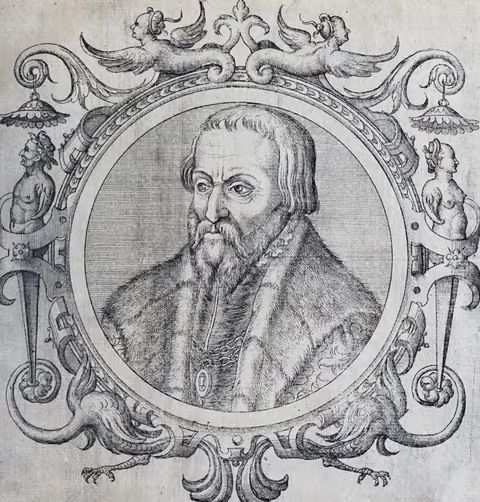
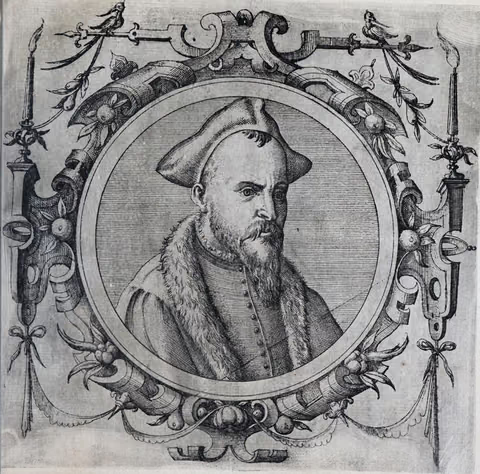
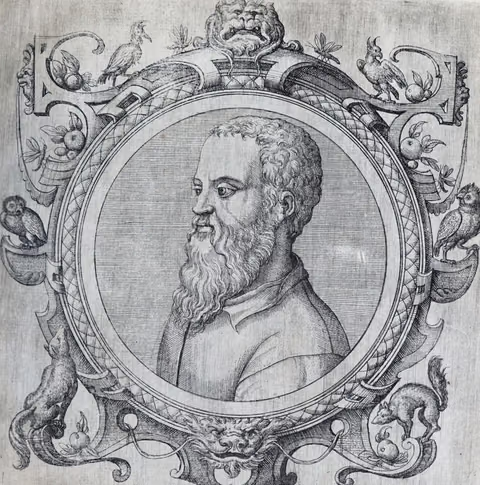
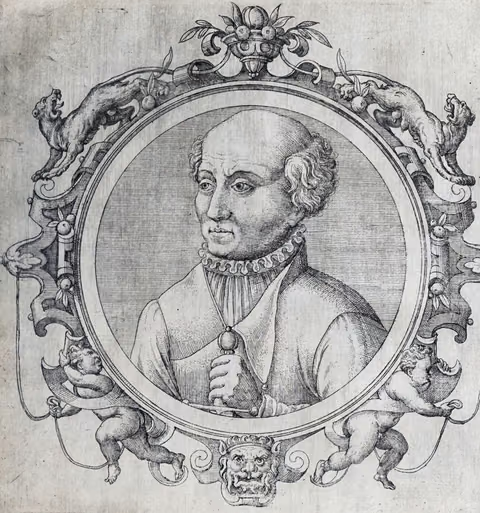
Sambucus says that he took the likenesses from statues, paintings, old coins and the frontispieces of ancient manuscripts. His poem on Vesalius admits that the ancient sages dissected “a pig and puppies, not humans.” His poem on Paracelsus puns on antimony and antinomia, “lawlessness.” He includes Homer as a surgeon whom Apollo made “prince of poets.”

Joannes Sambucus (János Zsámboky) is listed with the physician-poets in this library.
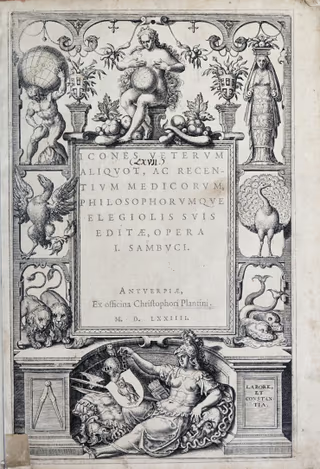
Opening page of Icones veterum aliquot, ac recentium medicorum, philosophorumque elegiolis suis editae
Icones veterum aliquot, ac recentium medicorum, philosophorumque elegiolis suis editae, scan 6. Opens in the reader.
How the text reached this edition, oldest first
Date Place Work Notes
1564 Antwerp Emblemata By Joannes Sambucus Sambucus’s emblem book, also printed by Plantin. Each emblem joins a motto, a picture and a Latin epigram. The Icones applies the same method to real people, with the portrait as the picture and the couplet as the epigram.
1574 Antwerp Icones veterum aliquot, ac recentium medicorum, philosophorumque elegiolis suis editae By Joannes Sambucus (János Zsámboky) A folio printed by Plantin, with etched portrait roundels attributed to Pieter van der Borcht the Elder. Sambucus dated his dedication to the Augsburg collector Johann Heinrich Herwart at Vienna on 1 January 1574. Plantin’s son-in-law Franciscus Raphelengius reissued the book at Leiden in 1603.
Joannes Sambucus. Joannes Sambucus, Icones, 1574

Illustrations

69 illustrations. Each opens its page in the reader, zoomed to the picture.

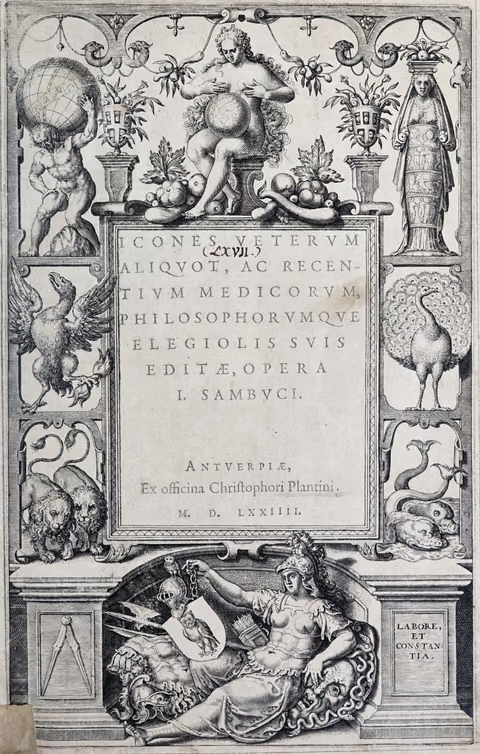
  • An ornate frame surrounds Latin text, featuring figures including a man holding a globe, a reclining armored woman with a shield, lions, a griffin, and a peacock.
    PORTRAITS OF SOME (LXVII.) ANCIENT, AND RECENT PHYSICIANS, AND PHILOSOPHERS PUBLISHED WITH THEIR SHORT ELEGIES, BY THE EFFORT OF I. SAMBUCUS. ANTWERP, From the workshop of Christopher Plantin. M. D. LXXIIII. BY LABOR, AND CONSTANCY.
  • An ornate initial letter N contains a figure of a person holding a staff. Decorative plants in vases flank the letter, and garlands are draped within and around it.
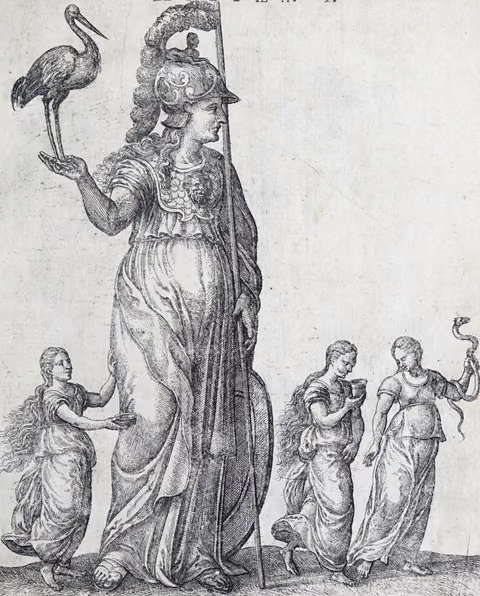
  • Hygiæa wears a helmet and holds a bird and a staff. Three women surround her, holding a bowl, a cup, and a staff with a snake.
    HYGIAEA. 1.
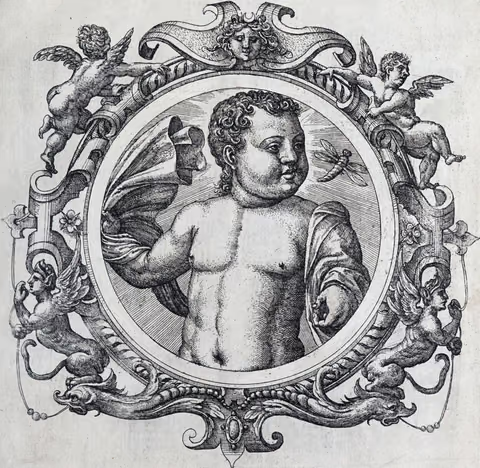
  • Apollo, depicted as a chubby infant, is shown within an ornate oval frame decorated with winged figures and chimeric creatures. A dragonfly flies near his face.
    APOLLO. 2.
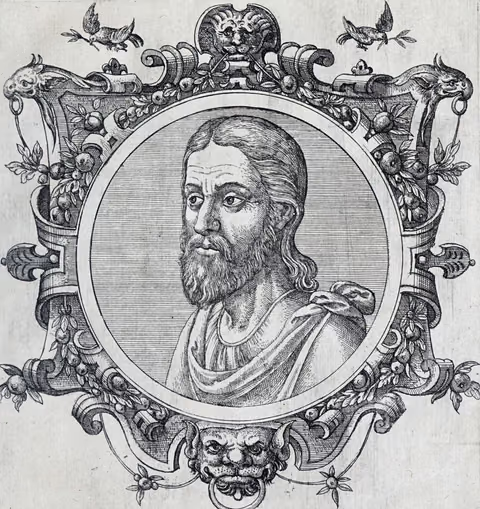
  • Chiron is a bearded man depicted within an oval frame. The frame is enclosed by an ornate border with foliage, fruit, and grotesque masks.
    CHIRON. 3.
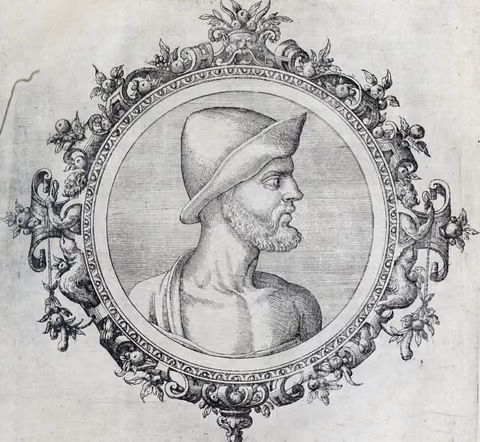
  • Aesculapius is shown in profile, wearing a hat and having a beard, inside an ornate oval frame.
    AESCULAPIUS. 4.
  • Machaon is shown in a portrait within an ornate oval frame. The frame is decorated with cherubs, a mask, and decorative scrolls.
    MACHAON. 5.
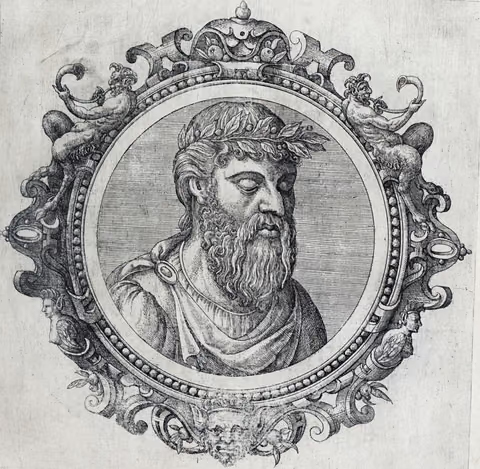
  • Homer is depicted within an ornate circular frame. He has a long beard, wears a laurel wreath on his head, and has closed eyes.
    HOMERUS. 6.
  • Pythagoras is depicted in a portrait, framed by an ornate oval border featuring mythical creatures and a small face at the bottom.
    PYTHAGORAS. 7.
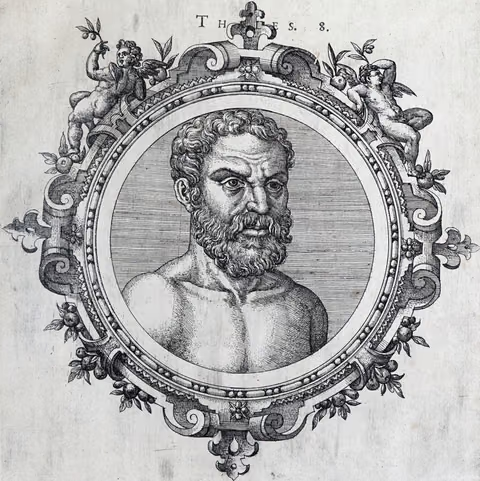
  • Thales is depicted as a bearded, bare-chested man within an ornate circular frame. Two cherubs sit atop the frame.
    THALES. 8.
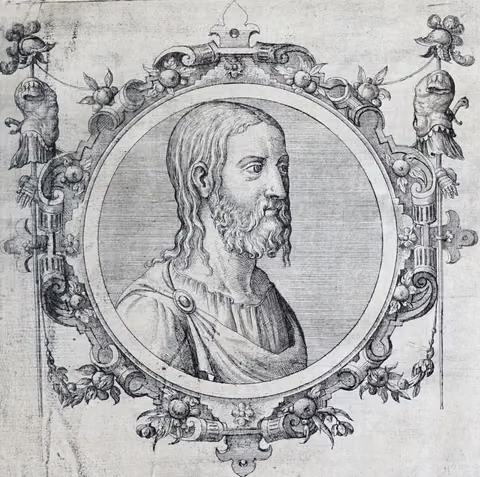
  • Hippocrates is shown in a circular portrait surrounded by an ornate frame with scrolls, berries, and insects.
    HIPPOCRATES. 9.
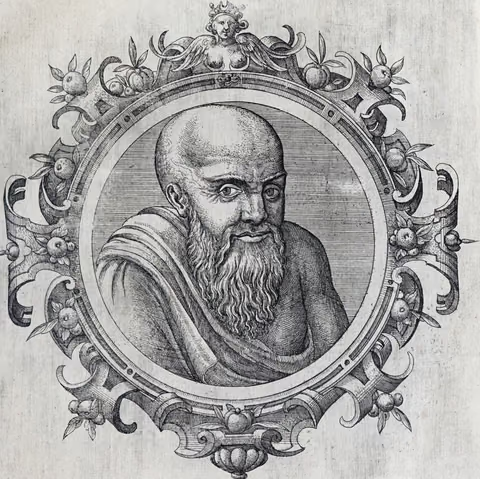
  • Socrates is depicted as a bald man with a beard, wearing a robe, and enclosed within an ornate circular frame.
    SOCRATES. 10.
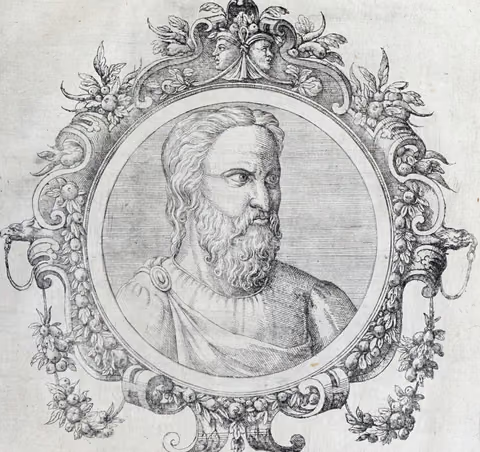
  • Aretævs faces right in a portrait, featuring a beard and a draped garment. He is enclosed in an ornate oval frame adorned with fruits, leaves, and small faces at the top.
    ARETAEUS. II.
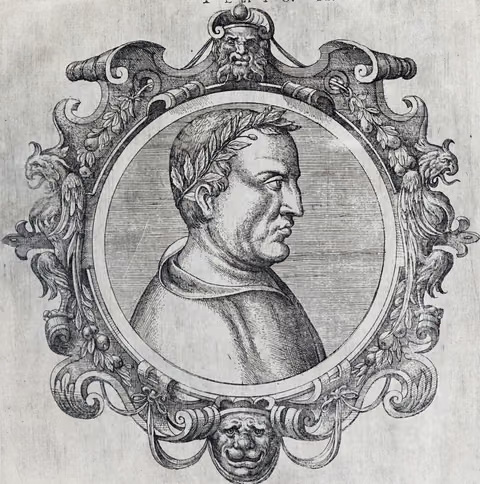
  • Plato is depicted in profile wearing a laurel wreath. He is enclosed within an ornate oval frame decorated with scrolls and two sculpted faces.
    PLATO. 12.
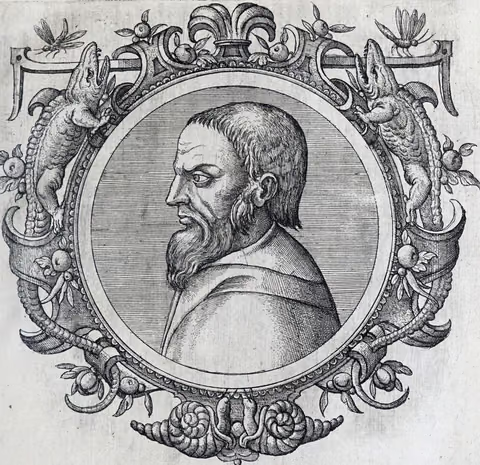
  • Aristoteles is depicted in a profile portrait within a circular frame. The frame is surrounded by an ornate decorative border with leaf patterns and two crocodiles.
    ARISTOTLE. 13.
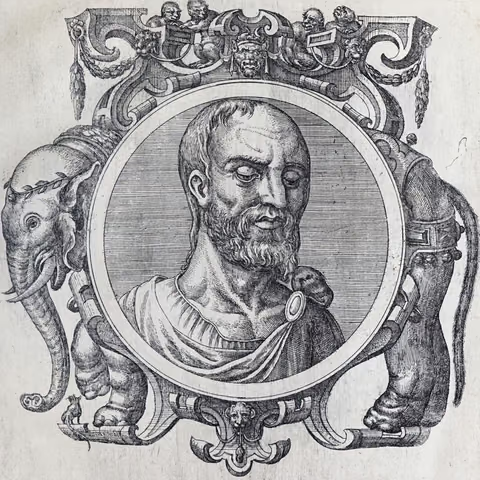
  • Theophrastus is shown in a portrait within an oval frame. The frame is surrounded by ornate decorations, including elephants on either side and small figures at the top.
    THEOPHRASTUS. 14.
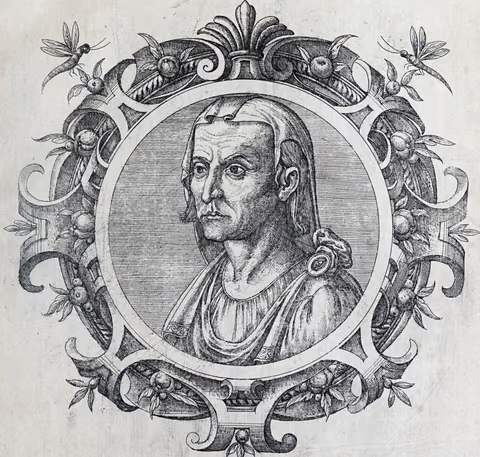
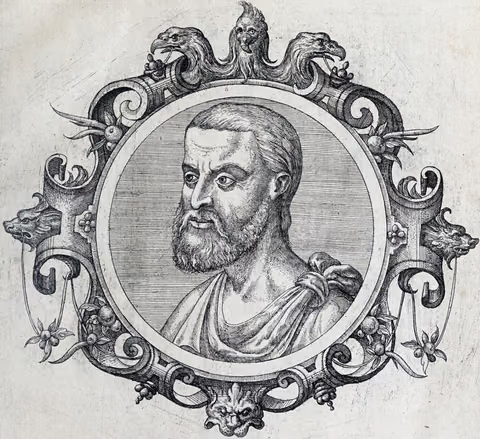
  • Nicander, a bearded man in a draped garment, is depicted in a portrait enclosed within an ornate circular frame decorated with scrolls and animal faces.
    NICANDER. 15.
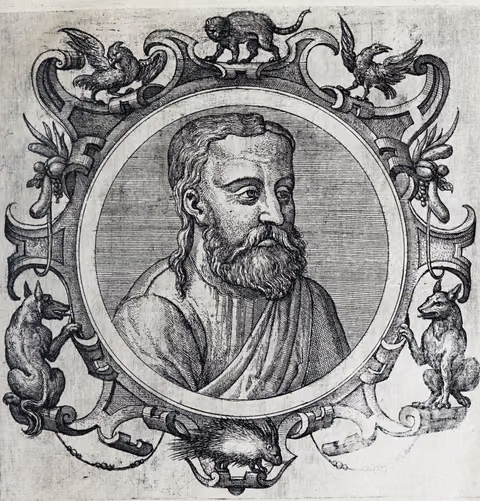
  • Cratevas is a bearded man in a robe, framed by an ornate oval border decorated with birds, foxes, and other animals.
    CRATEVAS. 16.
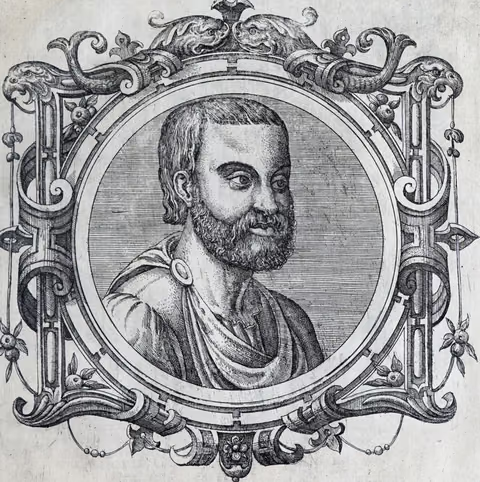
  • Niger is depicted as a bearded man wearing a draped cloak, enclosed within an ornate circular frame.
    NIGER. 17.
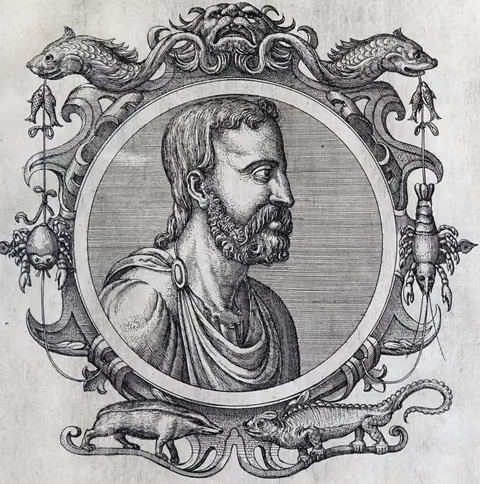
  • Celsus is depicted in profile within a decorative circular frame adorned with mythical fish, crustaceans, and reptiles.
    CELSUS. 18.
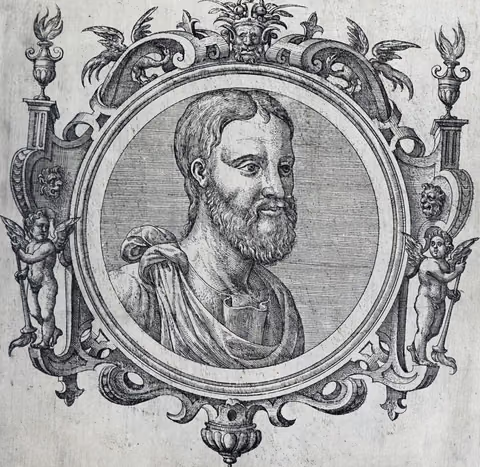
  • Galen is depicted as a bearded man wearing a draped garment, enclosed in an ornate oval frame decorated with birds and scrolls.
    GALEN. 19.
  • Dioscorides is depicted in a profile portrait with a beard, wearing a robe. He is enclosed in an ornate oval frame decorated with mythical creatures and garlands.
    DIOSCORIDES. 20.
  • Xenocrates is shown in a profile portrait with a beard and a draped garment, enclosed in an ornate circular frame decorated with birds, lions, and figures.
    XENOCRATES. 21.
  • A portrait of Plinius is set within an ornate circular frame decorated with faces, birds, and fish.
    PLINY. 22.
  • A bearded man named Ægineta is depicted within a circular frame surrounded by an ornate border featuring mythical creatures and small monkeys.
    AEGINETA. 23.
  • Ruffvus is depicted as a bearded man within a circular frame adorned with ornate carvings, animals, and flowers in vases.
    RVFFVS. 24.
  • A portrait of Apollonius is shown within a circular frame surrounded by ornate scrollwork, two cherubs, and a small face at the bottom.
    APOLLONIUS. 25.
  • Heraclius Tarent is shown in a portrait within an ornate oval frame decorated with winged figures and foliage.
    HERACLIUS TARENT. 26.
  • A profile portrait of a bearded man named Pamphilus is enclosed within an ornate circular frame decorated with scrolls and helmets.
    PAMPHILUS. 27.
  • IOAN. B. MONTANVS appears in a portrait within an ornate circular frame decorated with human figures and animals.
    IOAN. B. MONTANUS. 28.
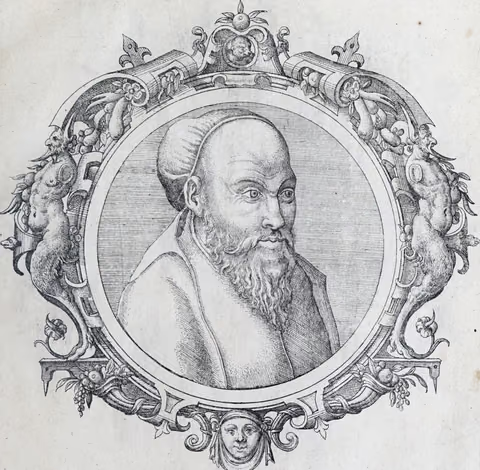
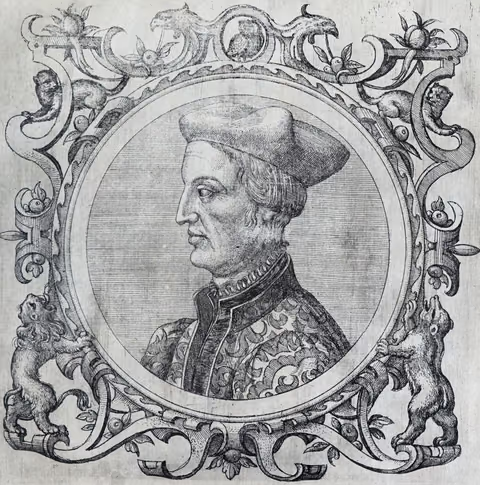
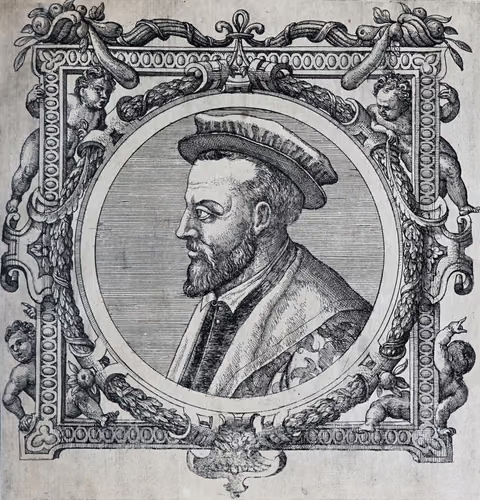
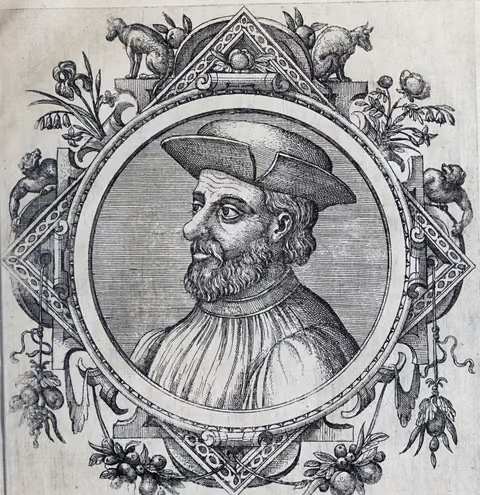
  • Fernelivs is shown in profile facing left, wearing a cap and an ornate high-collared garment. He is enclosed within an ornate oval frame decorated with scrollwork and lions.
    FERNELIUS. 29.
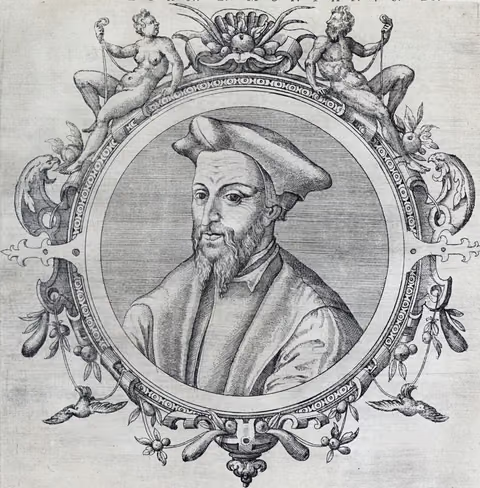
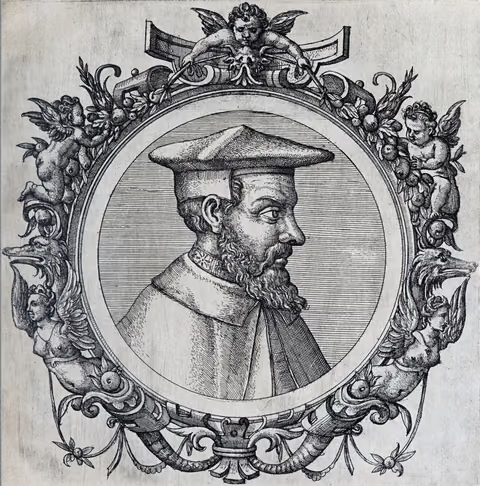
  • Trincavela is depicted in a circular frame, wearing a cap and sporting a beard. An ornate border containing fruits, foliage, and birds surrounds the portrait.
    TRINCAVELA. 30.
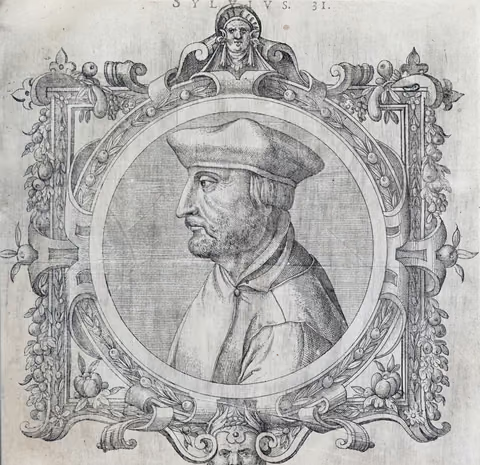
  • Sylvius is shown in a profile portrait wearing a cap and gown, enclosed within an ornate circular frame decorated with foliage and figures.
    SYLVIVS. 31.
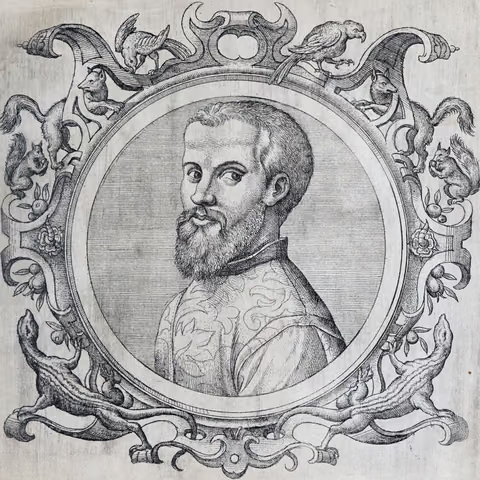
  • Vesalius is depicted in a circular frame surrounded by an ornate border featuring birds, squirrels, and lizards.
    VESALIUS. 32.
  • Gesnervs is shown in profile wearing a cap and a collared garment. He is enclosed in an ornate circular frame decorated with birds and creatures.
    GESNER. 33.
  • A portrait of Andernacvs is enclosed in an ornate oval frame decorated with mythical figures, birds, and grotesque faces.
    ANDERNACUS. 34.
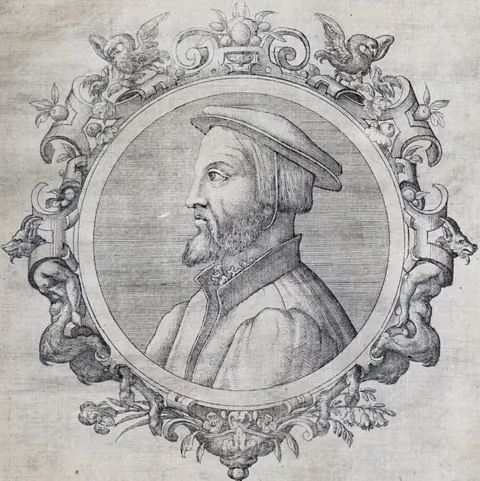
  • Brassavolvs is shown in profile, wearing a hat and having a beard. The portrait is set within an ornate circular frame surrounded by a rectangular border with cherubs and floral motifs.
    BRASSAVOLVS. 35.
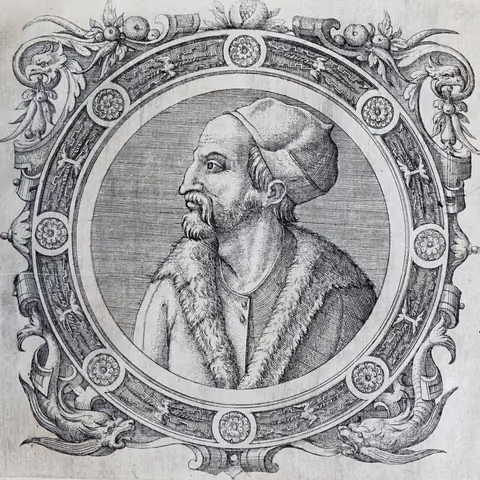
  • P. Iovivs is shown in profile within an ornate circular border, wearing a cap and a fur-collared garment.
    P. IOVIUS. 36.
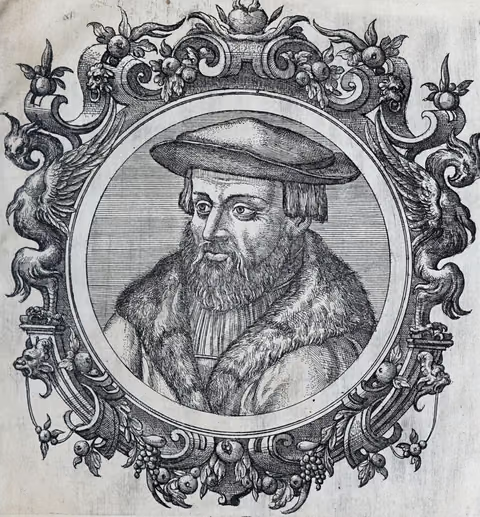
  • A bearded man named FVXIVS wears a flat hat and a fur-collared robe. He is enclosed in a circular frame surrounded by an ornate border with foliage and winged figures.
    FVXIVS. 37.
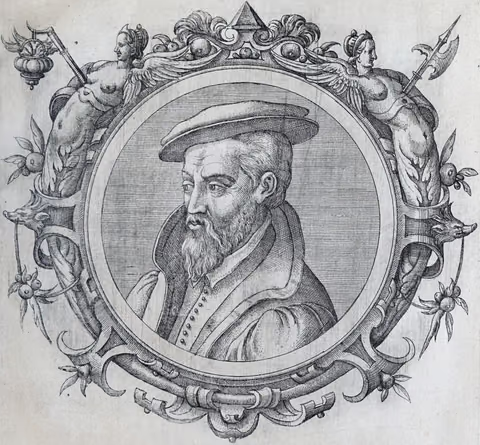
  • G. Agricola is depicted in profile within an oval frame, wearing a cap and a collared coat. The frame is decorated with winged female figures, floral patterns, and scrollwork.
    G. AGRICOLA. 38.
  • Cornarivs is a bearded man wearing a wide-brimmed hat inside an ornate oval frame. The frame is decorated with monkeys, pigs, rabbits, and birds.
    CORNARIUS. 39.
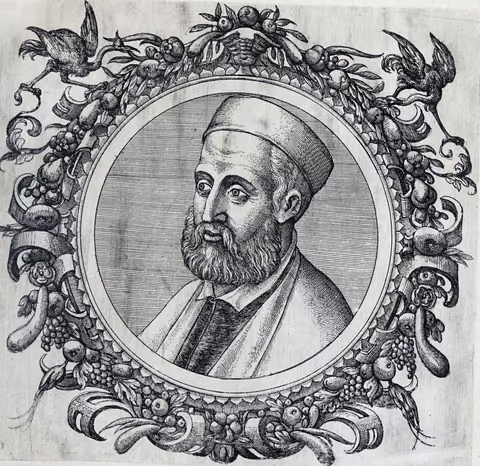
  • Matthiolus is shown in a circular portrait, wearing a fur-collared garment and a chain. He is surrounded by an ornate frame featuring scrolls and figures.
    MATTHIOLUS. 40.
  • Hypol. Salvianus is shown in a circular frame, wearing a cap and a fur-lined garment. An ornate decorative border surrounds the frame.
    HYPOL. SALVIANUS. 41.
  • Rondeletivs is depicted in a profile portrait within an ornate circular frame decorated with animals and foliage.
    RONDELETIUS. 42.
  • IVL. ALEXANDRINVS is depicted in profile facing left within an ornate oval frame decorated with cherubs and masks.
    IVL. ALEXANDRINVS. 43.
  • Ioan. Crato is depicted in profile within an ornate oval frame adorned with foliage and cherub heads. He has short curly hair, a beard, and wears a high-collared buttoned garment.
    IOAN. CRATO. 44.
  • Nicol. Biesivs is depicted in a circular frame adorned with cherubs, winged horses, and scrolls. He wears a cap and an ornate collar.
    NICOL. BIESIUS. 45.
  • Altomarvs is shown in profile within a circular frame. The frame is decorated with ornate scrolls and four winged cherubs.
    ALTOMARUS. 46.
  • Nicol. Massa is depicted in profile within an ornate oval frame. He has a beard and wears a cap and robe, while two animal figures flank the frame.
    NICOL. MASSA. 47.
  • HADR. IVNIVS is shown in profile facing left, wearing a flat cap and a fur-trimmed robe, enclosed in an ornate oval frame decorated with cherubs and greenery.
    HADR. IVNIVS. 48.
  • A decorative circular frame featuring winged female figures, dolphins, and foliage surrounds a blank center.
    ARGENTERIUS. 49.
  • Ioan. Cuspinianvs is depicted in a circular frame decorated with reclining figures, cherubs, and fruit. He wears a wide-brimmed hat and a robe.
    IOAN. CVSPINIANVS. 50.
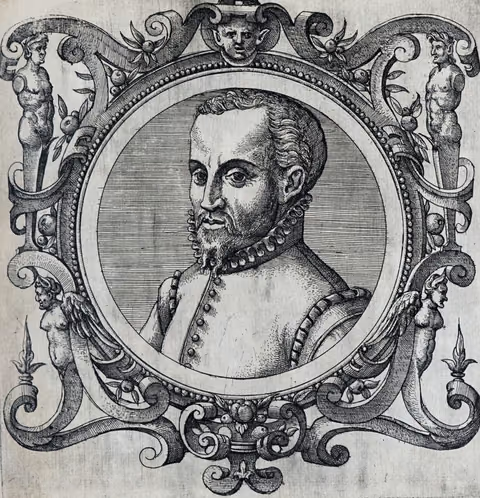
  • Cordvs is depicted as a bearded man wearing a ruff collar, enclosed within an ornate oval frame decorated with classical figures and scrolling ornaments.
    V. CORDVS. 51.
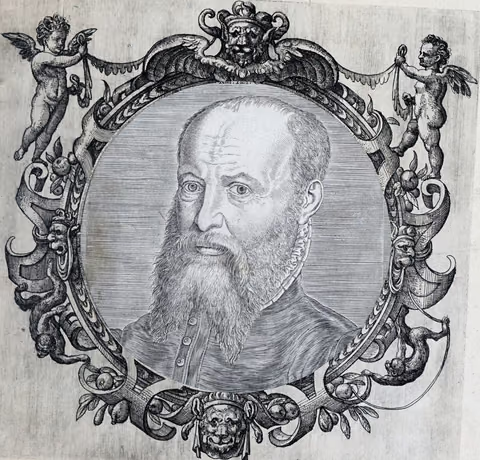
  • Goropius Becanus is shown as a man with a high forehead and a long, full beard. An ornate oval border featuring cherubs and grotesque masks surrounds the portrait.
    GOROPIUS BECANUS. 52.
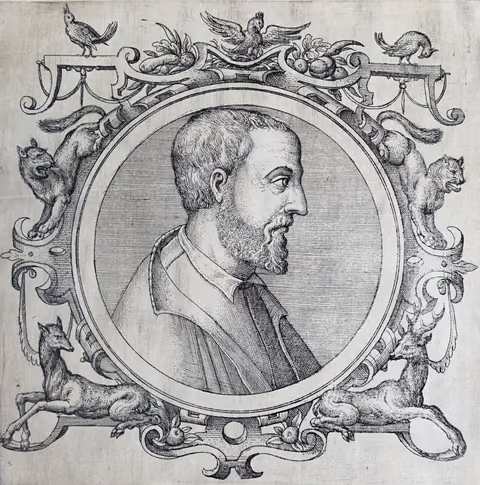
  • A profile portrait of Cardanus is enclosed within a circular frame decorated with birds, cats, and deer.
    CARDANUS. 53.
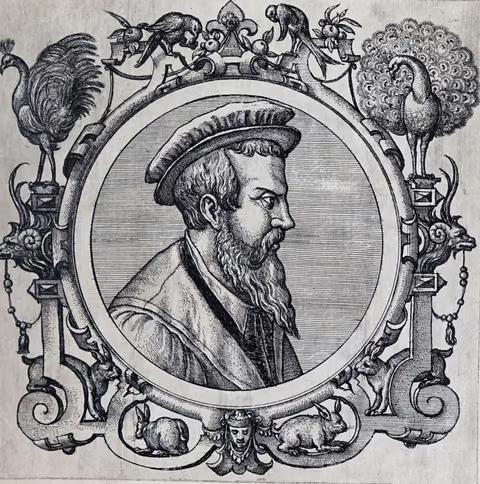
  • A profile portrait of C. Scaliger, wearing a cap and having a beard, is enclosed in an ornate circular frame decorated with birds, rabbits, and other creatures.
    C. SCALIGER. 54.
  • B. Victorius is depicted in profile within a circular frame. He wears a hat and a pleated garment, and the frame is surrounded by an ornate border featuring animals and floral elements.
    B. VICTORIUS. 55.
  • P. Crassvs is shown in profile, wearing a cap and a robe. He is enclosed within an ornate oval frame featuring cherubs and mythical creatures.
    P. CRASSUS. 56.
  • An ornate circular frame is decorated with winged female figures, mythological creatures, and floral motifs around a blank center.
    MONTAGNANA. 57.
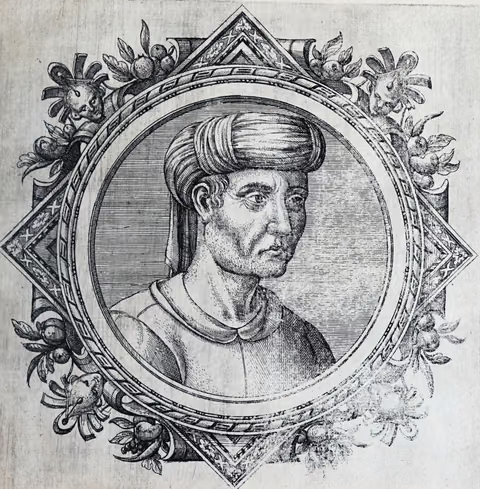
  • Savanorela appears in a circular frame surrounded by foliage and a diamond border. He wears a large, wrapped hat.
    SAVANORELA. 58.
  • Lazius is a bearded man wearing a cap and an ornate garment, framed within an oval medallion surrounded by a decorative border featuring cherubs and winged mythical creatures.
    VV. LAZIUS. 59.
  • An ornate circular frame with a blank center is set within a diamond-shaped border decorated with leaves, fruit, and masks.
    CURTIUS. 60.
  • A profile portrait of Tragus is framed within a circle. The circle is surrounded by an ornate border featuring cherubs and winged creatures.
    TRAGVS. 61.
  • Paracelsus is depicted in a portrait within an ornate oval frame. The frame features lions, cherubs, and a grotesque face at the bottom.
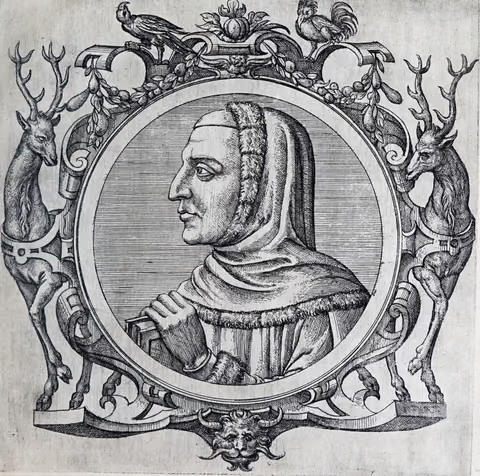
    PARACELSVS. 62.
  • Seneca is shown in profile within an oval frame, wearing a hooded, fur-trimmed garment and holding a book. The frame is decorated with deer, birds, and a face at the bottom.
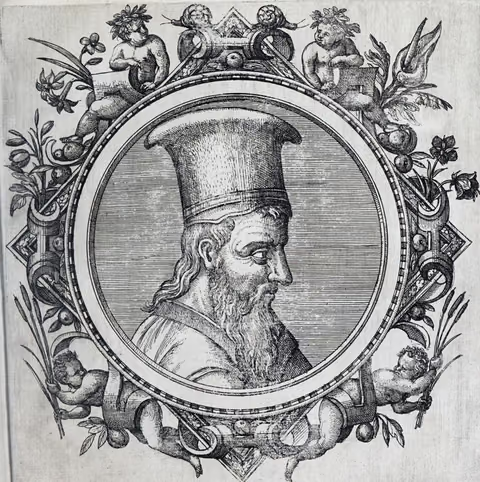
    SENECA. 63.
  • Strabo is shown in a profile portrait wearing a tall hat within a circular frame. The frame is decorated with cherubs and foliage.
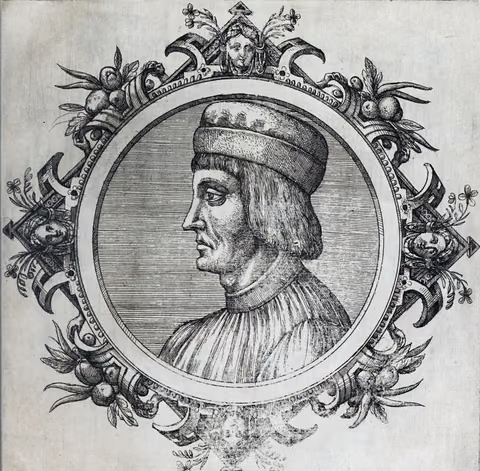
    STRABO. 64.
  • P. Crescentivs is shown in profile facing left, wearing a cap and a pleated garment. He is enclosed within a circular ornate frame decorated with foliage, fruit, and small faces.
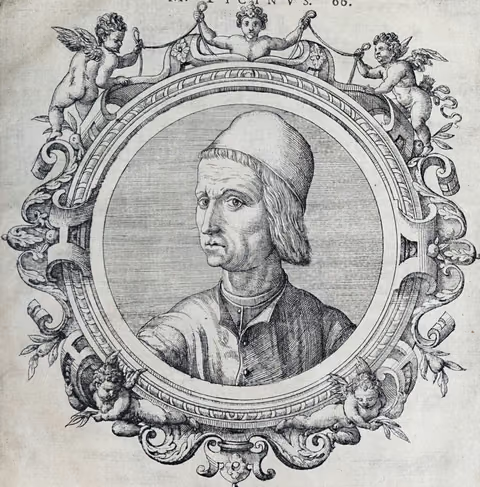
    P. CRESCENTIVS. 65.
  • M. FICINVS is depicted in a circular frame adorned with cherubs and ornamental scrolls. He wears a cap and a buttoned garment.
    M. FICINUS. 66.
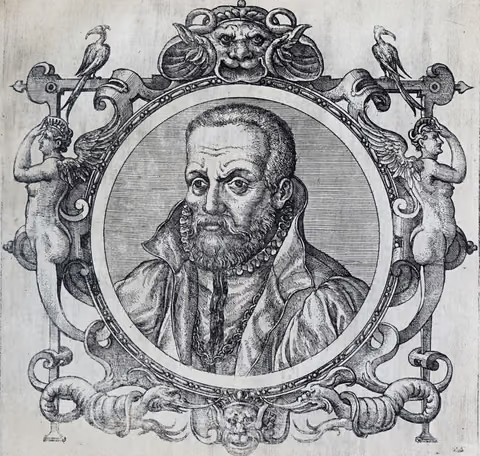
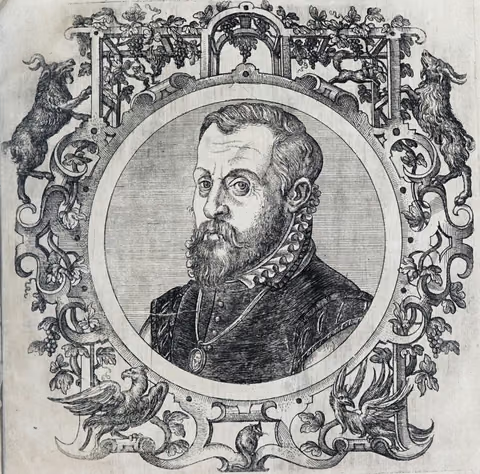
  • D. Ioan. Sambvco, a bearded man wearing a ruff collar and a medallion, is depicted within an oval frame surrounded by an ornate border of vines, animals, and birds.
    ON MASTER JOANNES SAMBUCUS. I. L. 67.

Poems

69 poems, grouped by theme.

Medical knowledge · 9
Literature & the arts · 8
Natural world · 7
Learning & scholarship · 6
Life stages & mortality · 6
Ethics & life philosophy · 5
Feelings & inner life · 5
Care & treatment · 4
Places & journeys · 3
Power & social conditions · 3
Religion & worship · 3
Everyday life & work · 2
Health & bodily conditions · 1
Personal relationships · 1
Population health · 1
War & violence · 1
Other poems · 4