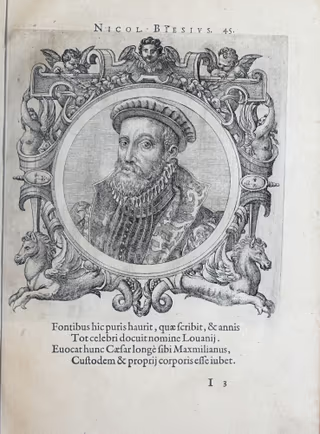
NICOL. BIESIUS. 45.

NICOL. BIESIVS. 45.

Poet
Sambucus
Form
Elegiac couplet
Open the page in the book
The page this poem fills. Each opens in the Icones veterum aliquot, ac recentium medicorum, philosophorumque elegiolis suis editae reader.

Hover or tap a word to see its match.

He draws what he writes from pure springs, and for so many years

he taught at Leuven with an illustrious reputation.

Emperor Maximilian summons him from afar to himself,

and commands him to be the guardian of his own body.

Fontibus hic puris haurit, quæ ſcribit, & annis

Tot celebri docuit nomine Louanij.

Euocat hunc Cæſar longè ſibi Maxmilianus,

Cuſtodem & proprij corporis eſſe iubet.
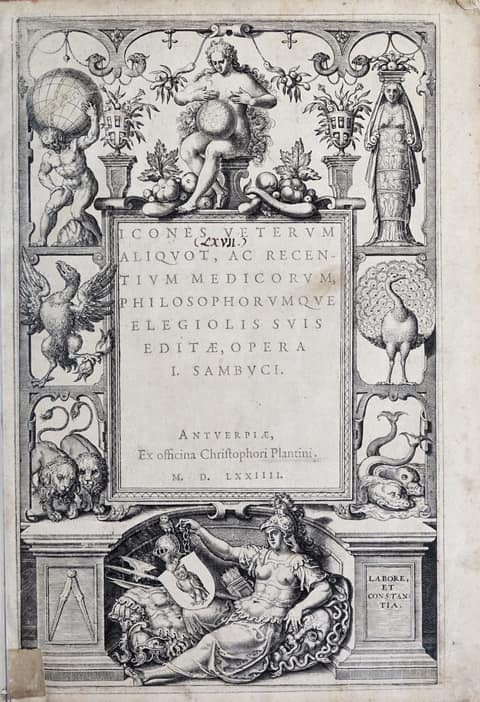
Title page of Icones veterum aliquot, ac recentium medicorum, philosophorumque elegiolis suis editae
Title page of Icones veterum aliquot, ac recentium medicorum, philosophorumque elegiolis suis editae , 1574

About this text

Provenance

This digital edition is derived from the Getty Research Institute copy of Joannes Sambucus's 1574 portrait anthology, made available through Internet Archive. The source record is the Antwerp Plantin edition of portraits of ancient and recent physicians and philosophers with accompanying elegiac poems.

Machine translation and features may contain errors.

Rights

The source work is in the public domain. The rights evidence for this Internet Archive-derived copy points to a Public Domain Mark record. Poet Doctor's presentation adds generated OCR, transcription, translation, navigation metadata, and editorial context.

Original scans: Getty Research Institute copy via Internet Archive ( Public Domain Mark 1.0 ).

Historian’s note. This text records the medicine of its own time, and later evidence has replaced most of it. It is not medical advice. We read it as history, and we ask what, if anything, connects it to medicine today. More on how we read old medical books