Hover or tap a word to see its match.
Why am I not that swallow
That flies and flees beneath the horizon!
I would go strike with great beats of my wings
At the windowpane of your house.
I would say to you: "Beneath my plumage
Throbs a heart that knows how to love;
Poet, listen to my warbling;
I wish I could charm you!"
Why am I not the tender breeze
Or her lover the gentle zephyr!
At the hour when your soul breaks,
I would bring you my sigh.
To cradle in reverie
Your heart more easily calmed,
By a few flowers of the homeland,
This sigh would be perfumed!
Why am I not that great cloud
That crosses the firmament!
I would go and visit that shore
Where you live in isolation!
You would understand that, sad and somber,
I come to share your misfortune,
And on your brow mingle my shadow
With the one cast by your sorrow!
Why am I not a wandering wave
Of the Ocean that carried you!
I would go, limpid and transparent,
To the places where exile has cast you!
Here are my verses, I deliver them to you:
It is for you above all to judge them:
Poet, accept then this book,
To which you are no stranger!
It is a reflection of your light,
Eager to rise back to you,
As to the primary source
That had cast it upon me!
It is, when your songs work marvels,
A faint reverberated echo
Of your voice, which already awakens
That of posterity.
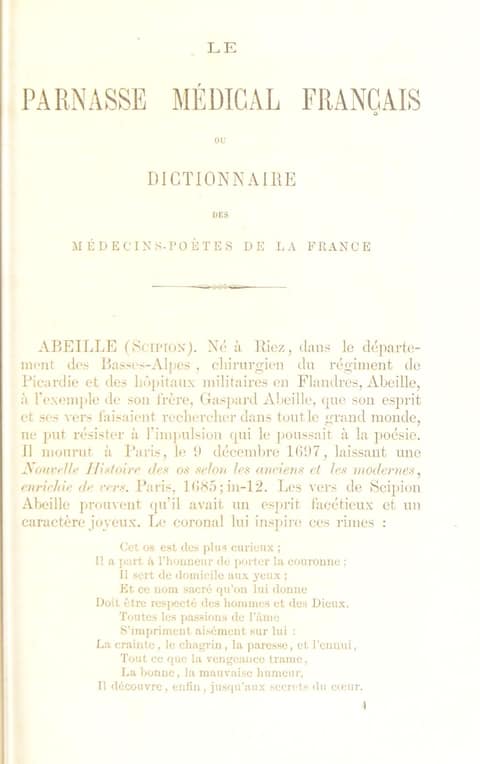
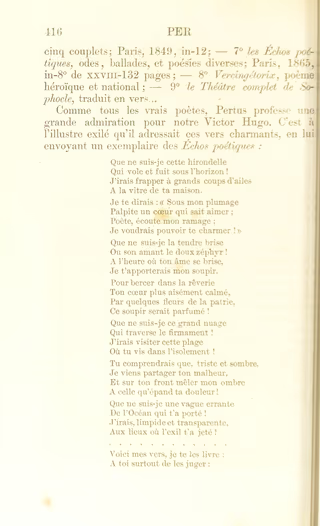
Que ne suis-je cette hirondelle
Qui vole et fuit sous l'horizon !
J'irais frapper à grands coups d'ailes
A la vitre de ta maison.
Je te dirais : « Sous mon plumage
Palpite un cœur qui sait aimer ;
Poète, écoute mon ramage ;
Je voudrais pouvoir te charmer ! »
Que ne suis-je la tendre brise
Ou son amant le doux zéphyr !
A l'heure où ton âme se brise,
Je t'apporterais mon soupir.
Pour bercer dans la rêverie
Ton cœur plus aisément calmé,
Par quelques fleurs de la patrie,
Ce soupir serait parfumé !
Que ne suis-je ce grand nuage
Qui traverse le firmament !
J'irais visiter cette plage
Où tu vis dans l'isolement !
Tu comprendrais que, triste et sombre,
Je viens partager ton malheur,
Et sur ton front mêler mon ombre
A celle qu'épand ta douleur !
Que ne suis-je une vague errante
De l'Océan qui t'a porté !
J'irais, limpide et transparente,
Aux lieux où l'exil t'a jeté !
Voici mes vers, je te les livre :
A toi surtout de les juger :
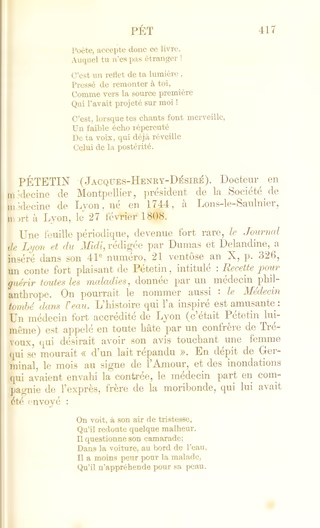
Poète, accepte donc ce livre,
Auquel tu n'es pas étranger !
C'est un reflet de ta lumière,
Pressé de remonter à toi,
Comme vers la source première
Qui l'avait projeté sur moi !
C'est, lorsque tes chants font merveille,
Un faible écho répercuté
De ta voix, qui déjà réveille
Celui de la postérité.