Hover or tap a word to see its match.
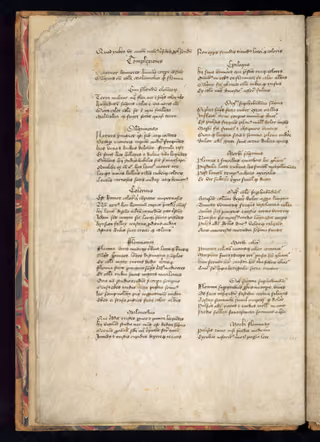
Epilogue
These are the humors which furnish colors to each.
In all things from phlegm comes a white color;
By blood it becomes greyish-blue, and by red choler reddish;
From black choler it is shown to be dark-tawny.
Signs of superabundance of blood
If blood offends, the face reddens, the eye protrudes,
The cheeks are inflated, and the body is weighed down too much.
The pulse is frequent, full, soft; great pain
Especially occurs in the forehead, and constipation of the belly;
And a dry tongue, thirst, and dreams full of redness;
Sweetness of spittle is present, and sharp things are sweet.
Diseases of blood
Pleurisy and synochus, hemoptysis are generated here,
A broad red pustule; to these synochus, morphew is joined;
After a long time, ascites, axialis,
And subtle air, region, and a similar diet.
Signs of superabundant choler
Pain on the right side, a rough tongue accuse choler,
Ringing in the ears and frequent vomiting, much wakefulness,
Much thirst, fatty excretion, twisting of the belly;
Nausea occurs, biting of the heart, appetite languishes;
The pulse is present: slender, hard, and swift, growing hot;
One is parched, tastes bitterness, and fashions dreams of fires.
Diseases of choler
Itching and heat of the liver accompany choler;
Morphew, and dry dropsy, jaundice, phthisis are generated here;
To this heat, here causon, here tertian fever is generated;
Cancer or lupus, sacred erysipelas is created.
Signs of superabundant phlegm
Phlegm surpassing its own powers in the body
Makes the mouth tasteless, frequent loathings, salivas;
Pain of the ribs, of the stomach, and at the same time of the occiput;
The pulse is present: rare and slow, soft in the aged;
Deceitful watery sleep precedes phantoms.
Diseases of phlegm
Paralysis, quinsy, unless medicine precedes,
Lies in wait at the doors, affection of the nerves, lethargy.
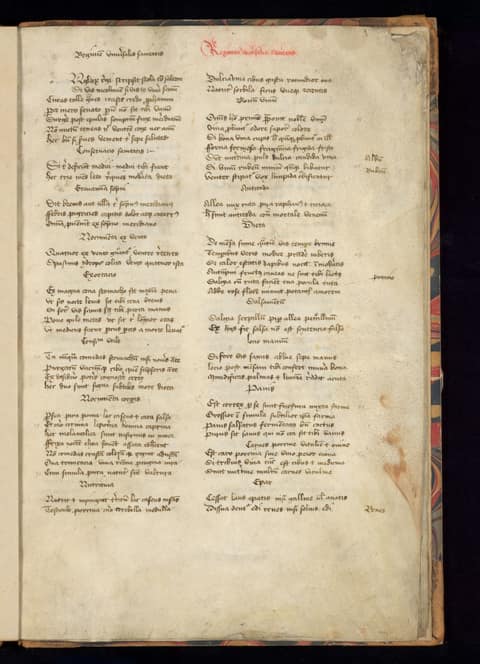
Hij sunt humoēs quī ꝑstāt cuıꝙ colores
Om̄ıbꝰ ın rebꝰ ex flenmate fıt color albus
Sāġne fıt glaucꝰ colā rubea ꝙ rufus
Ex colā nıḡ ꝯmostīt̄ afforᵉ fuluīs
Sı ꝑc̄et sāġs facıe rubet extat ocellus
Jnflant̄ gēne corpus nıṁıūꝙ ġuat̄
Est pulsus frequēs plenꝰ moll̄ dolor ıngēs
Maxīe fıt frontˢ + cōstıpacıo ventrıs
Sıcca ꝙ lıngua sıtıs + somnıa plena rubōe
Dulcor adē sputı sunt acrıa dulcıa queꝙ
Plenres + sınochus emothoıs hıc gūant̄
Pustula lata rubens hıjs sınoth̄ morpheā ıūcta
Post longū tempꝰ achıtes axıcıalıs
Et vır subtıle r̄gīo sımıliꝙ dıēta
Accusāt colām dextē dolor aꝑa lıngua
Tınnıtꝰ vomıtꝰꝙ frequēs vıgılancıa m̄lta
Multa sıtˢ pınguıs egestıo torcıo ventrıs
Nausea fıt morsꝰ cordıs lāguescıt orexıs
Pulsꝰ adē ḡcılıs durꝰ veloxꝙ calescēs
Aret amarescıt ıncendıa sōpnıa fıngīt
Prurıtꝰ colerā ıecorısꝙ calor comıtat̄
Morphea sıccꝙ ydrops yct̄ ptısıs hīc gūant̄
Huıc feruor hīc causon hīc t̄ha febrıs gūat̄
Canc̄ siue lupꝰ herıspıla sacra creatur
Flenma suꝑgradıēs ꝑp̄as ıncorꝑe vıres
Os facıt ıṅsıpıdū fastıdıa crebra salıuas
Costaꝝ stomachī sımul occıpıtˢ ꝙ dolor
Pulsus adē rarus + tardus moll̄ ın anīs
P̄cedıt fallax fantasmata somnus aq̄sꝰ
Ꝑalısıs zūna nısı p̄cedat medıcīna
Excubat ıṅforıbꝰ n̄uoꝝ passıo lete