Sanitatis tuendae methodus: Latin verse regimens for preserving health
By Georg Pictorius · Published 1561 · Latin with English translation · Jagiellonian Digital Library
Historian’s note. This text records the medicine of its own time, and later evidence has replaced most of it. It is not medical advice. We read it as history, and we ask what, if anything, connects it to medicine today.
Historian’s note. This text records the medicine of its own time, and later evidence has replaced most of it. It is not medical advice. We read it as history, and we ask what, if anything, connects it to medicine today. More on how we read old medical books
We have not yet reviewed the translation of this book.
Sanitatis tuendae methodus
Latin verse regimens for preserving health
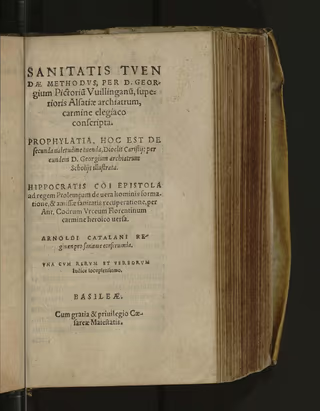
By Georg Pictorius, 1561. The edition has the page scans, the Latin text, and an English translation.
Georg Pictorius (c. 1500–1569) of Villingen was chief physician to the Habsburg government of Upper Alsace at Ensisheim. His Sanitatis tuendae methodus, printed at Basel in 1561, is a regimen of health in Latin elegiac couplets. It follows the six “non-naturals” of Galenic medicine: air, food and drink, motion and rest, sleep and waking, repletion and evacuation, and the passions of the soul. Most rules take one couplet, with a heading in the margin. The first rule on food tells a healthy person to eat nothing until the stomach has emptied.
After his poem Pictorius printed three older regimens addressed to kings. They are the letter attributed to Diocles of Carystus to King Antigonus, with Pictorius’s notes; a letter attributed to Hippocrates to King Ptolemy, in Latin hexameters by Antonio Codro Urceo; and the regimen that Arnaldus de Villanova wrote for James II of Aragon. His notes on Diocles cite Galen, Avicenna and Paul of Aegina by book and chapter.
Georg Pictorius is listed with the physician-poets in this library.
| Date | Place | Work | Notes |
|---|---|---|---|
| 1305–1308 | Crown of Aragon | Regimen sanitatis ad regem Aragonum By Arnaldus de Villanova | A prose regimen of health written for King James II of Aragon. It survives in 78 manuscripts and was translated into Catalan before 1310. Pictorius printed it under the name “Arnoldus Catalanus” as the last part of his 1561 volume. |
| c. 1494 | Rome | Coena By Battista Fiera | A Latin poem on foods and drinks in elegiac couplets. Pictorius says in his note to the reader that he mixed in lines from Martial, Ovid and Fiera. He uses Fiera’s metre, not the hexameter of the Salerno regimen. |
| 1561 | Basel | Sanitatis tuendae methodus By Georg Pictorius | Printed by Heinrich Petri with an imperial privilege. Pictorius dated his dedication to Baron Johann Georg Pougartner at Ensisheim on 9 September 1560. He also wrote a prose regimen on the same six non-naturals, the Tuendae sanitatis ratio, in seven dialogues. |
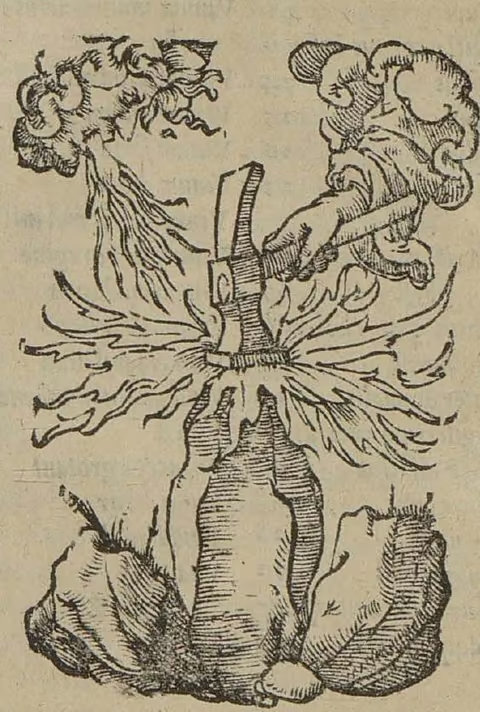
Illustrations
7 illustrations. Each opens its page in the reader, zoomed to the picture.
-
-
-
-

-
-
F I N I S. -
Poems
200 poems, grouped by theme.
Care & treatment · 61
- Aniſum.
- Arbuta, ſorba, meſpila.
- Balneum gelidum & tepidum.
- Bombi uentris non retinendi.
- Canon de uinis.
- Canon primus.
- Caulis Romana, Græcorum braſsica lingua
- Cor ſtomachi per uomitum.
- De abſinthio.
- De allio.
- De arthemiſia.
- De baccis lauri.
- De bethonica.
- De boragine.
- De capare.
- De carne herinacei.
- De caſtanea.
- De caule.
- De cepis.
- De cicere.
- De cinamomo.
- De eodem.
- De ficu.
- De lupino.
- De malis.
- De marrubio.
- De melle.
- De mentha.
- De nuce muſcata.
- De perſicis.
- De pipere.
- De piris.
- De portulaca.
- De prunis damaſcenis.
- De prunis ſylueſtribus.
- De prunis.
- De rapa.
- De ruta.
- De ſaluia.
- De ſerpillo.
- De ſpinachia.
- De uino enulato.
- De uino ex hyſſopo.
- De uino roris marini.
- De uino ſaluiato.
- De uua paſſa.
- De uuis.
- Dentium habenda ratio.
- Fœniculum.
- Frictio motum ſupplet.
- Frictionis utilitas.
- Intercutanea per ſcarificationem.
- Oua tremula.
- Papauer.
- Pinea.
- Qua arte quoqꝫ fœtidus.
- Quando pingues & obœſi balneandi.
- Quod caret alterna requie,durabile non eſt,
- Sinapis.
- Tempore ueris minuendus ſanguis.
- Turturis caro.
Everyday life & work · 35
- Ante cibum ambulandum, poſt quieſcendum.
- Coriandrum.
- Cydonia.
- Cydonia.
- De aprina.
- De bubula & caprina.
- De bubulina.
- De butyro.
- De carne alaudæ.
- De conficiendo ſapore ad carnes ex herbis.
- De eadem.
- De eruca.
- De gliris carne.
- De hyrundine.
- De leporina.
- De oleo oliuarum.
- De oriza.
- De ſale.
- De tuberibus.
- De ueruecina.
- De uitulina.
- Et de alijs uolatilium partibus.
- Exceſſus ſomni nocet.
- Lyncis caro.
- Neqꝫ uacuo, neqꝫ repleto ſtomacho dorm.
- Non diu ad menſam ſedendum.
- Perdicis caro.
- Pronus & ſupinus lædunt.
- Quæ caro eligenda.
- Quando parcè ſumenda cœna.
- Qui cibi præmittendi.
- Somnus pomeridianus nocet.
- Somnus ſit ſeptem horarum.
- Tempore æſtiuo & hyemali quid.
- Vinum quod optimum.
Medical knowledge · 32
- Amygdala.
- CANON.
- Caſtoris caro.
- Cerebrum per naſum.
- DE ANIMALIVM QVADRV- pedum partibus. Cap. V.
- De aqua.
- De carne anſeris.
- De carne columbi.
- De carne ſuilla.
- De collo & iecore.
- De dulci uino.
- De eodem.
- De eodem.
- De forti uino.
- De fungo.
- De hœdina & agnina.
- DE LACTE, BVTYRO, CASEO, ſale, oleo oliuarum, melle & ouis. Cap. XII.
- De milijs.
- De muſto.
- De pane opiro.
- De pingui & toſta.
- DE RE TERTIA NON NATV- rali, quæ eſt motus & quies. Cap. XV.
- De renibus, pulmone, uentre & corde.
- De uino albo.
- Et calidus.
- Exercitij utilitas.
- Fames cauenda.
- Hepar per inteſtina purgatur.
- Lens.
- Phaſiani caro.
- Quando longior eſſe poſsit.
- Quid ante & poſt cibum faciet.
Natural world · 23
- Aër bonus & malus.
- Canon.
- Caro ſturni.
- Cernis,ut ignauum corrumpant ocia corpus,
- Ciconiæ caro.
- DE AERE PRIMA RE NON naturali. Caput I.
- De capreolina.
- De carne corui.
- De carne gallinæ.
- De cornicis carne.
- De ficedula.
- De galli carne.
- De iuniperi baccis.
- De lactuca.
- De malis punicis.
- De malis punicis.
- De ouis quæ optima.
- De pauone.
- De urſina.
- Lupi caro.
- Poma nerantia.
- Quando largè ſumenda.
- Temperatus eligendus.
Health & bodily conditions · 16
Feelings & inner life · 13
- DE ACCIDENTIBVS ANIMI, SEX- ta re non naturali. Cap. XXI.
- De ceruina.
- De croco.
- De cuniculina.
- De faba.
- De modo bibendi.
- De paſſere.
- DE REPLETIONE ET INANITIO- ne, quinta re non naturali. Cap. XVII.
- De uino boraginato.
- De zinzibere.
- Palumbi torquati caro.
- Quæ uirtus ſit uino.
- Thermæ malè affectis bonæ.