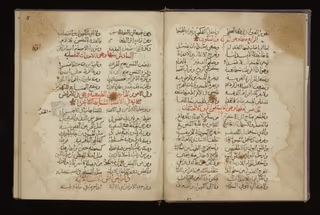
The fourth of them, which is movement and rest

الرابع منها وهو الحركه والسكون

Poet
Ibn Sina
Form
Rajaz
Open the page in the book
The page this poem fills. Each opens in the Ibn Sina's Urjuza fi al-tibb and other medical works in MS Arabic 129 reader.

Hover or tap a word to see its match.

As for exercises, the moderate is excellent / and one should comply with the like of that.

For they balance the bodies / and expel burdens and filth.

They make the body grow to moderation / and improve the young through growth.

And if it is excessive, causing fatigue / it depletes the spirit and weakens the soul.

And it ignites the innate heat / so the body is emptied of moisture.

And it weakens the organs from excessive pain / and ages the body while old age has not come.

And let not excessive rest deceive you / for there is no benefit in an excess of it.

It may fill the body with a humor like food / and does not prepare the body at all for growth.

اما الرياضات فنعم المعتدل / وينبغي بمثل ذاك ان يمتثل

فانها تعدل لابدانا / وتخرج الاثقال والادرانا

تنمي الجسم لاعتدال / وتصلح الصغير بالنماء

وهوا ذا افرطت مما تعبا / يستفرغ الروح وتوهي النفسا

وتشعل الحرارة الغريزية / فيفرغ الجسم من الرطوبة

وتضعف الاعضاء من فرط الالم / وتهرم الجسم ولاياتي الهرم

ولا يغرك افراط الدعة / فليس في الافراط منها منفعه

قد تملي الجسم بخلط كالغذا / ولا يهي الجسم شيئاً للنما
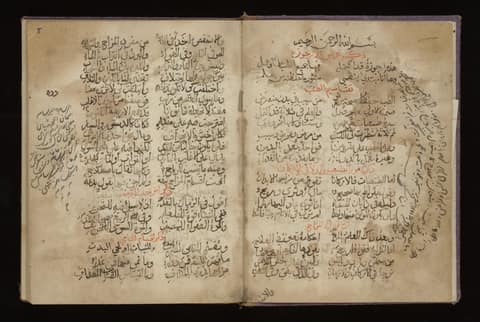
Title page of Ibn Sina's Urjuza fi al-tibb and other medical works in MS Arabic 129
Title page of Ibn Sina's Urjuza fi al-tibb and other medical works in MS Arabic 129 , 1700

About this text

Provenance

MS Arabic 129 is a handwritten Arabic medical volume held by Wellcome Collection in London. It is a composite manuscript: a single volume that brings together 11 separate works. They cover bloodletting, circumcision, the seasons, anatomy, the pulse, and urine, and most are in verse. Most of the verse in this edition is Ibn Sina's Urjuza fi al-tibb, a long poem on medicine, identified from the catalog card in the scans and from the poem's opening lines. Wellcome also names Ibn al-Tilmidh and Ibn Makki among the authors. Shams al-Din ibn Makki wrote three short poems here, and some pieces cannot be identified from the book. The manuscript is undated, and Wellcome estimates it as 18th century.

Methodology

Each scan is treated as a page-level unit. The page image remains the authority for the edition. Local Arabic Kraken OCR was weak and used only as auxiliary context; Gemini generated scan-grounded Arabic transcription and English translation primarily from the manuscript images and the approved glossary. Some word links remain uncertain, and some words have no reliable location on the scan.

Rights

The Wellcome Collection source record marks the digital surrogate with the Public Domain Mark 1.0. Poet Doctor's presentation adds generated OCR, transcription, translation, navigation metadata, and editorial context.

Original scans: Wellcome Collection ( Public Domain Mark 1.0 ).

Historian’s note. This text records the medicine of its own time, and later evidence has replaced most of it. It is not medical advice. We read it as history, and we ask what, if anything, connects it to medicine today. More on how we read old medical books