الثالث النوم واليقظة

Poet
Ibn Sina
Form
Rajaz
Open the page in the book
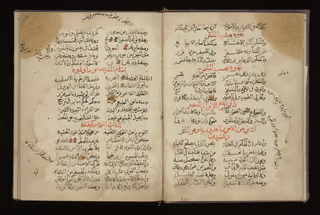
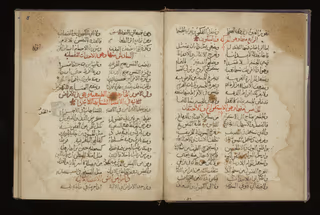
The pages this poem fills. Each opens in the Ibn Sina's Urjuza fi al-tibb and other medical works in MS Arabic 129 reader.

Hover or tap a word to see its match.

Sleep is the rest of the psychological faculties / from the movements of the sensory faculties.

Heating to the interior of bodies / by it the digestion of food becomes excellent.

And if sleep continues in excess / it fills the ventricles of the head with humors.

It moistens bodies or relaxes them / and extinguishes the heat that warms them.

And wakefulness that is in moderation / moves the senses into activity.

And prompts the faculties to actions / and cleanses the body of heaviness.

And if wakefulness continues continuously / it causes distress and agitation to souls.

And dissolves the spirits and the bodies / and corrupts the complexions and the colors.

It sinks the eye and prolongs the closing of the eyelids / and annuls thought and wastes the body.

النوم راحة القوى النفسيه / من حركات لقوى الحسيه

مسخن لباطن الاجسام / به يجود الهضم للطعام

وان تمادى النوم بافراط / يملا بطون الراس بالاخلاط

يرطب الجسوم او يرخيها / ويطفي الحر الذي يحميها

واليقظة التي على الاقتصاد / تحرك الاحساس في نشاط

وتبعث القوى على الاعمال / وتنظف الجسم من الاثقال

وان تمادت يقظة باتساق / تحدث للنفوس كربا واقلاق

وتحلل الارواح والابدان / وتفسد السحن والالوان

تغور العين وتديم الغمض / وتبطل الفكر وتبري الجسما
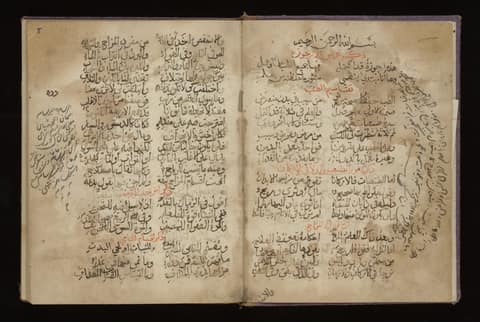
Title page of Ibn Sina's Urjuza fi al-tibb and other medical works in MS Arabic 129
Title page of Ibn Sina's Urjuza fi al-tibb and other medical works in MS Arabic 129 , 1700

About this text

Provenance

MS Arabic 129 is a handwritten Arabic medical volume held by Wellcome Collection in London. It is a composite manuscript: a single volume that brings together 11 separate works. They cover bloodletting, circumcision, the seasons, anatomy, the pulse, and urine, and most are in verse. Most of the verse in this edition is Ibn Sina's Urjuza fi al-tibb, a long poem on medicine, identified from the catalog card in the scans and from the poem's opening lines. Wellcome also names Ibn al-Tilmidh and Ibn Makki among the authors. Shams al-Din ibn Makki wrote three short poems here, and some pieces cannot be identified from the book. The manuscript is undated, and Wellcome estimates it as 18th century.

Methodology

Each scan is treated as a page-level unit. The page image remains the authority for the edition. Local Arabic Kraken OCR was weak and used only as auxiliary context; Gemini generated scan-grounded Arabic transcription and English translation primarily from the manuscript images and the approved glossary. Some word links remain uncertain, and some words have no reliable location on the scan.

Rights

The Wellcome Collection source record marks the digital surrogate with the Public Domain Mark 1.0. Poet Doctor's presentation adds generated OCR, transcription, translation, navigation metadata, and editorial context.

Original scans: Wellcome Collection ( Public Domain Mark 1.0 ).

Historian’s note. This text records the medicine of its own time, and later evidence has replaced most of it. It is not medical advice. We read it as history, and we ask what, if anything, connects it to medicine today. More on how we read old medical books