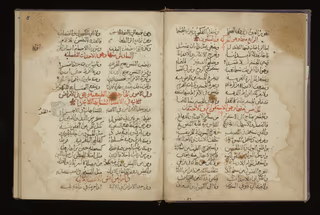
The fifth of them, which is evacuation and retention

الخامس منها وهو الاستفراغ والاحتقان

Poet
Ibn Sina
Form
Rajaz
Open the page in the book
The page this poem fills. Each opens in the Ibn Sina's Urjuza fi al-tibb and other medical works in MS Arabic 129 reader.

Hover or tap a word to see its match.

And the body is in need of evacuation / from the rest of the organs and the brain.

So phlebotomy and purging in the spring / have the utmost benefit for people.

And emetics are used in the summer / and you expel black bile in the autumn.

And induce sweating, and use the tooth-stick / to clean the teeth and the palates.

And release urine in paralyses / and extract menses from women absolutely.

And release urine from colic / for purging saves from it.

And use the bath for dirt / and do not be slack concerning that.

To expel superfluities from the surface of the body / it cleanses the body from the symptoms of filth.

And permit intercourse for the youth / so they may be safe by that from impurities.

And do not approve it for the feeble / nor for the elderly and the weak.

And do not approve it for the thin / nor for the elderly and the weak.

And whoever has intercourse after eating / is preparing himself for pains.

And excessive intercourse weakens the body / and bequeaths the bodies various afflictions.

والجسم محتاج الي استفراغ / من ساير الاعضاء والدماغ

فالقصد والاسهال في الربيع / للناس منه غاية المنفوع

والقي تستعمل في الصيف / وتخرج السودا في الخريف

وعرقوا واستعمل المسواكا / تنظف الاسنان والاحناكا

واطلق البول في الافاليجن / واستخرج الطمث من النسا البته

وارسل البول من القولنج / فان الاسهال منه ينجي

واستعمل الحمام للاوساخ / ولا تكن عن ذاك في تراخي

لتخرج الفضول من سطح البدن / تنظف الجسم من اعراض الدرن

واطلق الجماع للاحداث / فيامنوا بذاك من اخباث

ولا تحبه الي ذوي السخاف / ولا الي الكهول والضعاف

ولا تحبه الي النحاف / ولا الي الكهول والضعاف

ومن يجامع اثر الطعام / فالعده بالنفس للالام

وكثرة الجماع تضعف البدن / وتورث الاجسام اصناف المحن
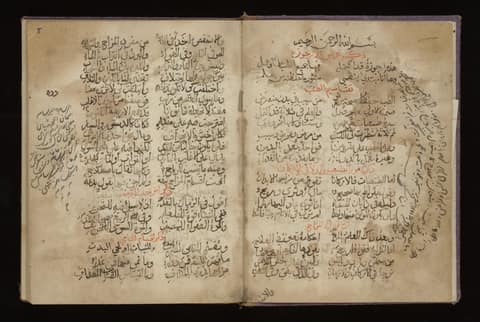
Title page of Ibn Sina's Urjuza fi al-tibb and other medical works in MS Arabic 129
Title page of Ibn Sina's Urjuza fi al-tibb and other medical works in MS Arabic 129 , 1700

About this text

Provenance

MS Arabic 129 is a handwritten Arabic medical volume held by Wellcome Collection in London. It is a composite manuscript: a single volume that brings together 11 separate works. They cover bloodletting, circumcision, the seasons, anatomy, the pulse, and urine, and most are in verse. Most of the verse in this edition is Ibn Sina's Urjuza fi al-tibb, a long poem on medicine, identified from the catalog card in the scans and from the poem's opening lines. Wellcome also names Ibn al-Tilmidh and Ibn Makki among the authors. Shams al-Din ibn Makki wrote three short poems here, and some pieces cannot be identified from the book. The manuscript is undated, and Wellcome estimates it as 18th century.

Methodology

Each scan is treated as a page-level unit. The page image remains the authority for the edition. Local Arabic Kraken OCR was weak and used only as auxiliary context; Gemini generated scan-grounded Arabic transcription and English translation primarily from the manuscript images and the approved glossary. Some word links remain uncertain, and some words have no reliable location on the scan.

Rights

The Wellcome Collection source record marks the digital surrogate with the Public Domain Mark 1.0. Poet Doctor's presentation adds generated OCR, transcription, translation, navigation metadata, and editorial context.

Original scans: Wellcome Collection ( Public Domain Mark 1.0 ).

Historian’s note. This text records the medicine of its own time, and later evidence has replaced most of it. It is not medical advice. We read it as history, and we ask what, if anything, connects it to medicine today. More on how we read old medical books