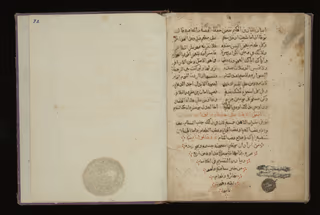
ابيات لثياذوق الحكيم تتضمن حفظ الصحة والعافية قال

Poet
ثياذوق الحكيم
Form
Tawil
Open the page in the book
The page this poem fills. Each opens in the Ibn Sina's Urjuza fi al-tibb and other medical works in MS Arabic 129 reader.

Hover or tap a word to see its match.

Beware, if you wish, of introducing food / upon food before the action of digestion.

And any food that the teeth are unable to chew / do not approach it, for it is the worst of foods.

And do not be excessive in having intercourse with full-breasted women / for excess in it is the strongest destroyer of life.

And beware, beware of the old woman and intercourse with her / for it is nothing but like having intercourse with vipers.

And do not retain excrements when they descend / even if you were among sharp

cutting swords. And especially at the time of sleep, attending to them, if you want to sleep, is the most necessary

duty. And rub oils on the body, for they / are one of the pillars for the health of bodies.

And every week you must induce vomiting / for in it is safety from the evils of phlegms.

And bathe once every two days / and maintain these habits, and persevere.

With that did the physician advise the brother of justice, Nushirwan, king of the non-Arabs.

توقا اذا ما شيت ادخال مطعم / علي مطعم قبل فعل الهواضم

وكل طعام يعجز السن مضغه / فلا تقربه فهو بئس المطاعم

ولاتك في وطئ الكواعب مسرفا / فاسرافه للعمر اقوي الهوادم

واياك اياك العجوز ووطيها / فما هو الا مثل وطى الاراقم

ولا تحبس الفضلات عند / نزولها ولو كنت بين المرهفات

الصوارم ولاسيما عند المنام / فقصدها ان اردت النوم الزم

لازم ومن علي الجسم الما فانها / لصحة الابدان احد الدعايم

وفي كل اسبوع عليك بقيئة / ففيها امان من شرور البلاغم

وكن مستحم كل يومين مرة / وحافظ علي هداه الخصال

وداوم بذاك اوصي الحكيم / اخا لعدل نوشروان مك الاعاجم
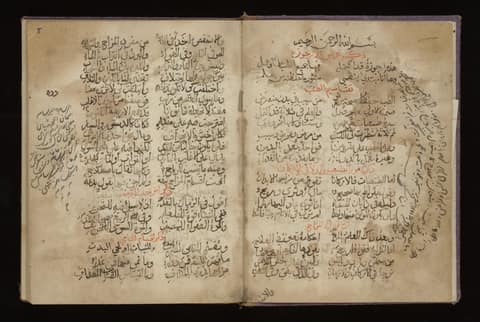
Title page of Ibn Sina's Urjuza fi al-tibb and other medical works in MS Arabic 129
Title page of Ibn Sina's Urjuza fi al-tibb and other medical works in MS Arabic 129 , 1700

About this text

Provenance

MS Arabic 129 is a handwritten Arabic medical volume held by Wellcome Collection in London. It is a composite manuscript: a single volume that brings together 11 separate works. They cover bloodletting, circumcision, the seasons, anatomy, the pulse, and urine, and most are in verse. Most of the verse in this edition is Ibn Sina's Urjuza fi al-tibb, a long poem on medicine, identified from the catalog card in the scans and from the poem's opening lines. Wellcome also names Ibn al-Tilmidh and Ibn Makki among the authors. Shams al-Din ibn Makki wrote three short poems here, and some pieces cannot be identified from the book. The manuscript is undated, and Wellcome estimates it as 18th century.

Methodology

Each scan is treated as a page-level unit. The page image remains the authority for the edition. Local Arabic Kraken OCR was weak and used only as auxiliary context; Gemini generated scan-grounded Arabic transcription and English translation primarily from the manuscript images and the approved glossary. Some word links remain uncertain, and some words have no reliable location on the scan.

Rights

The Wellcome Collection source record marks the digital surrogate with the Public Domain Mark 1.0. Poet Doctor's presentation adds generated OCR, transcription, translation, navigation metadata, and editorial context.

Original scans: Wellcome Collection ( Public Domain Mark 1.0 ).

Historian’s note. This text records the medicine of its own time, and later evidence has replaced most of it. It is not medical advice. We read it as history, and we ask what, if anything, connects it to medicine today. More on how we read old medical books