Hover or tap a word to see its match.
Part 1
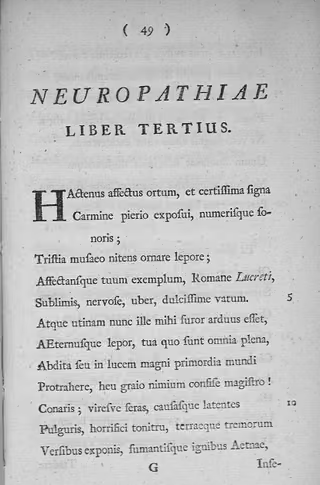
Thus far the origin of the affection, and its most certain signs,
I have set forth in Pierian song, and in sonorous
numbers;
Striving to adorn gloomy subjects with poetic charm;
And aspiring to your example, Roman Lucretius,
Sublime, vigorous, copious, sweetest of bards.
And would that I now possessed that lofty frenzy,
And eternal charm, of which all your works are full,
Whether the hidden first principles of the great world into the light
To draw forth, alas, trusting too much in your Grecian master!
You endeavor; or the fierce powers, and latent causes
Of lightning, of terrifying thunder, and of earthquakes
You expound in verses, and of Aetna smoking with fires,
HActenus affectus ortum, et certiſſima ſigna
Carmine pierio expoſui, numeriſque ſo-
noris ;
Triſtia muſaeo nitens ornare lepore ;
Affectanſque tuum exemplum, Romane Lucreti,
Sublimis, nervoſe, uber, dulciſſime vatum.
Atque utinam nunc ille mihi furor arduus eſſet,
AEternuſque lepor, tua quo ſunt omnia plena,
Abdita ſeu in lucem magni primordia mundi
Protrahere, heu graio nimium confiſe magiſtro !
Conaris ; vireſve feras, cauſaſque latentes
Fulguris, horrifici tonitru, terraeque tremorum
Verſibus exponis, fumantiſque ignibus Aetnae,
Part 2
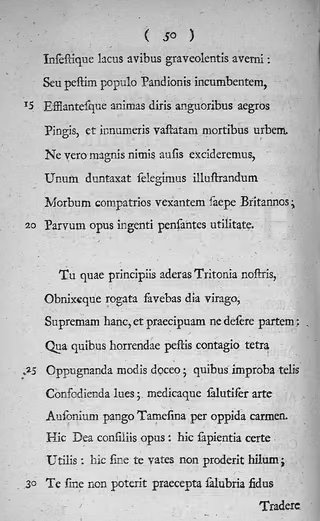
And the lakes of foul-smelling Avernus, hostile to birds:
Or whether you paint the plague weighing upon the people of Pandion,
And the sick breathing out their lives in dire agonies,
And the city laid waste by innumerable deaths.
But lest we should fail in undertakings too great,
We have chosen one disease only to be illustrated,
Which often vexes our fellow-countrymen the Britons;
Compensating a small work with immense utility.
You, Tritonia, who were present at our beginnings,
And, earnestly entreated, showed favor, divine warrior-maid,
Do not forsake this final and principal part:
Wherein I teach by what means the foul contagion of the dreadful pestilence
Must be combated; with what weapons the relentless plague
Must be pierced through; and, bringing health by medical art,
I compose an Ausonian song through the towns of the Thames.
Here, Goddess, there is need of counsels: here wisdom is certainly
Useful: here without you the poet will not avail a whit;
Without you he will not be able faithfully wholesome precepts
To impart
Infeſtique lacus avibus graveolentis averni :
Seu peſtim populo Pandionis incumbentem,
Efflanteſque animas diris anguoribus aegros
Pingis, et innumeris vaſtatam mortibus urbem.
Ne vero magnis nimis auſis excideremus,
Unum duntaxat ſelegimus illuſtrandum
Morbum compatrios vexantem ſaepe Britannos;
Parvum opus ingenti penſantes utilitate.
Tu quae principiis aderas Tritonia noſtris,
Obnixeque rogata favebas dia virago,
Supremam hanc, et praecipuam ne deſere partem :
Qua quibus horrendae peſtis contagio tetra
Oppugnanda modis doceo ; quibus improba telis
Confodienda lues ; medicaque ſalutifer arte
Auſonium pango Tameſina per oppida carmen.
Hic Dea conſiliis opus : hic ſapientia certe
Utilis : hic ſine te vates non proderit hilum;
Te ſine non poterit praecepta ſalubria fidus
Tradere
Part 3
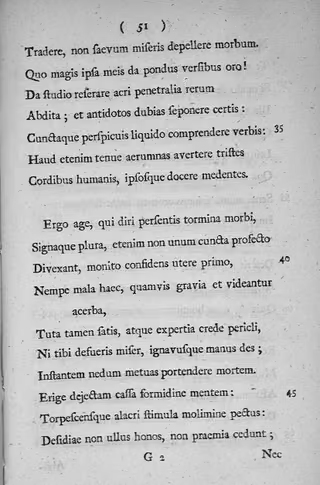
to impart, nor drive away the cruel disease from the wretched.
Wherefore the more do thou thyself give weight to my verses, I pray!
Grant that with keen study I may unlock the hidden
recesses of things; and separate doubtful antidotes from sure ones:
And clearly comprehend all things in perspicuous words:
For it is no slight matter to avert sad afflictions
from human hearts, and to teach the healers themselves.
Come then, thou who feelest the gripes of this dire disease,
and its many signs, for truly they do not all torment
a single person, confidently use this first admonition:
Namely, believe that these ills, although they may seem heavy and
bitter,
are nevertheless safe enough, and devoid of danger,
unless, wretched one, thou failest thyself, and cowardly yieldest;
much less shouldst thou fear that they portend impending death.
Raise up thy mind cast down by vain fear:
And stimulate thy torpid breast with brisk exertion:
To sloth no honor, no rewards fall;
Tradere, non ſaevum miſeris depellere morbum.
Quo magis ipſa meis da pondus verſibus oro!
Da ſtudio referare acri penetralia rerum
Abdita; et antidotos dubias ſeponere certis:
Cunctaque perſpicuis liquido comprendere verbis:
Haud etenim tenue aerumnas avertere triſtes
Cordibus humanis, ipſoſque docere medentes.
Ergo age, qui diri perſentis tormina morbi,
Signaque plura, etenim non unum cuncta profecto
Divexant, monito confidens utere primo,
Nempe mala haec, quamvis gravia et videantur
acerba,
Tuta tamen ſatis, atque expertia crede pericli,
Ni tibi defueris miſer, ignavuſque manus des;
Inſtantem nedum metuas portendere mortem.
Erige dejectam caſſa formidine mentem:
Torpeſcenſque alacri ſtimula molimine pectus:
Deſidiae non ullus honos, non praemia cedunt;
Part 4
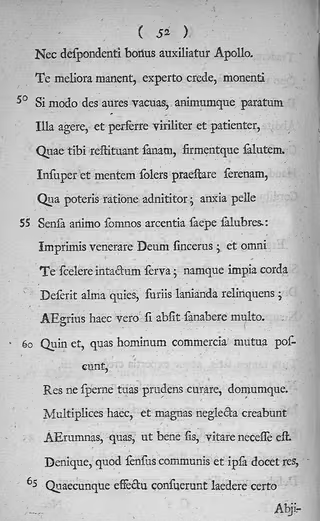
Nor does kind Apollo aid the despondent.
Better things await you, believe one who has experience, who advises you,
If only you lend attentive ears, and a mind prepared
To do and endure manfully and patiently those things
Which may restore and strengthen your sound health.
Moreover, skillfully strive to keep your mind serene,
By whatever means you can; drive away anxious
Thoughts from your mind, which often ward off wholesome sleep:
First of all, worship God sincerely; and keep yourself
Untouched by any crime; for kindly peace
Forsakes impious hearts, leaving them to be torn by the Furies;
And indeed, if this peace be absent, you will be healed with much greater difficulty.
Furthermore, what the mutual dealings of men de-
mand,
Prudently do not scorn to care for your affairs, and your home.
These things, if neglected, will create manifold and great
Troubles, which, that you may be well, it is necessary to avoid.
Finally, as common sense and the fact itself teach,
Whatever things are accustomed to harm with a sure effect
Nec deſpondenti bonus auxiliatur Apollo.
Te meliora manent, experto crede, monenti
Si modo des aures vacuas, animumque paratum
Illa agere, et perferre viriliter et patienter,
Quae tibi reſtituant ſanam, firmentque ſalutem.
Inſuper et mentem ſolers praeſtare ſerenam,
Qua poteris ratione adnititor; anxia pelle
Senſa animo ſomnos arcentia ſaepe ſalubres:
Imprimis venerare Deum ſincerus; et omni
Te ſcelere intactum ſerva; namque impia corda
Deſerit alma quies, furiis lanianda relinquens;
AEgrius haec vero ſi abſit ſanabere multo.
Quin et, quas hominum commercia mutua poſ-
cunt,
Res ne ſperne tuas prudens curare, domumque.
Multiplices haec, et magnas neglecta creabunt
AErumnas, quas, ut bene ſis, vitare neceſſe eſt.
Denique, quod ſenſus communis et ipſa docet res,
Quaecunque effectu conſuerunt laedere certo
Part 5
must be cast aside; such as gluttony, and drunkenness disturbing the brain;
and the destructive pleasure of immoderate venery;
then the intense study of philosophy; and night-watchings
inimical to the nerves; and all labor exceeding the strength:
these things must be altogether warded off by you, and removed far away;
so that nothing may delay the wished-for cure.
Thus fortified by these precepts, hear further
what remains to be done according to the laws of our art.
Since the pulpy fabric of the brain, as I have taught above,
and the nerves, the threads drawing their origin from it,
especially injured by this disease, and their structure broken,
grow soft with an untimely flaccidity:
and the thin liquor of the encephalon, which is called spirit,
thereby also become degenerate, and vapid, and watery,
and poor, embracing few animal elements;
Mobi-
Abjiciantur; ut ingluvies, turbanſque cerebrum
Crapula; et immodicae veneris damnoſa voluptas;
Tum ſophiae ſtudium vehemens; nerviſque ini-
mica
Lucubratio; vireſque exſuperans labor omnis :
Haec arcenda tibi omnino, removendaque longe;
Ut nihil optatam poſſit tardare medelam.
His ita munitus praeceptis accipe porro
Quae diſciplinae ad leges facienda ſuperſunt.
Quum fabrica, ut ſupra docui, pulpoſa cerebri,
Ex ipſaque ortum ducentia ſtamina nervi,
Hoc morbo imprimis laeſa, et compagine fracta,
Intempeſtiva molleſcant flacciditate :
Encephalique liquor tenuis, qui ſpiritus audit,
Degener inde etiam factus, vapiduſque, aque-
uſque,
Paucaque complectens elementa animalia pauper;
Mobi-
Part 6
Swift with excessive mobility, and too dissolved,
Flows away, and too suddenly flies off from the nerves themselves:
And thus the nature of this dreadful plague is constituted:
It is clear that this can be conquered in no other way,
Than by hardening the mass of the brain, and the slender threads of the nerves,
So that growing strength and elastic power
May at length restore their functions to the renewed fibres:
And at the same time by enriching the thin liquor of the encephalon,
So that it may contain particles proper to the animal,
Namely of salt, and mild oil, and minute earth,
Very many, gentle, generous, and well concocted:
And so from thence be rendered more tenacious, and less
fleeting;
And fit for nourishing its own proper canals;
And for discharging its own duties well and constantly:
These things must be done, in order that the disease may be rightly cured:
This is the work, this the toil, this the ultimate aim of our
art.
Mobilitate celer nimia, nimiumque ſolutus
Diffluat, et nervis ſubito nimis evolet ipſis:
Horrendaeque luis natura ita conſtituatur:
Hanc patet haud alia vinci ratione poteſſe,
Quam cerebri glomus, et nervorum tenuia fila
Durando, ut robur, virtuſque elaſtica gliſcens
Tandem inſtauratis reddat ſua munera fibris:
Encephalique ſimul tenuem ditando liquorem,
Particulas ut contineat proprias animali,
Nempe ſalis, leniſque olei, terraeque minutae,
Permultas, blandas, generoſas, et bene coctas:
Atque adeo magis inde tenax, minus et fugi-
tivus
Reddatur; propriiſque canalibus aptus alendis;
Officiiſque ſuis bene conſtanterque obeundis:
Haec fieri, rite ut morbo medeatur, oportet:
Hoc opus, hic labor, hic noſtrae ſcopus ultimus
artis.