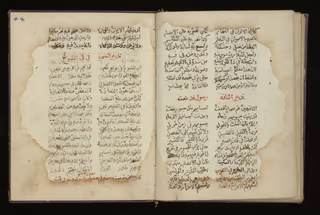
تدبير الصحة في الشيوخ

Poet
Ibn Sina
Form
Rajaz
Open the page in the book
The page this poem fills. Each opens in the Ibn Sina's Urjuza fi al-tibb and other medical works in MS Arabic 129 reader.

Indeed, the elderly have a deficiency in their strengths / due to their condition, every day brings a decrease

Give them strong food / in small amounts so as not to burden the limbs

If you purge, do not purge yellow bile / leave it, for it is medicine in their bodies

If he is accustomed to phlebotomy / do not cut off that habit from him

But whoever has reached sixty / and is robust and sturdy

Then bleed him twice a year / and do not deviate in this from the two bleedings

And prevent him from having the cephalic vein bled / and be attentive to the matter

If he reaches seventy, bleed once / and do not add to this single time

And prevent him from having the median cubital vein bled / even if you see his body as full

And if you want a definitive cut, then in the two veins / in the basilic or from the jugulars

And prevent him after that from any bloodletting / for in old age there is a crash for the elderly

Do not repel swellings in their bodies / and do not strengthen the drawing from their swellings

Treat them gently with rubbing and anointing / and give them oils in anointing

And cleanse them with soft food / beware of intending to use medication

ان الشيوخ في قواهم نقص لحالهم في كل يوم نقص

اعطهم القوى من غذاء قليل كيلا تثقل الاعضاء

ان تسهل لا تسهل الصفراء دعها فان في جسومهم دواء

ان يكن تعود الفصادة لا تقطعن منه ذاك العادة

لكن من قد بلغ الستينا وكان ذا صرامة متينا

فاقصده في العام مرتين ولا تحد فيه عن القصدين

وامنعه ان يقصد القيفال وكن من الامر على احتفال

ان بلغ السبعين فاقصد مرة ولا تزد فيه على ذي الكرة

وامنعه ان يقصد عرق الكحل وان تراه جسمه كالممتلى

وان ترد حسما ففي العرقين في الباسليق او من الودجين

وامنعه بعد ذاك كل فصدة فان في الكبر للشيوخ هدة

لا تردع الاورام في اجسامهم ولا تقوي الجذب من اورامهم

لطفهم بالدلك والتمريخ واعطهم الادهان في تمريخ

ونقهم بلين الغذاء اياك ان تهم بالدواء
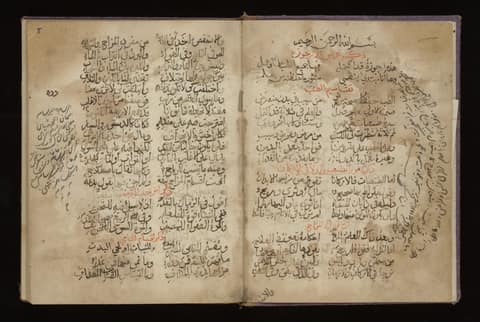
Title page of Ibn Sina's Urjuza fi al-tibb and other medical works in MS Arabic 129
Title page of Ibn Sina's Urjuza fi al-tibb and other medical works in MS Arabic 129 , 1700

About this text

Provenance

MS Arabic 129 is a handwritten Arabic medical volume held by Wellcome Collection in London. It is a composite manuscript: a single volume that brings together 11 separate works. They cover bloodletting, circumcision, the seasons, anatomy, the pulse, and urine, and most are in verse. Most of the verse in this edition is Ibn Sina's Urjuza fi al-tibb, a long poem on medicine, identified from the catalog card in the scans and from the poem's opening lines. Wellcome also names Ibn al-Tilmidh and Ibn Makki among the authors. Shams al-Din ibn Makki wrote three short poems here, and some pieces cannot be identified from the book. The manuscript is undated, and Wellcome estimates it as 18th century.

Methodology

Each scan is treated as a page-level unit. The page image remains the authority for the edition. Local Arabic Kraken OCR was weak and used only as auxiliary context; Gemini generated scan-grounded Arabic transcription and English translation primarily from the manuscript images and the approved glossary. Some word links remain uncertain, and some words have no reliable location on the scan.

Rights

The Wellcome Collection source record marks the digital surrogate with the Public Domain Mark 1.0. Poet Doctor's presentation adds generated OCR, transcription, translation, navigation metadata, and editorial context.

Original scans: Wellcome Collection ( Public Domain Mark 1.0 ).

Historian’s note. This text records the medicine of its own time, and later evidence has replaced most of it. It is not medical advice. We read it as history, and we ask what, if anything, connects it to medicine today. More on how we read old medical books