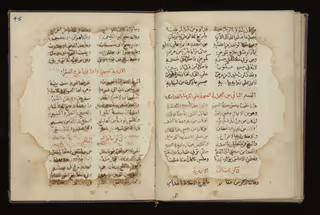
تدبير من نقصت صحته في عضو دون عضو أو وقت دون وقت

Poet
Ibn Sina
Form
Rajaz
Open the page in the book
The page this poem fills. Each opens in the Ibn Sina's Urjuza fi al-tibb and other medical works in MS Arabic 129 reader.

Whoever complains at a certain time, / treat him before it comes to us,

With the opposite of what they fear at that moment, / and blend time with time for him.

And whoever complains about one of his organs / due to its weakness, work on its medication

With what I have mentioned in treating disease, / until you see him recovered from the symptom.

And whoever you see a sign in his body / of an illness, devise a way to resolve it.

Because it is hidden within his body, / so devise a way for it before it becomes evident.

And I have mentioned the indicating symptoms / for the disease that you fear.

So work on its medication in its respective chapter, / by resolving the causes I mentioned.

من كان يشكو في الزمان حينا فداوه من قبل ان يجينا

بضد ما خشوا لذاك الآن وامزج له الزمان بالزمان

ومن شكا الواحد من اعضائه من ضعفه فاعمل على دوائه

بما ذكرت في علاج المرض حتى تراه باريا من عرض

ومن ترى علامة في جسمه لمرض فاحتل له في حسمه

لانه في جسمه مكنون فاحتل له من قبل ان يبين

وقد ذكرت ما يدل من عرض علي الذي تخافه من المرض

فاعمل علي دوايِه ببابهِ بحسم ما ذكرت من اسبابهِ
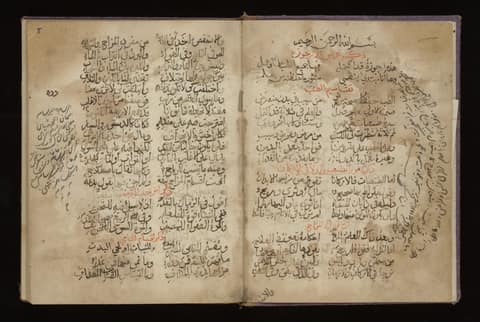
Title page of Ibn Sina's Urjuza fi al-tibb and other medical works in MS Arabic 129
Title page of Ibn Sina's Urjuza fi al-tibb and other medical works in MS Arabic 129 , 1700

About this text

Provenance

MS Arabic 129 is a handwritten Arabic medical volume held by Wellcome Collection in London. It is a composite manuscript: a single volume that brings together 11 separate works. They cover bloodletting, circumcision, the seasons, anatomy, the pulse, and urine, and most are in verse. Most of the verse in this edition is Ibn Sina's Urjuza fi al-tibb, a long poem on medicine, identified from the catalog card in the scans and from the poem's opening lines. Wellcome also names Ibn al-Tilmidh and Ibn Makki among the authors. Shams al-Din ibn Makki wrote three short poems here, and some pieces cannot be identified from the book. The manuscript is undated, and Wellcome estimates it as 18th century.

Methodology

Each scan is treated as a page-level unit. The page image remains the authority for the edition. Local Arabic Kraken OCR was weak and used only as auxiliary context; Gemini generated scan-grounded Arabic transcription and English translation primarily from the manuscript images and the approved glossary. Some word links remain uncertain, and some words have no reliable location on the scan.

Rights

The Wellcome Collection source record marks the digital surrogate with the Public Domain Mark 1.0. Poet Doctor's presentation adds generated OCR, transcription, translation, navigation metadata, and editorial context.

Original scans: Wellcome Collection ( Public Domain Mark 1.0 ).

Historian’s note. This text records the medicine of its own time, and later evidence has replaced most of it. It is not medical advice. We read it as history, and we ask what, if anything, connects it to medicine today. More on how we read old medical books