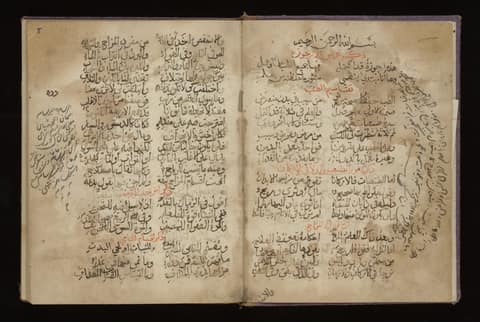
And after that, observe the arrangement of time / Moderate, like what has been
And what the soul desires, with measure / A little of it suffices for a lot
And whatever is of astringents / From a purgative, or sour, or astringent
Benefits the yellow bile without dispute / And what runs its course in harmony
And what you see in him as a headache / Or throbbing that increases his burning pain
Then smear his forehead with jujube water / And grated sandalwood cures the pain
And use plums and cherries / If you seek the medicine by its specific property
And whoever comes complaining of an obstruction in the intestine / Give him barley gruel with butter
And add to it a handful of rice / Boiled, mixed with almonds
And prepare for him a meatless *mulukhiyah* / With almond oil of good repute
And if you see a trace of that in the throat
/ Then phlebotomize him; he will recover, there is no risk in that
And give him a *mithqal* of coriander / With starch, almonds, and *harira* [gruel]
And whoever has a bad temperament in the liver / Have him lick a rose lozenge; it is an excellent effort
And do not forget the one with a spleen [ailment] / For vinegar and figs are his cure
And if there is colic in the belly
/ And you fear it, and it induces fear
Then give him cumin water with mastic to drink / For it immediately removes what he complained of
And if his belly has become blocked / And you fear he will fall into a state of non-existence
Take the great quince purgative / For the benefit in it is not small
And whoever you see his diarrhea has become excessive / And you fear from his diarrhea that he will perish
Let him be nourished with sumac drink / And leave fat and broths
And whoever has some tenesmus / It is a great disease, not easy
So give him marshmallow and rose seeds / And rose oil and rose syrup
And aloeswood, *mandal* wood, and quince / In them is healing, hastening to the utmost
وبعده انظر ترتب الزمانا معتدلاً مثل الذي قد كانا
والنفس ما تهواه بالتقدير قليله يغني عن الكثير
وكل ما كان من القوابض من مسهل او حامض او قابض
تنفع للصفراء بلا خلاف وما جرى مجراه بايتلاف
وما تراه عنده صُداعا او ضربان تزايد التياعا
فالطخ له الجبهة بي العالم والصندل المحكوك يشفي الالم
واستعمل الاجاص والقراصيا ان كنت تطلب للدوا بالخاصيه
ومن اتي يشكو المعى بسده حسو شعير اعطيه بزبده
وزد عليه حفنة من ارز مسلوقة قد خلطت باللوز
واجعل ملوخية له مزوره بدهن لوز طيب مخبره
وان ترى في الحلق من ذاك اثر
فافصده يبرأ ليس في ذاك غرر
واعطيه مثقالاً من الكزبرة مع النشا واللوز والحريرة
ومن به سؤ مزاج في الكبد لعقه قرص الورد للاولى جهد
وصاحب الطحال لا تنساه فالخل والتين له شفاه
وان يكن من مغص في الجوف
وخف منه وهو مغني الخوف
فاسقيه ما الكمون مع المصطكا فانه في الحال يذهب ما شكا
وان يكن بطنه قد انكتم وخفت ان يهوي بحال العدم
خذ مسهل السفرجل الجليل فالنفع فيه ليس بالقليل
ومن ترى اسهاله قد اسرفا وخفت من اسهاله ان يتلفا
فليغتذي بشربة السماق ويترك الدهن مع الامراق
ومن به شي من الزحير فداء عظيم ليس باليسير
فاعطه الخطمي وبزر الورد ودهن ورد وشراب الورد
والعود والمندل والسفرجل فيه الشفاء لغايه يعجل