تدبير الصحيح بقول مشتمل في هوايه وخاصته في طبعه

Poet
Ibn Sina
Form
Rajaz
Open the page in the book
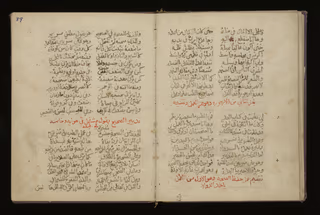
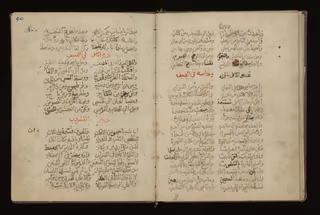
The pages this poem fills. Each opens in the Ibn Sina's Urjuza fi al-tibb and other medical works in MS Arabic 129 reader.

Hover or tap a word to see its match.

For the preservation of health, there is a branching kind

/ in the practice of medicine into two kinds:

That the temperament, if you desire its continuation / in a state, its diet should be similar to it,

And the body, if you resolve to remove it / from its nature, then the opposite of its temperament [is used],

And for the healthy person absolutely, / as is seen remaining upon the treatment,

Dwell in the lands of the fourth clime, / whatever of them is safe from vapor,

And what has an elevation over the flood in them, / and rely on the east, for it is milder,

And lean thus by the opposite towards the hot, / and the city open to the north,

And [spend] the night in the high gathering places, / and by day descend to the soft, sandy ground.

Turn away from sour foods / and incline toward *khabīṣ* made of jujube

Use cooling aromatic plants / and the like of rose oil among oils

Protect your eyes from dust / and from smoke and from vapor

And from the rays of the sun and griefs / and from encountering intense heat and anxieties

Do not prolong the study of fine details / be it an engraving or a densely written *taʿlīq* script

للحفظ في الصحة جنس **منشعب**

/ في عمل الطب على ضربين

أن المزاج أن ترد بقاه / بحاله شُبّه به غذاه

والجسم أن تعزم على اخراجه / من طبعه فالضد من مزاجه

وعلى الصحيح باطلاق / كما يرى على العلاج باقي

اسكن بلاد رابع الأقاليم / ما كان منها في بخار سالم

وما على الفيض بها شرف / واعتمد الشرق فهو ألطف

ومل كذا بالضد إلى الحار / والبلد المفتوح للشمال

والليل في العالي من المجالس / وبالنهار انزل إلى الدهاس

وَاعْدِل عَنِ الاحْمَاضِ / وَمِلْ إِلى الخَبِيصِ مِنْ عِنَابِ

وَاسْتَعْمِلِ البَارِدَ مِنْ رَيْحَانِ / وَمِثْلَ دُهْنِ الوَرْدِ مِنْ أَدْهَانِ

وَاحْفَظْ عَلَى عَيْنَاكَ مِنْ غُبَارِ / وَمِنْ دُخَانٍ وَمِنْ بُخَارِ

وَمِنْ شُعَاعِ الشَّمْسِ وَالْغُمُومِ / وَمِنْ لِقَا الوَهَجِ وَالهُمُومِ

وَلا تُطِلْ مُطَالَعَ الدَّقِيقِ / نَقْشًا وَخَطًّا مُدْمِجَ التَّعْلِيقِ
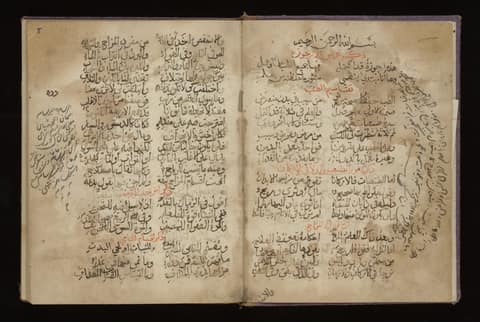
Title page of Ibn Sina's Urjuza fi al-tibb and other medical works in MS Arabic 129
Title page of Ibn Sina's Urjuza fi al-tibb and other medical works in MS Arabic 129 , 1700

About this text

Provenance

MS Arabic 129 is a handwritten Arabic medical volume held by Wellcome Collection in London. It is a composite manuscript: a single volume that brings together 11 separate works. They cover bloodletting, circumcision, the seasons, anatomy, the pulse, and urine, and most are in verse. Most of the verse in this edition is Ibn Sina's Urjuza fi al-tibb, a long poem on medicine, identified from the catalog card in the scans and from the poem's opening lines. Wellcome also names Ibn al-Tilmidh and Ibn Makki among the authors. Shams al-Din ibn Makki wrote three short poems here, and some pieces cannot be identified from the book. The manuscript is undated, and Wellcome estimates it as 18th century.

Methodology

Each scan is treated as a page-level unit. The page image remains the authority for the edition. Local Arabic Kraken OCR was weak and used only as auxiliary context; Gemini generated scan-grounded Arabic transcription and English translation primarily from the manuscript images and the approved glossary. Some word links remain uncertain, and some words have no reliable location on the scan.

Rights

The Wellcome Collection source record marks the digital surrogate with the Public Domain Mark 1.0. Poet Doctor's presentation adds generated OCR, transcription, translation, navigation metadata, and editorial context.

Original scans: Wellcome Collection ( Public Domain Mark 1.0 ).

Historian’s note. This text records the medicine of its own time, and later evidence has replaced most of it. It is not medical advice. We read it as history, and we ask what, if anything, connects it to medicine today. More on how we read old medical books