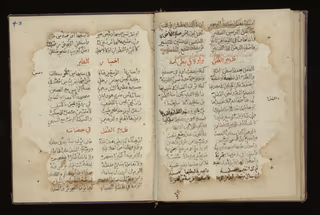
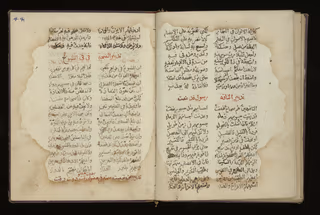
Regimen of the Child in its Nursing

تدبير الطفل في حضانته

Poet
Ibn Sina
Form
Rajaz
Open the page in the book
The pages this poem fills. Each opens in the Ibn Sina's Urjuza fi al-tibb and other medical works in MS Arabic 129 reader.

Hover or tap a word to see its match.

Anoint him with an astringent when swaddling him / until firmness is seen in his skin

And bathe him and clean him of his humors / and moderate the binding on his swaddle

And do not nurse him too much [lest] he get indigestion / and do not hug him too much [lest] he suffocate

And do not treat him with anything that makes him restless / [that] prevents him from sleeping or causes him insomnia

Keep to, if you want him to sleep / a cradle and soothing that pleases the boy

And bestow upon him melodies at the time of sleep / so as to prevent weeping from the boy

Keep him in the light during his wakefulness / so that he may see the stars and the sky

A multitude of varieties in food / so that you accustom him to it over the days

Soothe him with sounds in teaching / so that you train him to speak

Give him honey to lick and rub his palate / and wipe his tongue with it and massage it

And put a little licorice in it / and frankincense, and dissolve it in his mouth

And administer it as a nasal drop for him to smell / for a blockage in the nose or to clear it

Because this improves his senses / and his voice, and frees his breath

And prevent him from being bled or purged / until he is seen to have fallen ill

And whatever afflicts him of swelling or of pustules / do not counter it for him with drawing

ادهنه بالقابض عند شدة / حتى يرى صلابة في جلده

وحمه ونظفه من اخلاطه / ووسد الشد على قماطه

ولا ترضعه كثيراً يتخم / ولا تعانقه كثيرا ينفحم

ولا تعامله بشيء يقلقه / يمنعه المنام أو يؤرقه

الزم ان أردت ان يناما / مهدا و مداراة تروق الغلاما

وامنحه الالحان عند المنام / كي يمنع البكا من الغلام

الزمه في يقظته الضياء / كيما يرى النجوم والسماء

كثرة الالوان في الطعام لكي تمرنه على الايام

ناغيه بالاصوات في التعليم كيما تقريه على التكليم

العقه من عسل وحنكه وامسح به لسانه وادلكه

واجعل قليلا من سوس فيه وكندر وحله في فيه

واسعطه في ذا لكي يشمه من سدة في الانف او تصفيه

لان هذا مصلح احساسه وصوته ومطلق انفاسه

وامنعه ان يقصد او يسهلا حتى يرى نفسه قد اعتلا

وما اعتراه من ورم او من بثر فلاتقابله له بجذب
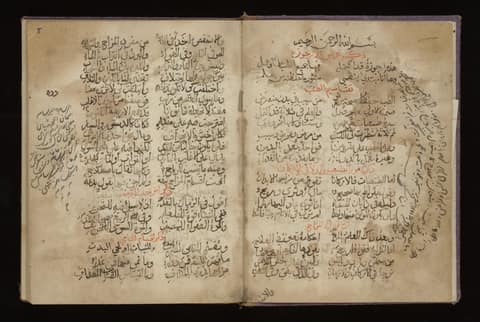
Title page of Ibn Sina's Urjuza fi al-tibb and other medical works in MS Arabic 129
Title page of Ibn Sina's Urjuza fi al-tibb and other medical works in MS Arabic 129 , 1700

About this text

Provenance

MS Arabic 129 is a handwritten Arabic medical volume held by Wellcome Collection in London. It is a composite manuscript: a single volume that brings together 11 separate works. They cover bloodletting, circumcision, the seasons, anatomy, the pulse, and urine, and most are in verse. Most of the verse in this edition is Ibn Sina's Urjuza fi al-tibb, a long poem on medicine, identified from the catalog card in the scans and from the poem's opening lines. Wellcome also names Ibn al-Tilmidh and Ibn Makki among the authors. Shams al-Din ibn Makki wrote three short poems here, and some pieces cannot be identified from the book. The manuscript is undated, and Wellcome estimates it as 18th century.

Methodology

Each scan is treated as a page-level unit. The page image remains the authority for the edition. Local Arabic Kraken OCR was weak and used only as auxiliary context; Gemini generated scan-grounded Arabic transcription and English translation primarily from the manuscript images and the approved glossary. Some word links remain uncertain, and some words have no reliable location on the scan.

Rights

The Wellcome Collection source record marks the digital surrogate with the Public Domain Mark 1.0. Poet Doctor's presentation adds generated OCR, transcription, translation, navigation metadata, and editorial context.

Original scans: Wellcome Collection ( Public Domain Mark 1.0 ).

Historian’s note. This text records the medicine of its own time, and later evidence has replaced most of it. It is not medical advice. We read it as history, and we ask what, if anything, connects it to medicine today. More on how we read old medical books