Hover or tap a word to see its match.
Of a King who, for the people, in the heart of the homeland,
Knew how to ward off the hostile power of evil,
Of the sages whose effort seconded his virtues,
I sing the labors, the laws, the institutes.
O thou! who by thy expressive voice,
Makest the ear of mortals attentive to the greatest subjects,
Muse, whose conquering accents and charms,
Know how to strew flowers over somber scenes,
By exposing to the light of day the errors and vices
From which the ills and torments of humans are born,
Celebrate the delights and the felicity
That virtues, strength, and health give;
Come, show us the sources of a thousand pains,
And come regulate the resources of the healing art,
Tell of its results, show its successes,
The fraudulent disorder and the numerous excesses;
Dare to signal the power of a surer art,
Which can prevent the birth of pain,
And which, against it, in us, knows how to stiffen the springs
Of the heart and the mind, and of the soul and the body.
To confound abuse, to enlighten the world,
To divert the too fertile source of misfortune,
To combat, to attenuate the principle of evil,
To lay the foundations of social happiness,
To make man faithful to the principles of Hygeia;
To sing of health, lend me your magic,
Come mingle your harmonious sounds with my songs,
And dictate the language of the Gods to my voice.
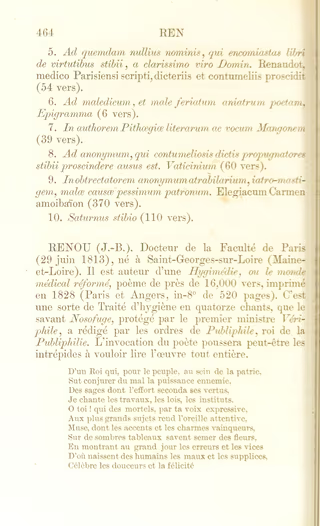
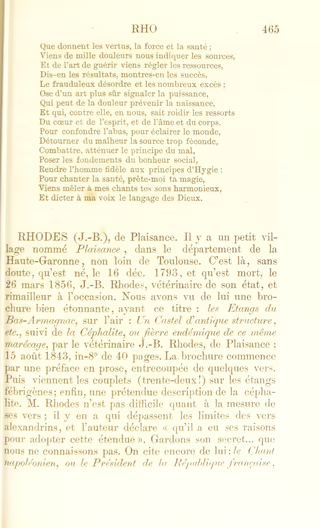
D'un Roi qui, pour le peuple, au sein de la patrie,
Sut conjurer du mal la puissance ennemie,
Des sages dont l'effort seconda ses vertus,
Je chante les travaux, les lois, les instituts.
O toi ! qui des mortels, par ta voix expressive,
Aux plus grands sujets rend l'oreille attentive,
Muse, dont les accents et les charmes vainqueurs,
Sur de sombres tableaux savent semer des fleurs,
En montrant au grand jour les erreurs et les vices
D'où naissent des humains les maux et les supplices,
Célèbre les douceurs et la félicité
Que donnent les vertus, la force et la santé ;
Viens de mille douleurs nous indiquer les sources,
Et de l'art de guérir viens régler les ressources,
Dis-en les résultats, montres-en les succès,
Le frauduleux désordre et les nombreux excès ;
Ose d'un art plus sûr signaler la puissance,
Qui peut de la douleur prévenir la naissance,
Et qui, contre elle, en nous, sait roidir les ressorts
Du cœur et de l'esprit, et de l'âme et du corps.
Pour confondre l'abus, pour éclairer le monde,
Détourner du malheur la source trop féconde,
Combattre, atténuer le principe du mal,
Poser les fondements du bonheur social,
Rendre l'homme fidèle aux principes d'Hygie ;
Pour chanter la santé, prête-moi ta magie,
Viens mêler à mes chants tes sons harmonieux,
Et dicter à ma voix le langage des Dieux.