Hover or tap a word to see its match.
Pepper is asserted to be of a dry and hot virtue;
the third degree is granted to it in both.
It has three species: white, and long, and black.
But because only two species are known,
I will say some things known to me about the black species.
Taken raw or cooked, or bound with honey,
it will aid the digestive power of the stomach and liver.
It cures pestiferous bites; it removes aversions to food.
It often counters various complaints of the thorax.
And the cold that is wont to harm in a periodic fever—
it restrains the fever if it is taken before the shivering.
With well-ground laurel berries or with its leaves,
and drunk with warm unmixed wine, it calms griping pains.
And mixed with hard pitch and applied on top, it represses scrofula.
It is also rightly joined to those [medicines]
which are accustomed to purge dread darkness from the eyes.
Mixed with natron it deletes spots by means of a poultice.
Ground into a powder with burnt human feces
Mix pepper in together: and thus apply it to cancers,
Experts say nothing is more useful than this powder.
No one can describe all the virtues of pepper.
For almost all medicines require pepper,
It is usually added to many precious antidotes.
Hence I think so few praises of pepper have been spoken,
And because it is worthy of praise in countless remedies.
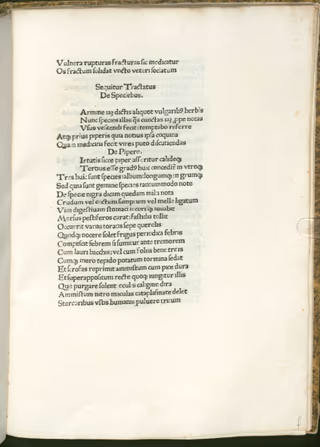
Irtutis ſicce piper aſſeritur calideqꝫ
Tertius eſſe gradꝰ huic concedit̃ in vtroqꝫ
Tres huic ſunt ſpecies:album:longumqꝫ:nigrumqꝫ
Sed quia ſunt gemine ſpecies tantummodo note
De ſpecie nigra dicam quedam mihi nota
Crudum vel coctum ſumptum vel melle ligatum
Vim digeſtiuam ſtomaci iecoriſqꝫ iuuabit
Morſus peſtiferos curat:faſtidia tollit
Occurrit variis toracis ſepe querelis
Quodqꝫ nocere ſolet frigus periodica febris
Compeſcit febrem ſi ſumitur ante tremorem
Cum lauri bacchis:vel cum foliis bene tritis
Cumqꝫ mero tepido potatum tormina ſedat
Et ſcrofas reprimit ammiſtum cum pice dura
Et ſuperappoſitum recte quoqꝫ iungitur illis
Que purgare ſolent oculis caligine dira
Ammiſtum nitro maculas cataplaſmate delet
Stercoribus vſtis humanis puluere tritum
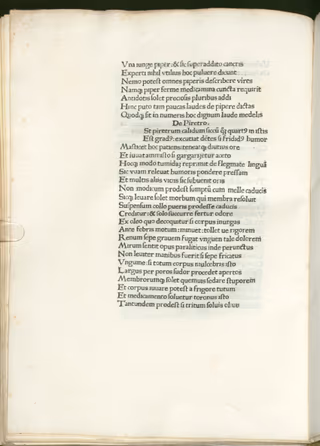
Vna iunge piper: & ſic ſuperaddito cancris
Experti nihil vtilius hoc puluere dicunt
Nemo poteſt omnes piperis deſcribere vires
Namꝙ piper ferme medicamina cuncta requirit
Antidotis ſolet precioſis pluribus addi
Hinc puto tam paucas laudes de pipere dictas
Quodꝙ ſit in numeris hoc dignum laude medelis