Hover or tap a word to see its match.
Part 1
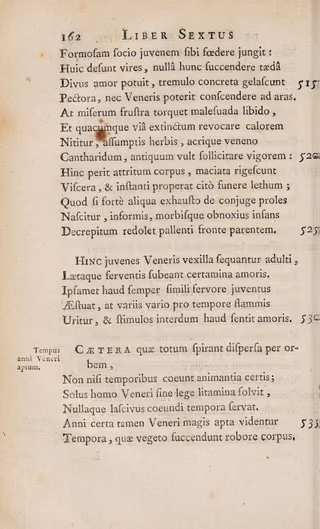
Non niſi temporibus coeunt animantia certis;
Solus homo Veneri ſine lege litamina ſolvit,
Nullaque laſcivus coeundi tempora ſervat.
Anni certa tamen Veneri magis apta videntur
Tempora, quæ vegeto ſuccendunt robore corpus.
Part 2
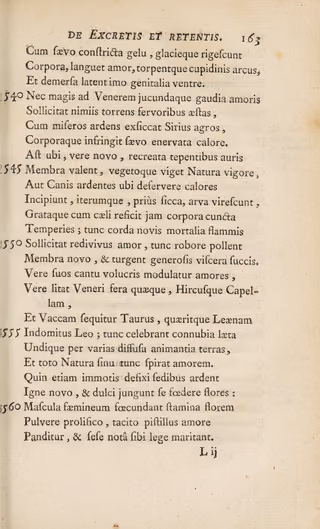
ON EXCRETIONS AND RETENTIONS.
When bodies, constricted by fierce frost, grow stiff with ice,
Love languishes, and the bows of desire grow numb,
And the genitals lie hidden, sunk in the bottom of the belly.
Nor does summer, scorching with excessive heats, any more
Incite to Venus and the pleasant joys of love,
When burning Sirius dries up the wretched fields,
And breaks down bodies enervated by fierce heat.
But when, in new spring, the limbs, refreshed by warm breezes,
Are strong, and Nature flourishes with lively vigor,
Or when the burning heats of the Dog Star begin to subside,
And the fields, previously dry, grow green again,
And when the pleasant mildness of the sky now restores
All bodies; then revived love incites mortal hearts
With new flames, then the limbs are strong
With new vigor, and the viscera swell with generous juices.
In spring the bird modulates its loves in song,
In spring every wild beast sacrifices to Venus, and the He-goat follows
the She-goat,
And the Bull the Cow, and the untamed Lion seeks
The Lioness; then living creatures, spread everywhere through various lands,
Celebrate joyful marriages,
And Nature then breathes love from her whole bosom.
Moreover, fixed in their unmoving seats, the flowers burn
With new fire, and join themselves in a sweet compact:
The male stamens fecundate the female flower
With prolific dust, the pistil opens in silent love,
And they wed one another by a law known to themselves.
L ij
Cum ſævo conſtricta gelu, glacieque rigeſcunt
Corpora, languet amor, torpentque cupidinis arcus,
Et demerſa latent imo genitalia ventre.
Nec magis ad Venerem jucundaque gaudia amoris
Sollicitat nimiis torrens fervoribus æſtas,
Cum miſeros ardens exſiccat Sirius agros,
Corporaque infringit ſævo enervata calore.
Aſt ubi, vere novo, recreata tepentibus auris
Membra valent, vegetoque viget Natura vigore,
Aut Canis ardentes ubi defervere calores
Incipiunt, iterumque, priùs ſicca, arva vireſcunt,
Grataque cum cæli reficit jam corpora cuncta
Temperies; tunc corda novis mortalia flammis
Sollicitat redivivus amor, tunc robore pollent
Membra novo, & turgent generoſis viſcera ſuccis.
Vere ſuos cantu volucris modulatur amores,
Vere litat Veneri fera quæque, Hircuſque Capel-
lam,
Et Vaccam ſequitur Taurus, quæritque Leænam
Indomitus Leo; tunc celebrant connubia læta
Undique per varias diffuſa animantia terras,
Et toto Natura ſinu tunc ſpirat amorem.
Quin etiam immotis defixi ſedibus ardent
Igne novo, & dulci jungunt ſe fœdere flores :
Maſcula fæmineum fœcundant ſtamina florem
Pulvere prolifico, tacito piſtillus amore
Panditur, & ſeſe notâ ſibi lege maritant.
Part 3
164 BOOK SIX
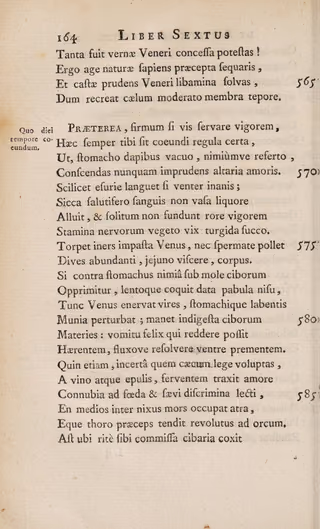
So great a power was granted to vernal Venus!
Come then, wisely follow the precepts of nature,
And prudently pay your offerings to chaste Venus,
While the sky refreshes the limbs with moderate warmth.
At what time of day to have intercourse.
Tanta fuit vernæ Veneri conceſſa poteſtas !
Ergo age naturæ ſapiens præcepta ſequaris ,
Et caſtæ prudens Veneri libamina ſolvas ,
Dum recreat cælum moderato membra tepore.